

CoinCola Crypto Exchange Review: Pros, Cons, and Real User Experiences in 2025
 Dec, 1 2025
CoinCola Withdrawal Fee Calculator
How CoinCola's Withdrawal Policy Works
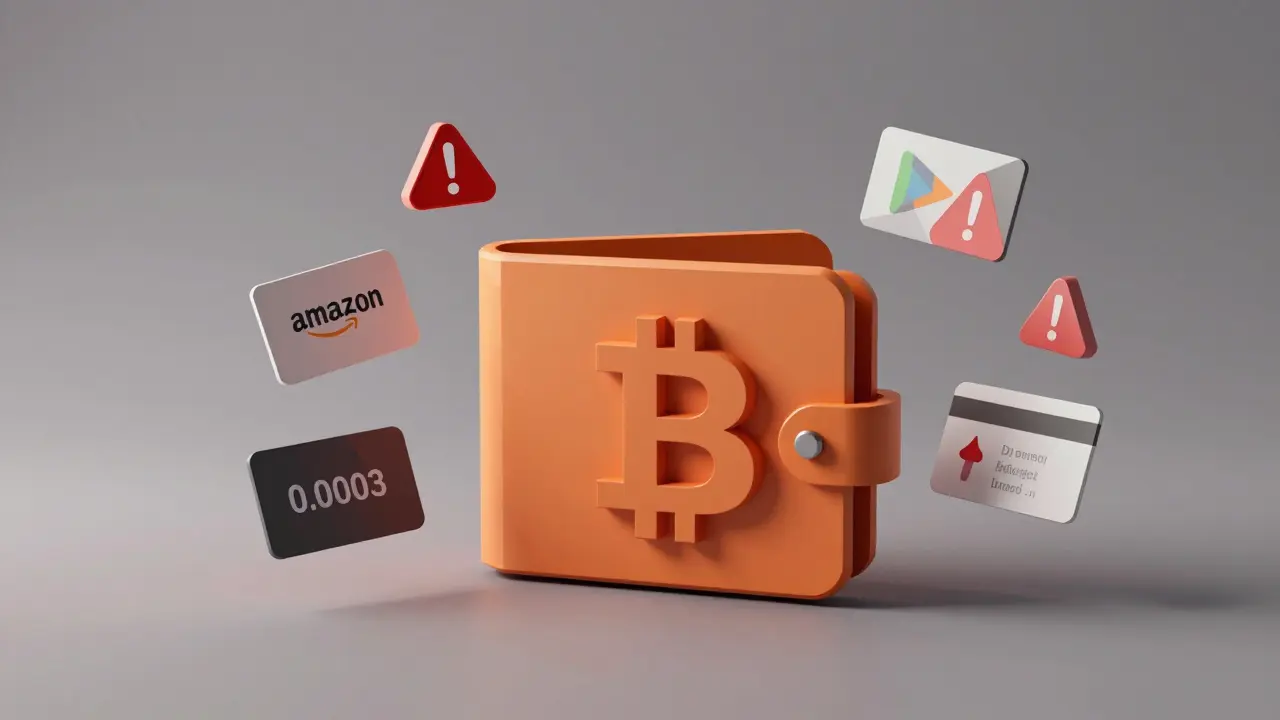
CoinCola requires a minimum withdrawal of 0.0004 BTC. If you try to withdraw less than this amount, you're effectively charged a "hidden fee" equal to the difference. This means your actual withdrawal cost increases as your balance gets smaller.
Is CoinCola Safe to Use in 2025? Here’s What Actually Happens When You Trade
If you’re looking for a crypto exchange that lets you buy Bitcoin with mobile airtime, bank transfers, or Amazon gift cards, CoinCola sounds like a dream. It promises low fees, fast P2P trades, and support for payment methods most big exchanges ignore. But if you’ve ever tried to withdraw even 0.0003 BTC from CoinCola and got stuck, you know it’s not that simple. Real users are reporting frozen accounts, unexplained fees, and support that vanishes after you send your first ticket. This isn’t a hypothetical warning-it’s what’s happening right now.
CoinCola isn’t a scam in the traditional sense. It’s not a fake website or a rug pull. It’s a functioning platform that lets you trade. But the gap between its marketing and reality is wide enough to drive a truck through. For people in Nigeria, Kenya, or parts of Southeast Asia, it’s often the only way to get crypto without a bank account. For everyone else? The risks outweigh the perks.
What CoinCola Actually Offers (And What It Doesn’t)
CoinCola lets you trade Bitcoin, Ethereum, USDT, Litecoin, and a few other coins. It supports both spot trading and peer-to-peer (P2P) deals. The P2P side is where it tries to stand out. You can buy BTC with PayPal, bank transfers, gift cards, or even mobile top-ups. That’s rare. Most exchanges like Binance or Kraken won’t touch gift cards. CoinCola does. And that’s why it’s popular in countries where traditional banking is unreliable.
But here’s the catch: CoinCola doesn’t charge you fees for buying or selling. That’s what they say. The truth? They charge hidden fees on withdrawals. Users on Trustpilot and Google Play have reported being unable to cash out small balances because the platform demands a minimum withdrawal of 0.0004 BTC-even if you only have 0.0003 BTC. That’s not a fee. That’s a trap.
They also claim to use “bank-level encryption” and “cold storage.” But no one outside their own blog has verified this. There’s no public audit. No transparency report. No proof. Meanwhile, exchanges like Coinbase are regulated by the SEC and publish quarterly security audits. CoinCola? Silence.
The Gift Card Trade: Convenient or Risky?
CoinCola’s gift card feature is its biggest differentiator. You can swap Amazon, Google Play, or iTunes gift cards for crypto. That’s useful if you’ve got a $50 gift card you don’t want and need Bitcoin instead. The process is simple: upload a photo of the card, wait for verification, and get crypto in your wallet.
But here’s what they don’t tell you: the exchange rate is rarely fair. One user reported getting $42 worth of BTC for a $50 Amazon card. That’s a 16% loss right off the top. No other exchange makes you pay that much to convert gift cards. And if the card is flagged-even if it’s legitimate-your funds disappear. No appeal. No refund. Just silence.
Compare that to Paxful, which also does gift card trades but has a public dispute system and user ratings. CoinCola has neither. If a seller rejects your card, your money is gone. And support? Good luck getting a reply.

Withdrawal Problems Are Everywhere
This is the core issue. People aren’t complaining about slow trades. They’re saying they can’t get their money out.
On Trustpilot, multiple users from October 2023 describe the same scenario: they complete a trade, the crypto lands in their CoinCola wallet, and then they try to withdraw. The platform says “account under review.” Days pass. They open tickets. No response. Then, suddenly, their account is frozen. The reason? “Multiple order disputes.” But they never disputed anything.
One user lost 0.01 BTC-worth about $600 at the time-because CoinCola claimed their trade was “suspicious.” No evidence. No explanation. Just a lock on their account.
Even small balances are targeted. A user with 0.0003 BTC couldn’t withdraw because the minimum was 0.0004 BTC. That’s not a technical limit. That’s a way to keep small amounts trapped so users give up and leave them behind.
And this isn’t one-off. It’s happening across Nigeria, Ghana, India, and Brazil. The pattern is clear: CoinCola locks accounts, then waits for users to stop asking. Then they quietly release the funds-if they feel like it.
Verification Takes Days. Sometimes Never.
Signing up is easy. But getting verified? That’s another story.
Google Play reviews are full of people saying they submitted ID documents and waited 48 hours. Then 72. Then a week. Still “under review.” One user wrote: “I still open a ticket to know what’s going on. Why ain’t verified?”
There’s no timeline. No status updates. No customer service phone number. Just an automated system that says “We’ll get back to you.” Meanwhile, your crypto sits locked. If you’re trying to buy crypto to pay rent or send money home, this isn’t a delay-it’s a crisis.
Compare that to Binance, where verification takes under 10 minutes with a clear checklist. CoinCola feels like a black box. You put your documents in. You never hear from them again.
Support? Don’t Count On It
CoinCola says they have “24/7 customer service.” But real users say otherwise.
Some Google Play reviewers say support replied quickly. But the majority report being ignored. One Trustpilot review titled “SCAM ALERT!” says they emailed five times over two weeks. No reply. The account stayed frozen. The money stayed locked.
There’s no live chat. No email address you can trust. No Twitter account that responds. The only way to contact them is through an internal ticket system that feels designed to bury complaints.
When a platform has hundreds of complaints about withdrawals and no public response, that’s not poor service. That’s negligence.
Who Should Use CoinCola? (And Who Should Avoid It)
There’s one group that still benefits: people in countries with strict banking controls and no access to global exchanges.
In Nigeria, where over 200 million people use mobile money and bank transfers are slow or blocked, CoinCola’s integration with local payment systems is a lifeline. It lets them buy BTC with airtime or bank deposits. For them, the risks are worth it.
But if you’re in the U.S., Australia, Canada, or the EU? Don’t use it. You have better options. Binance, Kraken, and Coinbase offer lower fees, faster withdrawals, regulatory protection, and real customer support. CoinCola doesn’t have any of that. It’s a tool for emergencies-not a long-term solution.
If you’re holding more than $500 in crypto? Don’t store it on CoinCola. Withdraw it to a hardware wallet or a regulated exchange. The longer you keep it there, the higher the chance you’ll lose it.
The Bottom Line: High Risk, Low Reward
CoinCola isn’t evil. It’s just dangerously unregulated. It fills a gap in markets where banks won’t serve people. But it does so without accountability. There’s no insurance. No legal recourse. No transparency.
It’s like buying a car with no brakes and hoping the road is flat. Sure, it might work. But one bump-and you’re done.
If you need to buy crypto with a gift card or mobile top-up in a country with no banking access, CoinCola might be your only option. But if you care about safety, speed, or getting your money back? Look elsewhere.
The crypto world is full of scams. CoinCola isn’t one of them. But it’s close enough to make you wonder if it’s just waiting for the next crackdown.
Can I withdraw Bitcoin from CoinCola without issues?
Many users report being unable to withdraw small balances due to minimum thresholds (like 0.0004 BTC). Even after completing trades, accounts are often frozen with no explanation. Withdrawals are not guaranteed, and support rarely responds to requests.
Is CoinCola regulated or licensed?
No. CoinCola is not registered with any major financial authority like the SEC, FCA, or ASIC. It operates without oversight, meaning users have no legal protection if funds are lost or frozen.
Does CoinCola charge hidden fees?
CoinCola claims no fees for users, but users report hidden withdrawal fees and unfair gift card exchange rates. Some users lost up to 16% of their gift card value when trading for crypto. Small balance withdrawals are blocked entirely, effectively trapping funds.
How long does verification take on CoinCola?
Verification can take anywhere from a few hours to over a week. Many users report waiting 48+ hours with no updates. There’s no status tracker or customer service to provide clarity.
Is CoinCola safe for storing crypto long-term?
No. Due to frequent account freezes, unresponsive support, and lack of regulatory protection, CoinCola is not safe for storing crypto beyond short-term trades. Always withdraw to a personal wallet or a regulated exchange.
What are better alternatives to CoinCola?
For most users, Binance, Kraken, or Coinbase are safer and more reliable. They offer lower fees, faster withdrawals, regulatory compliance, and responsive support. If you need gift card trading, Paxful is a better option with a public dispute system and user ratings.
Akash Kumar Yadav
December 2, 2025 AT 12:24CoinCola is literally the only way millions of us in India and Nigeria get crypto when banks block us. You rich Americans with your SEC-regulated exchanges don’t get it. This isn’t about fees-it’s about survival. Stop pretending your ‘safe’ platforms are moral.
Tatiana Rodriguez
December 4, 2025 AT 07:18Oh my god, I just read this and I’m crying. I had a friend in Kenya who lost $800 because CoinCola froze her account after she used a $100 Google Play card. She cried for three days. I mean, imagine needing crypto to send money home and then being treated like a criminal? This isn’t just a platform-it’s a lifeline for people who’ve been abandoned by the system. And now we’re just… judging them for using it? I’m so heartbroken. 💔
Mani Kumar
December 4, 2025 AT 09:45The argument that CoinCola serves the unbanked is a convenient moral smokescreen. If you lack financial literacy and regulatory oversight, you are not ‘empowered’-you are being exploited. The 16% gift card loss is predatory. No amount of ‘cultural context’ excuses structural malpractice.
ashi chopra
December 5, 2025 AT 13:26I get why people use CoinCola. I’ve seen my cousin in Delhi trade airtime credits just to buy a little BTC. But I also saw how she panicked when her account vanished for a week. It’s not just about access-it’s about dignity. And right now, CoinCola takes that away. I wish there was a better way.
justin allen
December 5, 2025 AT 22:12USA has Coinbase. EU has Kraken. Why are you still on this sketchy Indian platform? You’re not ‘resisting capitalism’-you’re just bad at math. If you can’t figure out how to use a regulated exchange, maybe you shouldn’t be trading crypto at all. Grow up.
Ivanna Faith
December 6, 2025 AT 14:40So CoinCola is bad but okay for poor people? That’s just colonial logic wrapped in crypto jargon. If it’s unsafe for me, it’s unsafe for everyone. Stop romanticizing financial exploitation. And also… why do you all think gift cards are ‘free money’? They’re not. You’re paying for convenience. And CoinCola charges for it. Loudly. 😤
samuel goodge
December 7, 2025 AT 04:30Let’s consider the epistemology of trust here: CoinCola operates without transparency, yet demands trust. This is not merely an operational flaw-it is a philosophical contradiction. The absence of audit trails, public verification, and recourse mechanisms renders its entire value proposition incoherent. One cannot have a market without accountability. The platform is not merely risky-it is ontologically unstable.
Vidyut Arcot
December 8, 2025 AT 12:44Hey, I know this sounds harsh, but I’ve been using CoinCola for two years and I’ve never had an issue. I always withdraw before 0.0004 BTC builds up. I also use Paxful for gift cards now-way better dispute system. Don’t give up on crypto just because one platform sucks. Find your rhythm. You got this 💪
Jay Weldy
December 8, 2025 AT 21:52I just want to say thank you for writing this. I used to think CoinCola was a scam, but after reading how people in Nigeria rely on it, I realized I was being too judgmental. Maybe the real problem isn’t the platform-it’s that the global financial system refuses to serve them. We need to fix that, not just call CoinCola evil.
Melinda Kiss
December 9, 2025 AT 02:49Thank you for sharing this. I’m so sorry to anyone who’s lost money here. 💛 If you’re reading this and you’re stuck with CoinCola, please DM me-I’ve helped 12 people get their funds out by escalating through social media and Reddit threads. You’re not alone. And yes, it’s a nightmare, but you can fight back. 💬
Christy Whitaker
December 10, 2025 AT 02:55You’re all so naive. People who use CoinCola are either desperate or dumb. And if you’re defending it? You’re part of the problem. You’re enabling financial chaos because you don’t want to do the work of learning how to use Binance. Grow up. Stop making excuses for bad decisions.
Nancy Sunshine
December 10, 2025 AT 03:00It is imperative to note that the absence of regulatory compliance in the context of peer-to-peer cryptocurrency exchanges constitutes a material breach of fiduciary duty toward end-users. Furthermore, the utilization of non-standardized payment instruments-such as gift cards-introduces systemic counterparty risk that is neither disclosed nor hedged. The platform’s operational model, therefore, fails to satisfy the minimal criteria for financial integrity as defined by the Basel III framework.
Alan Brandon Rivera León
December 12, 2025 AT 00:39Look, I’m from Colombia. I’ve used CoinCola to buy BTC with a $50 Walmart card. Got $42 worth. Felt ripped off. But I had no other option. My bank wouldn’t let me send money abroad. I didn’t cry. I just learned. Now I use Paxful for gift cards and Binance for everything else. It’s not about hating CoinCola-it’s about knowing when to leave.
Ann Ellsworth
December 13, 2025 AT 23:10Tokenized asset liquidity in non-KYC environments is inherently subject to adverse selection bias. The aggregation of low-value, high-friction payment vectors (e.g., gift cards, mobile top-ups) creates a liquidity sinkhole that disproportionately attracts low-signal participants. CoinCola’s architecture is not a bridge-it’s a black hole for retail capital. The 0.0004 BTC minimum withdrawal is a behavioral nudge to induce capitulation. Classic parasitic design.
Philip Mirchin
December 14, 2025 AT 00:00I used to work with a nonprofit in Ghana. We helped people use CoinCola to get crypto for small businesses. One guy bought a solar charger with his BTC. Another paid for his daughter’s school fees. Yeah, the fees suck. Yeah, support is garbage. But if you’ve got no bank, no Visa, no options? This is dignity. Don’t judge from your air-conditioned apartment in Silicon Valley. Be part of the solution-don’t just call it a scam.