

Content Ownership in Web3 Social Media: Who Really Owns Your Posts?
 Feb, 23 2026
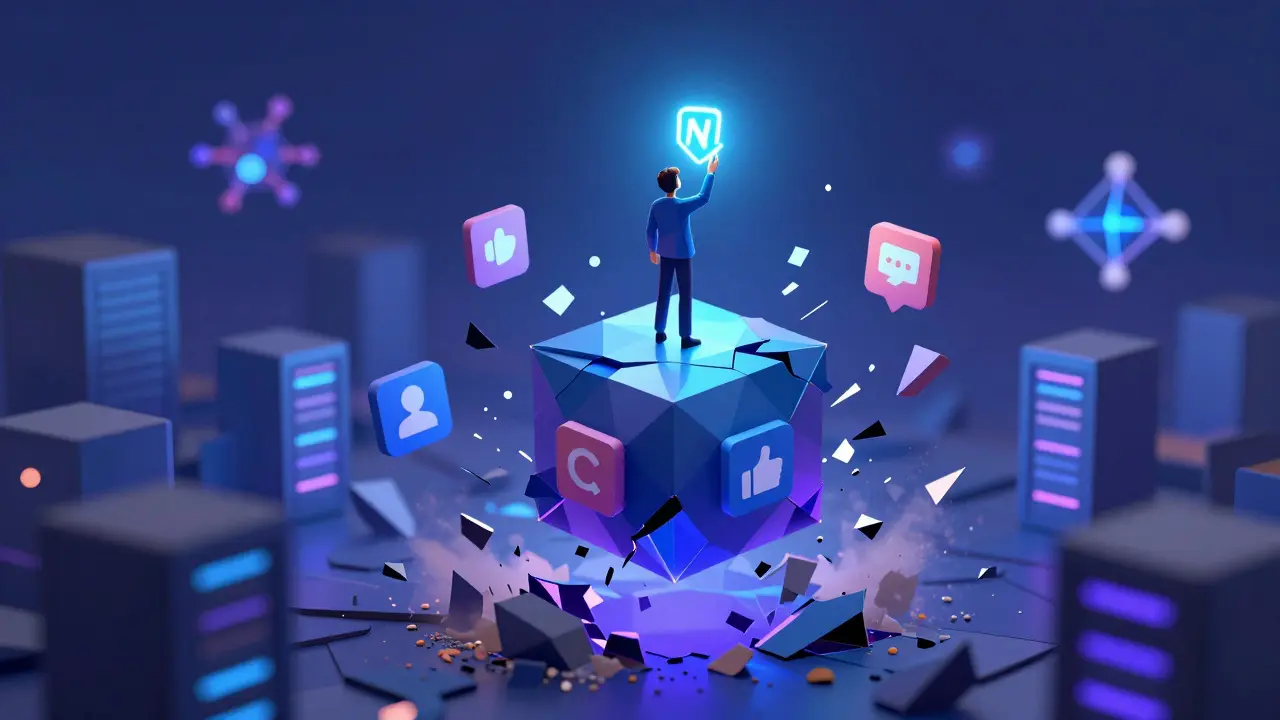
Think about the last photo you posted, the comment you made, or the video you shared. Who actually owns that content? If you’re using Facebook, Instagram, or Twitter, the answer isn’t you. It’s the company running the platform. They can delete your post, change how it’s shown, or even sell your data - all without asking you. Web3 social media flips this completely. Here, content ownership isn’t a privilege you’re granted - it’s a right you control.
What Does True Content Ownership Look Like?
In Web3 social media, your posts aren’t stored on a server owned by a corporation. They’re recorded on a blockchain - a public, tamper-proof ledger that anyone can verify. Every like, comment, or video you upload becomes a digital asset with a permanent record. This isn’t just about saving your content. It’s about proving you made it, when you made it, and who it belongs to.Non-Fungible Tokens (NFTs) are the engine behind this. Each piece of content - whether it’s a tweet, a photo, or a short video - can be minted as an NFT. That NFT is linked directly to your wallet. No middleman. No platform claiming rights. If you post a painting on a Web3 platform, that NFT proves you’re the original creator. And if someone else sells a copy later, you can automatically get a cut through smart contracts. No negotiations. No hidden clauses. Just code enforcing what you agreed to.
How It’s Different from Facebook or Instagram
Traditional platforms make money by keeping you hooked. They track your behavior, sell ads, and control what you see. Your content is their fuel. If you post something viral, they profit. If you get too popular, they might shadowban you. If you disagree with their rules, they can ban you - and take your entire audience with you.Web3 platforms don’t work like that. Your followers, your likes, your entire profile - all of it lives in your wallet. You can move it. You can take it to another platform. You can even sell it. There’s no lock-in. No algorithm deciding your reach. If a Web3 social network shuts down, your content doesn’t vanish. It’s still on the blockchain. You still own it.
Take a real example: A photographer in Melbourne uploads a series of sunset shots to a Web3 platform. Each image is minted as an NFT. She sets a 10% royalty. Months later, someone resells one of those images for $500. She gets $50 - automatically. No invoice. No waiting. No platform taking 30% or 50% of the sale. That’s the difference.
Decentralized Identity: Your Wallet Is Your Username
Forget passwords. Forget email verification. In Web3, your identity is tied to a crypto wallet. That wallet holds your assets, your social history, and your reputation. When you log in to a Web3 social app, you’re not signing in with a username - you’re signing with your private key. It’s like having a digital signature that no one else can copy.This means your identity moves with you. If you switch from one Web3 platform to another - say, from Lens Protocol to Farcaster - your followers, posts, and reputation come with you. No starting over. No losing years of engagement. Your digital identity is portable, verifiable, and entirely yours.

The Real Benefits: Control, Royalties, and Censorship Resistance
There are three big wins here.- Control: You decide who can use your content. Want to let a brand use your photo? You can set terms. Want to block someone? You don’t need to ask a moderator. Your smart contract handles it.
- Royalties: Every time your content is resold or reused, you get paid. This turns social media from a free labor platform into a real economy. Artists, writers, and musicians can earn long-term income without relying on ads or sponsorships.
- Censorship resistance: No company can delete your post just because it’s controversial. If a government tries to pressure a Web3 platform to remove content, they can’t - because there’s no central server to shut down. The content lives on thousands of devices around the world.
These aren’t theoretical. People are already using this. A poet in Berlin published a collection of verses as NFTs. She earned more in three months than she did in five years from traditional publishers. A DJ in Cape Town released live sets on a Web3 platform. Fans bought them as NFTs, and she got 85% of every resale. That’s not luck. That’s ownership.
The Hurdles: Why Most People Still Stick to Instagram
Let’s be honest - Web3 social media isn’t easy. You need a wallet. You need to understand gas fees. You need to back up your seed phrase. If you lose it, you lose everything. That’s a huge barrier.Gas fees can spike unexpectedly. A simple post might cost $2 one day and $15 the next. Not everyone can afford that. And while Web3 platforms are growing, most still have tiny audiences compared to Instagram’s 2 billion users. If you post something amazing but no one sees it, does it still matter?
There’s also the learning curve. Most people don’t know what a blockchain is. They don’t care. They just want to share a photo with friends. Web3 tools still feel clunky. Wallets crash. Apps freeze. The interface isn’t polished. For now, it’s a tool for early adopters - not the average user.
What’s Next? The Road to Mainstream
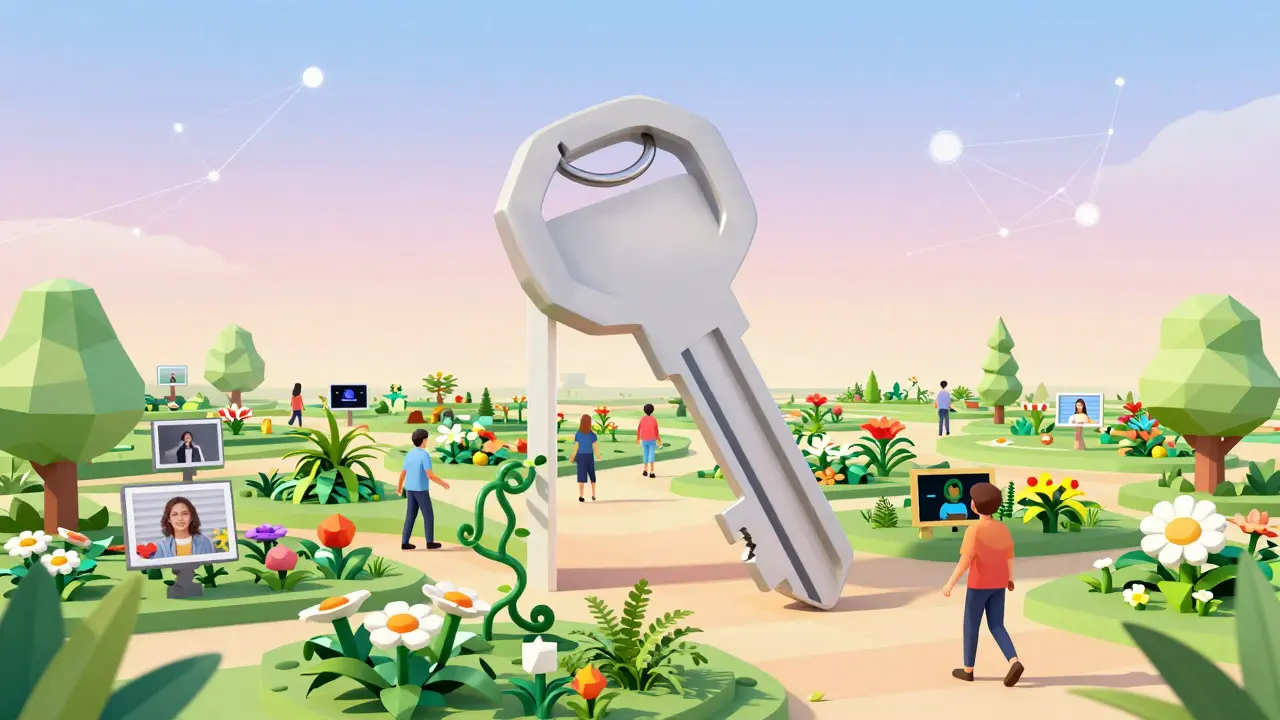
The good news? Things are getting better. New platforms are simplifying wallet setup. Some now let you sign up with an email - and automatically create a wallet behind the scenes. Others are building “gasless” systems where the platform pays the fees for you. Cross-chain compatibility is improving, so your NFTs can move between Ethereum, Solana, and Polygon without hassle.Big brands are watching. Companies like Nike and Coca-Cola are experimenting with Web3 social campaigns. They’re not just selling products - they’re building communities where fans own exclusive digital collectibles. That’s not a trend. It’s a shift in how brands connect with people.
Regulations are catching up too. Countries like Australia, Singapore, and Germany are starting to clarify how digital assets are treated. That means more legal clarity for creators. More protection. More trust.
The real turning point will come when a major social media platform - maybe even Meta or X - starts integrating blockchain-based ownership features. Not as a gimmick. But as a core part of how content works. That’s when Web3 stops being a niche experiment and becomes the new standard.
What You Can Do Right Now
You don’t need to quit Instagram tomorrow. But you can start experimenting.- Get a wallet. Try MetaMask or Phantom - they’re beginner-friendly.
- Find one Web3 social platform. Try Lens Protocol (for text and video) or Farcaster (for tweets and threads).
- Post something small. A photo. A thought. A 10-second clip.
- Mint it as an NFT. See how it feels to own it.
- Try sharing it with a friend who’s also on Web3. See how different the interaction is.
You’re not just posting content. You’re building a digital legacy. And that legacy? It’s yours - forever.
Can I really own my social media content on Web3?
Yes. On Web3 platforms, your content is tied to your wallet via NFTs. That NFT is a blockchain record that proves you created it and own it. No platform can take it down or claim rights to it. Even if the platform shuts down, the record stays on the blockchain.
Do I need to pay to post on Web3 social media?
Sometimes. Many Web3 platforms charge gas fees - small cryptocurrency payments - to record your post on the blockchain. These can range from less than $0.10 to over $10, depending on network traffic. Some newer platforms cover these fees for you, or let you pay with tokens earned from engagement. It’s not free, but it’s becoming cheaper and more predictable.
Can I still use my old social media accounts if I join Web3?
Absolutely. Web3 doesn’t replace your existing accounts - it gives you another option. You can post on Instagram, Twitter, and a Web3 platform at the same time. Many creators use Web3 to build deeper relationships with their most loyal fans while using traditional platforms to reach wider audiences.
What happens if I lose my wallet or private key?
If you lose your private key or seed phrase, you lose access to everything in that wallet - including your social media posts, followers, and NFTs. There’s no recovery option. That’s why backing up your keys securely - on paper or a hardware device - is critical. Treat it like your house key. If you lose it, you’re locked out.
Are Web3 social platforms safe from hackers?
The blockchain itself is extremely secure - it’s nearly impossible to hack. But your wallet can be stolen if you click a phishing link or share your private key. Most hacks happen because users make mistakes, not because the system is broken. Always double-check URLs, never share your seed phrase, and use a hardware wallet for large amounts of assets.
Can I make money from my content on Web3 social media?
Yes - and more directly than on traditional platforms. You can sell your posts as NFTs, set royalties for resales, or earn tokens for engagement. Some creators earn hundreds or thousands of dollars monthly from small communities. It’s not guaranteed, but the opportunity to earn directly from your audience - without a platform taking a cut - is real and growing.
George Suggs
February 24, 2026 AT 14:49Curtis Dunnett-Jones
February 25, 2026 AT 18:41McKenna Becker
February 26, 2026 AT 20:15precious Ncube
February 27, 2026 AT 04:41Jan Czuchaj
February 27, 2026 AT 15:30Tracy Peterson
February 28, 2026 AT 10:53KingDesigners &Co
February 28, 2026 AT 17:24Felicia Eriksson
March 2, 2026 AT 01:00aaron marp
March 3, 2026 AT 13:56Patrick Streeb
March 4, 2026 AT 02:37Tracy Whetsel
March 4, 2026 AT 09:33Michael Teague
March 4, 2026 AT 13:54kati simpson
March 4, 2026 AT 17:10lori sims
March 5, 2026 AT 00:55Reggie Fifty
March 6, 2026 AT 19:16Deborah Robinson
March 8, 2026 AT 03:09Michelle Mitchell
March 9, 2026 AT 08:58Kaitlyn Clark
March 9, 2026 AT 21:03Shannon Holliday
March 10, 2026 AT 22:38Michelle Xu
March 11, 2026 AT 01:04Arya Dev
March 12, 2026 AT 14:57Leslie Cox
March 14, 2026 AT 02:59Derek Sasser
March 15, 2026 AT 18:45Lilly Markou
March 17, 2026 AT 13:39