

Eterbase Crypto Exchange Review: What Went Wrong and Why It Failed
 Jan, 23 2026
Back in 2020, if you were a European crypto trader looking for a simple, low-fee exchange, you might have picked Eterbase. It looked clean. It supported EUR deposits. It had apps for iOS and Android. And for a while, users praised its straightforward interface. But what happened next turned it into one of the most cautionary tales in crypto history.
The Rise of Eterbase: A Quiet European Contender
Eterbase launched in 2015 from Slovenia, targeting everyday European users who wanted to trade crypto without jumping through hoops. Unlike Binance or Coinbase, it didn’t try to be everything. It focused on spot trading for EUR, USD, and stablecoins. At its peak, it supported 45 cryptocurrencies - enough for most retail traders. Its fee structure was competitive: 0.15% for makers, 0.25% for takers. That was nearly 40% cheaper than Bitstamp at the time. It also offered something others didn’t: native language support in eight European languages. For someone in Poland, Italy, or Portugal, trading in their own language made a real difference. The mobile apps had solid ratings - 4.3/5 on iOS, 4.1/5 on Android. The KYC process took 24 to 72 hours, aligned with EU AML5 rules. And for active traders, there was an API with 20 requests per second limits. Then there was XBASE, their native token. Launched in mid-2019, it gave users up to 50% fee discounts if they held 50,000 or more tokens. The tokenomics were designed to be deflationary: 20% of platform revenue went into quarterly buybacks. By January 2020, XBASE hit a market cap of $138 million. People believed in it. Some even treated it like a stock.The Fatal Flaw: Security That Wasn’t
Here’s the brutal truth: Eterbase’s security setup was dangerously outdated. For a platform handling millions in assets, they relied on basic hot wallet controls. According to CipherTrace’s post-hack analysis, their signing keys for hot wallets were stored on internet-connected servers with minimal access restrictions. No multi-signature setup. No proper key segregation. Just a single point of failure. In October 2020, hackers exploited that weakness. They stole 2,070 BTC, 14,500 ETH, and 1.3 million XRP - worth roughly €5.5 million at the time. The exchange didn’t just lose money. They lost trust overnight. The response? Silence. For 17 days, users got no updates. No breakdown of what happened. No plan for recovery. Reddit threads exploded with users sharing losses. One person, u/EterbaseVictim1, lost 3.2 BTC - over €110,000 at the time - and said support never replied. Pre-hack, Affgadgets.com had two reviews averaging 4.5/5. Post-hack, Trustpilot dropped to 1.3/5 across 87 reviews. The most common complaint? “Zero transparency.”What Made Eterbase Different - and Why It Wasn’t Enough
Eterbase wasn’t trying to compete with Binance. It didn’t have futures, margin trading, or 500+ coins. It didn’t need to. Its target was simple: European beginners who wanted to buy Bitcoin or Ethereum with EUR and move on. That’s why its interface was clean. That’s why fees were low. But in crypto, simplicity without security is a death sentence. Kraken, Bitstamp, and Coinbase had multi-sig wallets since 2013. Eterbase was still using single-key hot wallets in 2020. Nicholas Peiz from Halborn called it a “rookie mistake no professional exchange should make.” Even their cold storage - supposedly holding 95% of assets - wasn’t properly implemented. CipherTrace gave them a security score of 2.1 out of 10. That’s worse than most small DeFi protocols.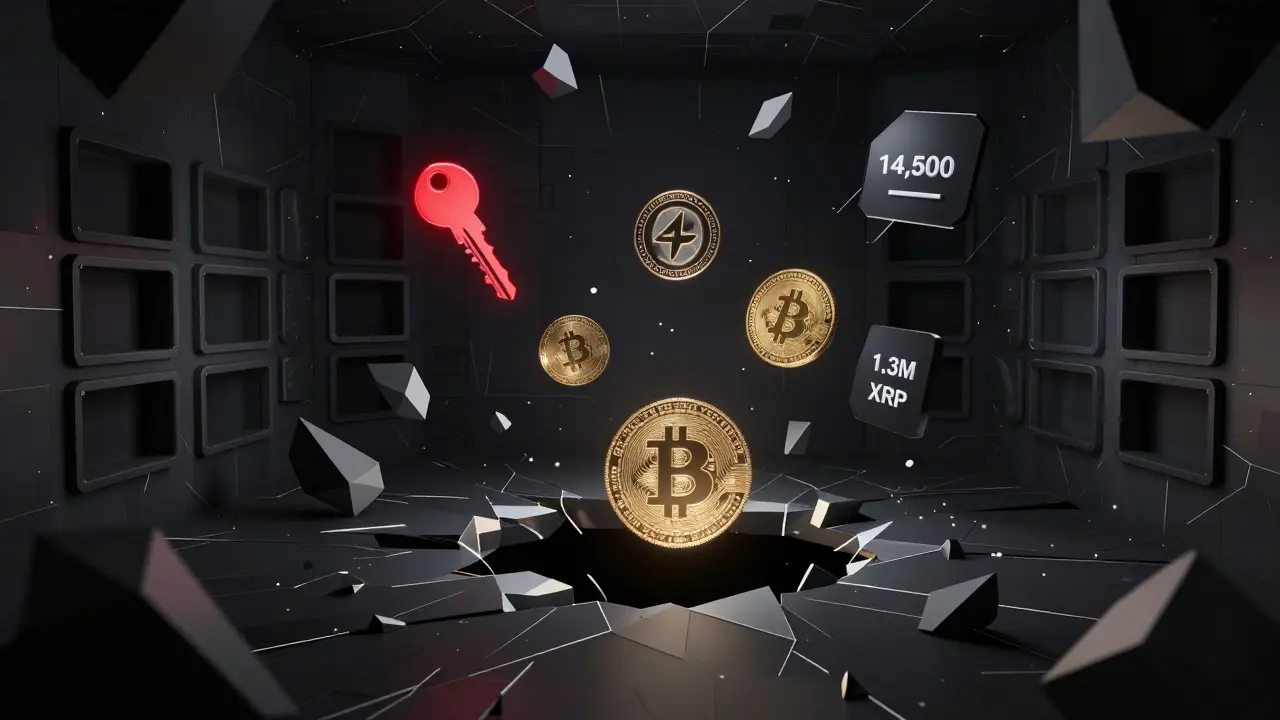
The Collapse: From 85,000 Users to Zero
Before the hack, Eterbase had 85,000 monthly active users in August 2020. By December, that number was down to 3,200. The official forum, once buzzing with 4,328 active users, shrank to 127 by early 2021. Brand24’s sentiment analysis showed 92.7% negative reactions after the breach announcement. On April 22, 2021, Eterbase announced they were “temporarily suspending operations.” That phrase was a lie. By September 2021, the Slovenian financial regulator revoked their license. No appeal. No second chance. Users were left with nothing. The liquidation process, managed by Slovenian authorities, offered only 18.3% restitution to verified claimants. That means if you lost €10,000, you got back about €1,830. Most didn’t even bother filing claims.What’s Left of Eterbase Today?
The website is offline. The apps are gone from app stores. The support emails bounce. The only thing still trading is XBASE - but barely. As of October 2025, it’s the #3690 cryptocurrency by market cap, worth just $1.8 million. Daily volume on decentralized exchanges hovers around $3,200. No one’s buying it to trade. People hold it as a relic. Gartner included Eterbase in their 2023 report on “Top 10 Crypto Exchange Failures.” Delphi Digital’s 2022 post-mortem called it “an irreversible path to failure.” The Cambridge Centre for Alternative Finance permanently classifies it as “non-operational.”
Why This Matters for You
Eterbase didn’t fail because it was too small. It failed because it grew faster than its security could handle. It looked trustworthy. It felt safe. But underneath, the foundation was rotten. Today’s crypto exchanges are more regulated, more transparent, and more secure - but not all of them. If you’re choosing a platform now, ask these questions:- Do they use multi-signature wallets for hot funds?
- Is their cold storage audited and publicly documented?
- Have they ever been hacked? How did they respond?
- Is their KYC process clear and compliant with local laws?
- Do they have a track record of customer communication during crises?
What You Can Learn from Eterbase’s Mistakes
If you’re new to crypto exchanges, here’s what to avoid:- Platforms that don’t disclose their security practices
- Exchanges that rely heavily on their own token for fee discounts (it’s often a distraction)
- Services with no public history of handling breaches
- Platforms that shut down with vague statements like “temporary suspension”
- Independent security audits (like those from CertiK or Halborn)
- Clear insurance or reserve proof (like Bitstamp’s proof-of-reserves)
- Active, responsive customer support with documented response times
- Regulatory licensing in a major jurisdiction (EU, US, UK, etc.)
Is Eterbase still operating as a crypto exchange?
No. Eterbase permanently shut down in April 2021 after a major hack in October 2020. The Slovenian financial regulator revoked its license in September 2021. The website, apps, and customer support are no longer active.
Can I recover my funds from Eterbase?
A limited recovery process was managed by Slovenian authorities. Verified users received only 18.3% of their lost assets back. The process ended in March 2022. No further claims are being accepted, and no additional funds will be returned.
What happened to the XBASE token?
XBASE still trades on decentralized exchanges like Uniswap and PancakeSwap, but volume is negligible - around $3,200 per day as of late 2025. Its market cap is under $2 million, down from $138 million at its peak. It has no utility left and is held only by collectors or those hoping for a revival that will never happen.
Why did Eterbase get hacked when bigger exchanges didn’t?
Eterbase used outdated security practices. While exchanges like Kraken and Coinbase had multi-signature wallets since 2013, Eterbase stored hot wallet signing keys on internet-connected servers with no proper access controls. CipherTrace rated their security at 2.1/10 - one of the worst scores among exchanges at the time.
Was Eterbase regulated?
Yes, it was registered under the Slovenian Financial Stability Board (#124578) and followed EU AML5 standards. But regulators found major gaps in its transaction monitoring and compliance systems. After the hack, the license was revoked because the platform proved it couldn’t protect user assets - which is the core requirement for any regulated exchange.
Should I trust any new exchange that looks like Eterbase?
Don’t be fooled by a clean interface or low fees. Look for proof of security: multi-sig wallets, public audits, insurance coverage, and a history of transparent communication during crises. Eterbase looked trustworthy - until it wasn’t. Always verify what’s underneath the surface.
steven sun
January 24, 2026 AT 05:43Bonnie Sands
January 25, 2026 AT 02:54David Zinger
January 25, 2026 AT 17:11Nadia Silva
January 26, 2026 AT 23:30Sara Delgado Rivero
January 27, 2026 AT 03:42Melissa Contreras López
January 28, 2026 AT 06:52Brenda Platt
January 30, 2026 AT 02:01Harshal Parmar
January 31, 2026 AT 19:45george haris
February 2, 2026 AT 11:28Arielle Hernandez
February 3, 2026 AT 07:05Shamari Harrison
February 4, 2026 AT 23:39Clark Dilworth
February 6, 2026 AT 05:03Chidimma Catherine
February 7, 2026 AT 10:31carol johnson
February 9, 2026 AT 03:42Matthew Kelly
February 9, 2026 AT 09:58Arnaud Landry
February 10, 2026 AT 01:22David Zinger
February 11, 2026 AT 07:28