

How to Verify Anonverse X CoinMarketCap Airdrop Legitimacy in 2026
 Feb, 6 2026
As of today, February 6, 2026, there's no official information about an Anonverse X CoinMarketCap airdrop. Let's walk through essential airdrop verification techniques to help you stay safe.
Why Some Airdrops Don't Have Public Information
Not every crypto project announces its airdrop details publicly. Some projects keep things quiet until they're ready to launch. Others might not have an airdrop at all. But here's the catch: scammers often create fake airdrop announcements to trick people into sharing private keys or sending cryptocurrency. Always verify before acting.
For example, CoinMarketCap a trusted cryptocurrency data platform that partners with verified projects for legitimate airdrops only lists airdrops from projects that meet their strict verification standards. If Anonverse isn't on their official airdrop page, it's a red flag.
How to Verify an Airdrop Legitimacy
Here's a simple checklist to check if an airdrop is real:
- Check the project's official website. If there's no mention of the airdrop there, it's likely fake.
- Look for the airdrop on CoinMarketCap's official airdrop page. CoinMarketCap only partners with verified projects.
- Check the project's social media accounts. Real projects announce airdrops on Twitter, Telegram, and Discord.
- Search for community discussions on Reddit or crypto forums. Legitimate airdrops have active discussions.
- Never share private keys or send crypto to claim rewards. Legitimate airdrops never ask for this.
Why Official Sources Matter
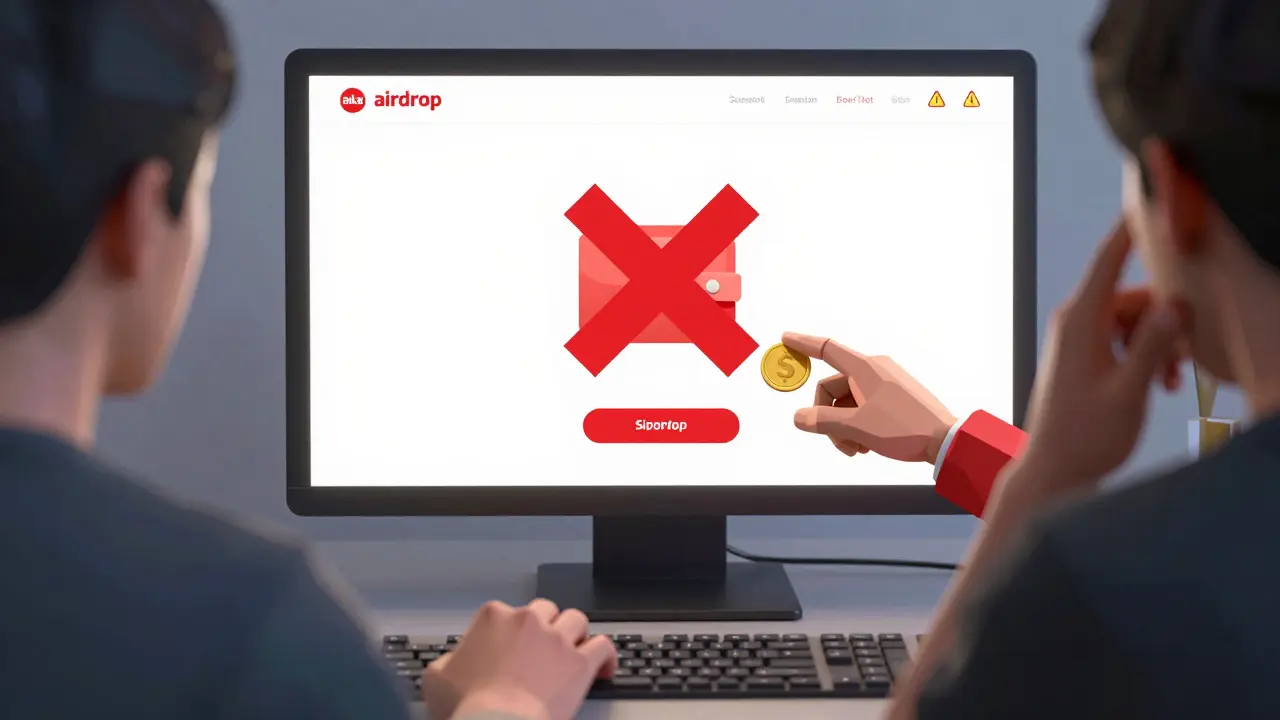
Scammers often create fake websites that look like CoinMarketCap or project pages. Always check the URL. Legitimate CoinMarketCap pages use coinmarketcap.com - anything else is fake. For example, in late 2025, a fake site called coinmarketcap-airdrop.com tricked users into sharing private keys. CoinMarketCap confirmed it was a scam and updated their official security page.
Real projects like LayerZero a cross-chain communication protocol that has run multiple airdrops for early users always list their airdrop details on their official website. Their airdrop page includes exact dates, token amounts, and eligibility criteria - no guesswork needed.
Examples of Legitimate Airdrops in 2026
Let's look at some real airdrops that CoinMarketCap lists:
MetaMask a popular cryptocurrency wallet that launched a token airdrop in 2025 requiring at least 0.1 ETH in wallet activity. They announced it clearly on their blog and social media. Users had to meet specific wallet activity requirements.
Monad a high-performance Layer 1 blockchain that distributed $225 million worth of tokens in early 2026. Their airdrop details were transparent, with clear eligibility criteria and distribution timelines. It went to 45,000 users who had interacted with their testnet before January 2025.
LayerZero a cross-chain communication protocol that has run multiple airdrops for early users. Their December 2025 airdrop rewarded users who transacted on their network over 100 times, with a total distribution of $12 million. All criteria were published in their developer documentation.
Other verified projects like Wormhole a bridge protocol that has distributed tokens to users of supported wallets and zkSync a zero-knowledge rollup solution that has distributed tokens to early users all have clear public information about their airdrops. Wormhole's 2025 airdrop went to users who bridged assets across chains, while zkSync rewarded early adopters of their testnet.
Red Flags of Fake Airdrops
Here's what to watch out for:
- Asking for private keys or seed phrases. Legitimate airdrops never need these.
- Requiring you to send cryptocurrency to "unlock" rewards. This is a scam.
- Too-good-to-be-true rewards, like "send $100 to get $10,000".
- Unofficial social media accounts claiming to be from CoinMarketCap or the project.
- Lack of clear documentation or whitepaper about the airdrop.
For example, in January 2026, scammers created fake Anonverse airdrop pages that asked users to send ETH. CoinMarketCap had to issue a public warning about these scams. Always double-check official channels before participating.

What to Do If You Find a Fake Airdrop
If you encounter a suspicious airdrop:
- Do not interact with it. Close the page immediately.
- Report it to CoinMarketCap through their official scam reporting form.
- Warn others in crypto communities (but avoid spreading misinformation).
- Check your wallet for any unauthorized transactions. If found, contact your wallet provider's support.
CoinMarketCap's scam reporting system is straightforward. They review reports quickly and often issue public alerts. For instance, when they caught a fake Monad airdrop in January 2026, they updated their official page within hours and sent out a tweet warning users.
Frequently Asked Questions
Is there an Anonverse X CoinMarketCap airdrop?
As of February 6, 2026, there is no verified information about an Anonverse X CoinMarketCap airdrop. CoinMarketCap's official airdrop page does not list Anonverse, and there are no announcements from the project's official channels. This suggests it's either not real or not yet launched.
How does CoinMarketCap verify airdrops?
CoinMarketCap partners with projects that have undergone rigorous verification. They check the project's team, code, and legitimacy. Only verified projects get listed on their official airdrop page. This prevents scams from appearing on their platform.
Can I participate in an airdrop without a wallet?
No. Legitimate airdrops require a cryptocurrency wallet. For example, MetaMask's 2025 airdrop required users to have a wallet with at least 0.1 ETH activity. Always use a secure wallet and never share your private keys.
Why would a project not announce an airdrop?
Some projects keep airdrop details private until the official launch to avoid premature speculation. Others might not have an airdrop at all. However, if a project is legitimate, they'll eventually announce it through official channels like their website or social media.
How can I stay updated on real airdrops?
Follow CoinMarketCap's official airdrop page and the project's verified social media accounts. For example, projects like Monad and LayerZero regularly update their communities about airdrop details. Avoid third-party sites that aren't officially linked.
Paul Jardetzky
February 8, 2026 AT 02:39Check CoinMarketCap. No listing? Skip it. Stay safe! 😎
Alisha Arora
February 8, 2026 AT 17:27Anyone who falls for fake airdrops is just asking for trouble. CoinMarketCap is the only trusted source. If it's not listed there, it's a scam. Always check the URL. Fake sites like coinmarketcap-airdrop.com are everywhere. You need to verify everything. No exceptions. Sending crypto to claim rewards is a scam. Always. Never share private keys. It's basic security. If you don't know this, you shouldn't be in crypto. People get scammed every day. You should be more careful. Always double-check. It's not hard. Just take a minute to look it up. Don't be lazy. Your money is at stake. Always verify.
Deeksha Sharma
February 9, 2026 AT 17:04Let's stay vigilant but hopeful. Legitimate projects like LayerZero show how transparency works. Always verify, but don't lose faith in crypto's potential. The key is to use official sources. CoinMarketCap's page is a great place to start. Don't panic, but be cautious. There are real opportunities out there. Just make sure you're not falling for scams. Always double-check before acting. Stay safe out there!
Kieren Hagan
February 10, 2026 AT 17:23It is essential to adhere strictly to the verification guidelines provided. CoinMarketCap's partnership with verified projects ensures legitimacy. Always check the official URL. No exceptions. The security of your assets depends on it. Always verify before participating.
Ajay Singh
February 12, 2026 AT 12:45Check CoinMarketCap. No listing? Skip it. Simple.
Mrs. Miller
February 14, 2026 AT 06:36Ah yes, another 'verify before acting' lecture. But seriously, if CoinMarketCap doesn't list it, it's probably fake. Though I'm sure some will still fall for it. People never learn, do they?
Katie Haywood
February 15, 2026 AT 09:45Yeah, people do fall for scams. But the good news is, education helps. Always check official sources. CoinMarketCap is the best place to start. Don't trust random links. It's not hard to verify.
Oliver James Scarth
February 17, 2026 AT 05:02The veracity of airdrops must be scrutinised with utmost diligence. CoinMarketCap's official page remains the definitive source. Any deviation from this protocol is a red flag. Always check the URL. Fake sites are rampant. Stay safe.
Kyle Pearce-O'Brien
February 17, 2026 AT 09:54This airdrop? 🤔 Probably fake. CoinMarketCap's official page is the ONLY source. No exceptions. Always verify. 💯
Freddie Palmer
February 19, 2026 AT 03:30I agree with the checklist! But wait, how do we know CoinMarketCap itself isn't compromised? Shouldn't we also check the blockchain directly? Hmm.
Jordan Axtell
February 20, 2026 AT 01:55You're overthinking it. CoinMarketCap is a trusted platform. They have rigorous verification processes. If it's not listed there, it's fake. Don't doubt the platform. Just verify. Simple.
Matthew Ryan
February 20, 2026 AT 14:05I appreciate the detailed info. Seems like a good checklist. Good to know how to verify. Always check official sources.
Mendy H
February 21, 2026 AT 10:35This is basic info. Anyone who doesn't know this is clueless. CoinMarketCap is the only source, duh.
Ryan Chandler
February 23, 2026 AT 01:04Oh no! Another fake airdrop scare! But seriously, CoinMarketCap's verification is crucial. Never trust unverified links. It's a minefield out there.
Taybah Jacobs
February 24, 2026 AT 12:45It is imperative to follow the outlined verification steps. CoinMarketCap's official page is the most reliable source for airdrop legitimacy. Always double-check URLs. Fake sites are common.
sabeer ibrahim
February 25, 2026 AT 23:02Anonverse X is a scam. CoinMarketCap never lists unverified projects. Always check official channels. Don't be gullible.
Danica Cheney
February 26, 2026 AT 08:33this airdrop thing seems fake. coinmarketcap says no. so dont trust it. maybe its a scam. idk.
aryan danial
February 27, 2026 AT 00:15Airdrop scams are rampant. Always check coinmarketcap.com-NOT coinmarketcap-airdrop.com. The latter is a scam. Always verify.