

Iranian Energy Subsidies for Crypto Mining: How Cheap Power Fuels a National Crisis
 Jan, 2 2026
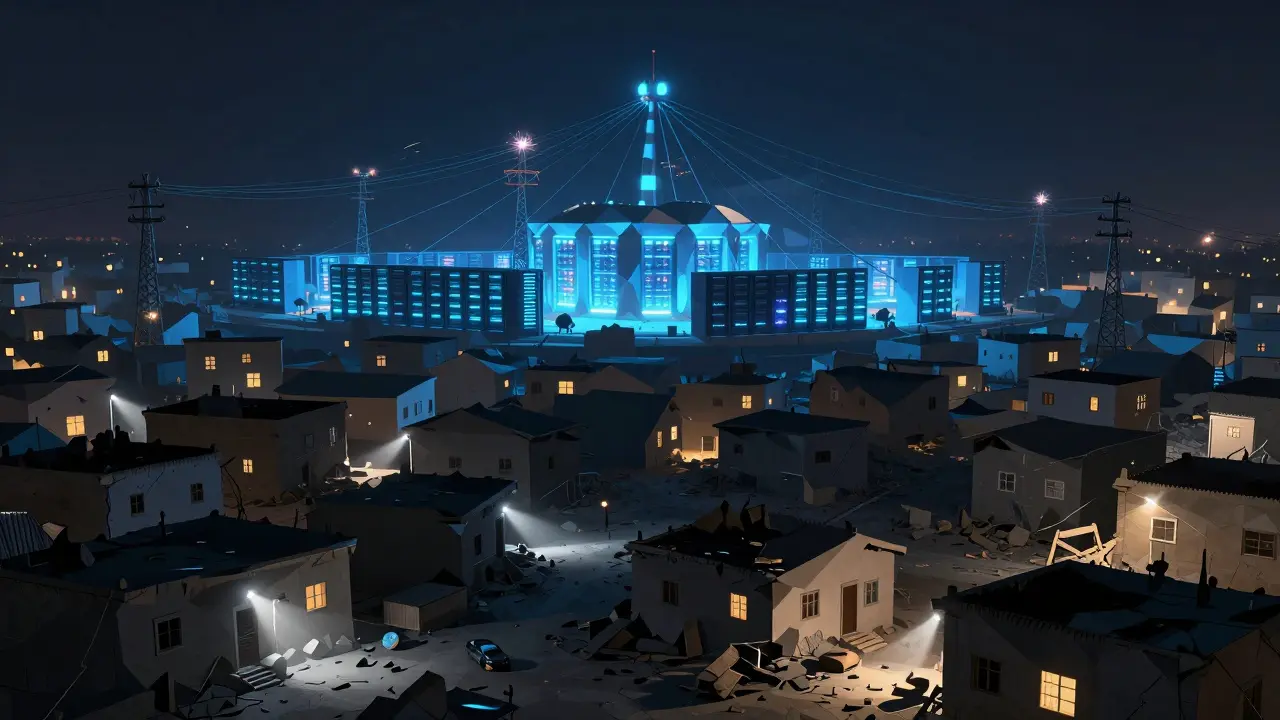
Iran’s electricity grid is failing. People in Tehran go without power for 12 hours a day in summer. Kids study by flashlight. Refrigerators spoil food. Meanwhile, thousands of industrial-grade Bitcoin miners run nonstop-powered by electricity that costs less than a penny per kilowatt-hour. This isn’t science fiction. It’s today’s reality in Iran.
How Crypto Mining Became a State-Sanctioned Energy Drain
In 2018, Iran legalized cryptocurrency mining. At first, it looked like a smart move. The country had cheap natural gas, underused power plants, and a population eager to earn dollars outside the broken banking system. But what started as a way to generate foreign income quickly turned into a runaway train. The government didn’t just allow mining-it subsidized it. Households pay $0.01-$0.02 per kWh. Licensed miners pay $0.04-$0.07. That’s less than 1% of what miners pay in the U.S. or Europe. In Italy, mining one Bitcoin costs $306,000. In Iran? Around $1,300. That’s a 235-fold difference. With Bitcoin trading between $30,000 and $40,000 in late 2024, Iranian miners were making 20 to 30 times their cost in profit. The government didn’t stop them. In fact, they encouraged it-by letting licensed miners sell their coins abroad to pay for sanctioned imports. That’s how Iran bypassed financial blockades: crypto became its new oil.The Real Cost: Blackouts, Broken Grids, and Public Fury
Here’s the catch: Iran’s power grid was never built for this. The country’s infrastructure is 40 years old on average. Transformers are rusted. Transmission lines are overloaded. Power plants operate at just 60-70% of needed capacity. And now, crypto mining is sucking up nearly 2,000 megawatts of electricity-5% of Iran’s total usage, but 15-20% of its grid imbalance. One mining operation alone-hidden inside the tunnels of Ahvaz Stadium-consumed enough power to run 100,000 homes. When it was discovered in April 2025, officials shut it down. But the damage was done. In July 2025, during a nationwide internet blackout linked to regional conflict, power demand dropped by 2,400 MW. Why? Because over 900,000 illegal mining rigs were turned off. That’s not a glitch. That’s a system built on theft. Ordinary Iranians are furious. On social media, people post videos of their homes in darkness while mining farms in nearby cities glow like neon. A Reddit thread from June 2025 with 1,450 comments showed 92% blamed crypto mining for blackouts. Telegram channels now share real-time outage maps, correlating spikes in power cuts with Bitcoin price surges. One admin wrote: “Every time Bitcoin jumps, blackouts spike within 48 hours.”Who’s Really in Control?
This isn’t just about individual miners. It’s about power. The Islamic Revolutionary Guard Corps (IRGC) controls an estimated 55-65% of all mining operations in Iran-either directly or through shell companies. These aren’t hobbyists with a few rigs in their garages. These are state-backed operations using subsidized energy to generate hundreds of millions in hard currency. Former Energy Minister Reza Ardakanian warned in 2024 that mining was using up to 10% of Iran’s total electricity generation. He was ignored. Now, analysts at Sharif University of Technology call it “state-sanctioned theft of public resources.” Dr. Saeed Laylaz, economic advisor to former President Khatami, says the IRGC has created a parallel economy: they control the energy, they control the mining, and they control the dollars-bypassing the Central Bank entirely. Meanwhile, the current Energy Minister Ali Akbar Mehrabian defends the system, claiming it brings in $800 million annually in foreign exchange. But that money doesn’t go to hospitals, schools, or power plants. It goes into IRGC coffers.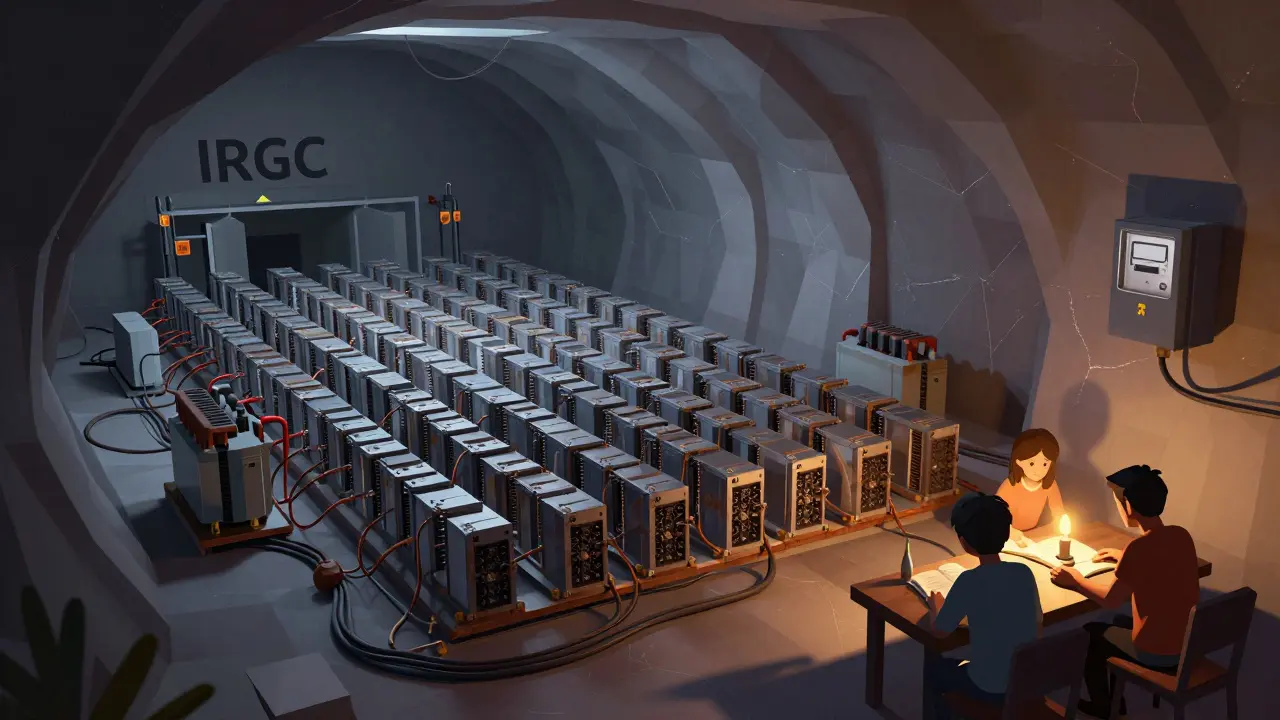
The Licensing Game: Legal Mining Is a Mirage
There’s a legal path to mine Bitcoin in Iran. You need approval from the Ministry of Industry, registration with the power company, and authorization from the Central Bank of Iran (CBI). The process takes 3-6 months. Approval rates? Below 40%. Even if you get approved, you’re stuck with state-approved mining pools that take 15-20% of your profits. Equipment imports take 4-6 months. Grid outages hit 15-20 times a month in summer. And you still pay $0.04-$0.07 per kWh-while illegal miners tap into household lines at $0.01. That’s why 80% of mining in Iran is illegal. People plug rigs into their homes, bypass meters, and run them 24/7. The government knows. They even run a reward program: citizens get 10% of recovered electricity costs for reporting illegal mines. In the first half of 2025, that led to 8,432 reports and 2,157 shutdowns. But for every rig taken down, ten more pop up.Why Iran Won’t Stop-Even as the Grid Crumbles
Iran’s government doesn’t want to end crypto mining. It wants to control it. The $1.5 billion the sector generates in 2025 is too valuable to kill. It funds sanctions-busting imports-medicine, machinery, food. It keeps the regime afloat. So instead of shutting it down, they cycle it. Every summer, when air conditioning demand spikes and electricity use jumps 30-40%, the government shuts down legal mining. It’s not about fairness. It’s about survival. They sacrifice mining for a few months to keep lights on in Tehran. Then, when winter comes and demand drops, they turn the miners back on. This isn’t policy. It’s triage.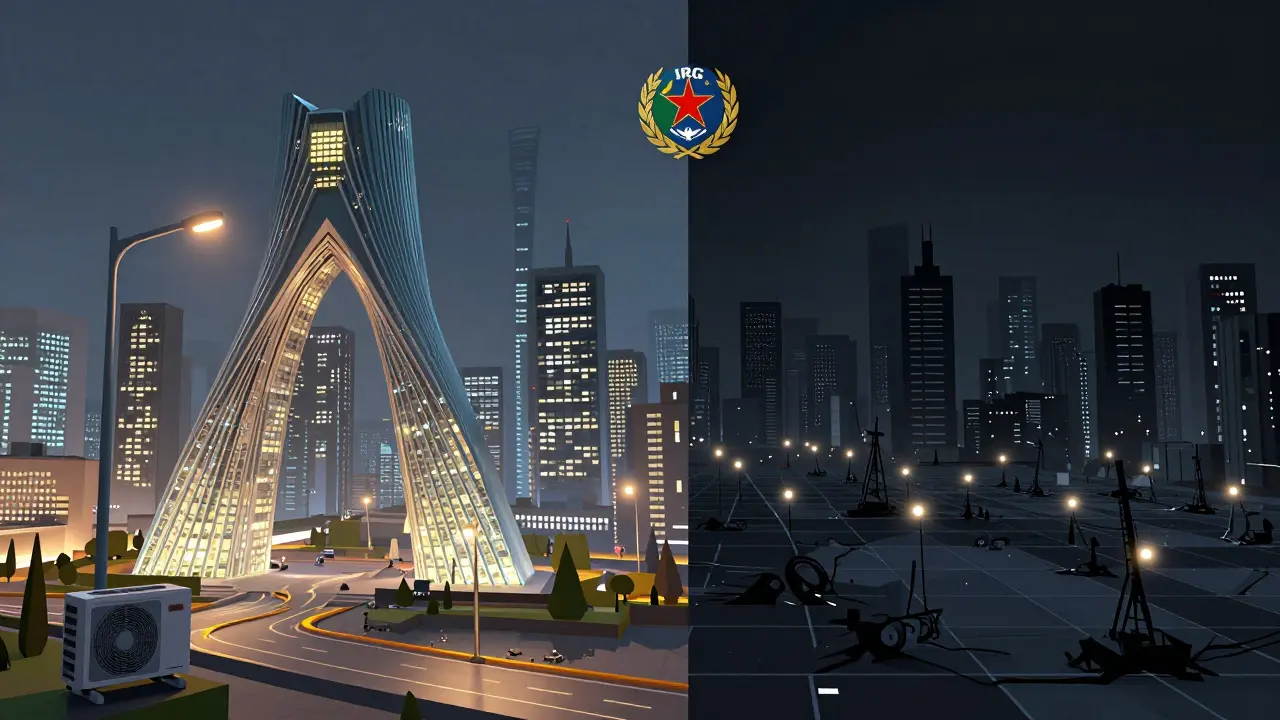
The Global Comparison: Why Iran Still Wins
Kazakhstan used to be the go-to spot for cheap crypto mining. Now, it’s Iran. Even with unreliable power and constant crackdowns, Iran’s $1,300 per Bitcoin cost is still the lowest in the world. Kazakhstan? Around $5,000. The U.S.? $15,000. Russia? $8,000. China? Banned. The EU? Too expensive. Even Saudi Arabia, with its cheap gas, can’t match Iran’s subsidy levels. The only thing keeping Iran from dominating even more? Its grid. If they upgraded their power infrastructure, they could mine more, earn more, and still have enough left for citizens. But upgrading costs billions. And the regime? It’d rather keep the cash flowing than fix the lights.What Happens Next?
The International Energy Agency predicts power shortages in Iran could rise by 25-30% by 2027 if mining keeps growing at its current rate. The Carnegie Endowment calls this “a microcosm of Iran’s broader energy crisis”-short-term gains versus long-term collapse. In 2025, the government rolled out new rules: all miners must register in industrial zones, install smart meters, and report usage in real time. But enforcement is weak. And with the IRGC running most of the operations, who’s going to shut them down? The people? They’re powerless. Literally. This isn’t a story about technology. It’s about power-who has it, who uses it, and who pays the price.Why does Iran subsidize crypto mining if it causes blackouts?
Iran subsidizes crypto mining because it generates hard currency that bypasses international sanctions. The government uses mined Bitcoin to pay for imported goods like medicine and machinery. Even though it strains the power grid, the regime sees the financial benefit as more urgent than public electricity access. The IRGC controls most of the mining operations, and the profits fund state priorities outside the official economy.
How much electricity does Bitcoin mining use in Iran?
Iran’s crypto mining operations consume about 2,000 megawatts of electricity-equal to 5% of the country’s total power use. Illegal miners alone use up to 2 gigawatts daily, which is the same amount of power used by Tehran’s 9 million residents. Mining one Bitcoin requires over 300 megawatt-hours, enough to power 35,000 homes for a day.
Is crypto mining legal in Iran?
Yes, but only under strict licensing. The government allows licensed miners to operate if they use industrial electricity rates and export their coins for trade. However, domestic use of cryptocurrency for payments is banned. Most mining-around 80%-is illegal, with miners tapping into subsidized household power. The government tolerates this because it still brings in foreign currency, even if it’s unregulated.
Who profits from crypto mining in Iran?
The Islamic Revolutionary Guard Corps (IRGC) controls 55-65% of mining operations through direct ownership or front companies. These operations generate an estimated $400-500 million annually in hard currency. While the government claims the revenue helps the economy, the money flows outside the official banking system and into IRGC-controlled accounts, bypassing the Central Bank and public oversight.
Why don’t Iranians just shut down illegal mining?
Because the people who run illegal mining are often connected to powerful state actors. Reporting a mine can earn a citizen a reward, but many fear retaliation. Plus, the government doesn’t want to fully eliminate mining-it needs the foreign currency. So they perform symbolic crackdowns: shutting down a few hundred rigs during public outrage, then letting the rest continue. It’s a controlled release, not a real solution.
nayan keshari
January 3, 2026 AT 18:55This is insane. Iran’s grid is falling apart while miners run rigs in basements like it’s a crypto rave. The government’s not stupid-they know exactly what they’re doing. It’s not about energy, it’s about survival. They’d rather let kids study by flashlight than lose their dollar pipeline.
Bianca Martins
January 4, 2026 AT 12:15Every time Bitcoin hits a new high, I check the outage maps. It’s not coincidence. It’s a direct line from mining rigs to dark apartments. The IRGC doesn’t care if your fridge spoils-they care if their offshore accounts keep growing. 😔
alvin mislang
January 5, 2026 AT 23:28Let me get this straight-people are freezing in the dark while state-backed criminals mine crypto like it’s a video game? This isn’t capitalism, it’s feudalism with servers. The whole system is rotten and the world’s too busy buying Bitcoin to notice.
Monty Burn
January 6, 2026 AT 01:46Power is energy but also control. When you subsidize mining you’re not just giving away electricity you’re giving away sovereignty. The grid is the body the miners are the parasites and the state is the silent host that chose to feed them instead of itself
Kenneth Mclaren
January 6, 2026 AT 09:38Wait wait wait-this is all a CIA psyop. You think Iran’s really mining Bitcoin? Nah. The U.S. is using fake mining rigs to destabilize Iran’s economy. The blackouts? That’s just distraction. The IRGC is a front. The real miners are in Nevada with Iranian IP addresses. They’re laundering power through drones. I’ve seen the documents. They’re classified but I got a friend in NSA.
Alexandra Wright
January 7, 2026 AT 09:59Oh wow. So the state is literally stealing electricity from its own people to fund a paramilitary force’s offshore empire. And you’re surprised people are angry? This isn’t a policy failure-it’s a moral collapse. The fact that anyone still defends this as "economic strategy" says more about you than Iran.
Jack and Christine Smith
January 7, 2026 AT 15:33my bff and i were just talking about this-its so sad. people in tehran cant even chill in their own homes cause the power’s out but some dude in ahvaz is making bank mining btc with stolen juice. its like watching your neighbor burn your couch to heat his hot tub. and the gov just shrugs. 😭
Jackson Storm
January 9, 2026 AT 01:15Just curious-how many of these illegal rigs are running on stolen grid power vs. dedicated lines? And if the government’s getting $800M from legal mining, why not just raise the rate for everyone and cut the blackouts? Seems like a simple fix if they actually wanted to fix it.
Michelle Slayden
January 9, 2026 AT 06:02The fundamental tragedy here is not the energy imbalance-it is the inversion of value. The state has prioritized liquidity over life. The electricity that could power a hospital’s ventilator is instead powering a cooling fan for a silicon chip that generates untraceable wealth for a military caste. This is not economic policy. It is the institutionalization of moral decay.
Vernon Hughes
January 11, 2026 AT 02:10Iran mines crypto because it can. The world mines because it must. The grid fails because it was never meant to hold this weight. The people suffer because they have no voice. And the regime? They just count the dollars and turn the lights back on when the world stops looking
Alison Hall
January 11, 2026 AT 08:00It’s heartbreaking. I can’t imagine studying by flashlight. But I also can’t imagine how anyone in power sleeps at night knowing this.
Amy Garrett
January 11, 2026 AT 23:28so like… if the gov is making so much off this why dont they just upgrade the grid? like its not rocket science. they got the money. they just dont care about people. sad.
Haritha Kusal
January 12, 2026 AT 03:12hope things get better for iran soon. people deserve light. not just crypto wallets glowing in the dark
Mike Reynolds
January 13, 2026 AT 08:43I get why they do it. But man, watching your neighbor’s house light up while yours stays dark? That’s not just unfair. That’s soul-crushing.
dayna prest
January 13, 2026 AT 10:29They didn’t create a crypto economy-they created a dystopian carnival where the only prize is a dead grid and a bank account full of blood money. And the clowns? They’re wearing military uniforms.
Brooklyn Servin
January 14, 2026 AT 08:26Let’s be real: this isn’t just about electricity. It’s about who gets to control the future. The IRGC isn’t mining Bitcoin-they’re mining legitimacy. Every rig is a vote against the West. Every blackout is a scream from the people they’ve abandoned. And the world? We just keep buying the coins like it’s Black Friday. 🤡💸
Phil McGinnis
January 14, 2026 AT 23:57Western hypocrisy at its finest. You condemn Iran for sanctions evasion but still buy the very currency they use to bypass them. You want them to collapse? Then stop funding their survival with your Coinbase account. You’re complicit.
Ian Koerich Maciel
January 16, 2026 AT 09:31This is the quiet apocalypse. No bombs. No war declarations. Just a slow, systemic theft of energy, dignity, and hope-powered by algorithms and enabled by global apathy. The lights go out in Tehran, but the blockchain keeps ticking. And no one in Silicon Valley even notices.
Steve Williams
January 16, 2026 AT 23:47While I deeply respect the complexity of Iran’s economic constraints, I must emphasize that the ethical burden of this policy cannot be reconciled with any notion of social justice. The subsidization of energy-intensive illicit activity at the expense of basic human needs represents a profound failure of governance-not merely of infrastructure. A nation’s strength is not measured by its capacity to circumvent sanctions, but by its commitment to the welfare of its most vulnerable citizens. The cost of this calculus is measured not in dollars, but in darkness.
Johnny Delirious
January 18, 2026 AT 01:31Let me be clear: this isn’t about Bitcoin. It’s about the moral bankruptcy of systems that turn human suffering into a balance sheet. The Iranian regime isn’t innovating-it’s exploiting. And the global crypto community? We’re the silent enablers. If you hold BTC mined in Iran, you’re holding a piece of someone’s darkness. Time to ask: what are you really mining?