

Malta's Blockchain Island Strategy: How Crypto Businesses Thrive Under Clear Rules
 Dec, 8 2025
When crypto businesses look for a home, they don’t just want low taxes-they want clarity. That’s why Malta, a small island nation in the Mediterranean, has become one of the most trusted places in the world for blockchain startups and crypto exchanges. It’s not luck. It’s strategy.
Why Malta Became the Blockchain Island
In 2018, Malta didn’t just pass a few crypto-friendly laws. It built a full legal system for digital assets. Three groundbreaking bills-the Virtual Financial Assets Act, the Malta Digital Innovation Authority Act, and the Innovation Technology Arrangements and Services Act-went into effect on July 4, 2018. These weren’t vague guidelines. They were detailed rules that told companies exactly how to operate legally. Before that, most countries either banned crypto or ignored it. Malta chose to regulate it. That made all the difference. Binance, the world’s largest crypto exchange, moved its headquarters to Valletta in 2019. OKEx followed. So did dozens of smaller blockchain firms. Why? Because they could file for a license, know what was expected, and sleep at night without fearing sudden crackdowns. The Malta Financial Services Authority (MFSA) became the gatekeeper. It didn’t just approve applications. It monitored them. It required transparency. It demanded AML and KYC checks. And it made sure companies didn’t promise returns they couldn’t deliver. This wasn’t a free-for-all. It was a controlled, professional environment.How the Tax System Works for Crypto Businesses
Malta’s tax rules are simple if you understand them. There’s no capital gains tax on crypto if you’re holding it as an investment. That means if you bought Bitcoin in 2020 and sold it in 2025 for a profit, you pay zero tax on that gain-as long as you’re not trading it daily. But if you’re actively trading? That’s treated like a business. Income tax applies, from 15% to 35%, depending on your earnings. Corporate entities pay 35% on profits-but here’s the twist: Malta’s imputation system lets you get most of it back. If your company distributes profits to shareholders who are tax residents, you can get refunds of up to 6/7ths of the tax paid. That brings the effective rate down to as low as 5%, sometimes even 0%. For individuals, the Global Residence Programme (GRP) offers a flat 15% tax on foreign income brought into Malta, with a minimum annual payment of €15,000. That’s cheaper than paying 30%+ in Germany or France. And you don’t need to be rich to qualify-just meet the residency and property requirements. Crypto-to-crypto trades used to be a gray area. Now, with MiCA alignment in 2025, the MFSA has issued clear guidance. Exchanging ETH for SOL? That’s no longer a legal question. It’s a record-keeping task. You need to track the value at the time of trade for tax purposes, but you’re not breaking any rules.Regulation That Works-Not Just Paperwork
Malta’s biggest edge isn’t just what’s written on paper. It’s how it’s enforced. The MFSA doesn’t just issue licenses. It conducts regular audits. It checks if companies are actually following their own compliance procedures. It requires detailed reporting on asset custody, transaction monitoring, and customer due diligence. This is different from places like Estonia, where the corporate tax rate is flat at 20% but the capital requirements to start a crypto business are high and the regulatory support is thin. In Malta, you get both: low effective taxes and strong institutional backing. The Financial Instrument Test is another unique tool. If you’re running an ICO or issuing a token, you submit it to the MFSA. They run it through a three-step test: Is it a utility token? A security? Or something else? The result tells you exactly which law applies. No guesswork. No legal bills to figure out if you’re breaking the rules. Even gaming companies are using Malta’s framework. The Malta Gaming Authority now allows blockchain-based games to prove fairness using distributed ledgers. Players can verify that a slot machine’s outcome wasn’t rigged. That’s not just innovation-it’s trust built into the system.
Residency and Citizenship for Crypto Investors
If you’re making money in crypto, you don’t just want to operate in Malta-you might want to live there. The Malta Permanent Residence Programme (MPRP) lets you get indefinite residency by investing in property or renting, paying annual fees, and proving your crypto income is clean and documented. For those ready to go further, the Citizenship by Naturalisation for Exceptional Services program lets you apply for a Maltese passport. You need to invest at least €600,000 in government bonds or real estate, donate €10,000 to a charity, and pass strict background checks. But here’s the catch: crypto assets count as proof of wealth-as long as you can trace their origin. Maltese citizenship gives you visa-free access to over 180 countries, including the Schengen Area, the UK, Canada, and Singapore. That’s more mobility than most passports offer. For crypto founders who travel often, this isn’t a luxury-it’s a necessity.How Malta Compares to Other Crypto Hubs
Switzerland has Zurich’s Crypto Valley. Singapore has its fintech push. The U.S. has Wyoming’s crypto-friendly laws. But none match Malta’s combination of full regulatory clarity, tax efficiency, and EU membership. Switzerland’s tax rules are complex and vary by canton. Singapore has high corporate tax rates and strict licensing. Wyoming doesn’t have EU access, which limits business expansion. Malta gives you all three: clear rules, low taxes, and a passport that opens Europe. Even the UAE, which is trying to become a crypto hub, lacks the legal consistency of Malta. Dubai’s Virtual Assets Regulatory Authority (VARA) is still evolving. Malta’s framework has been tested for seven years. It’s stable. Predictable. Proven.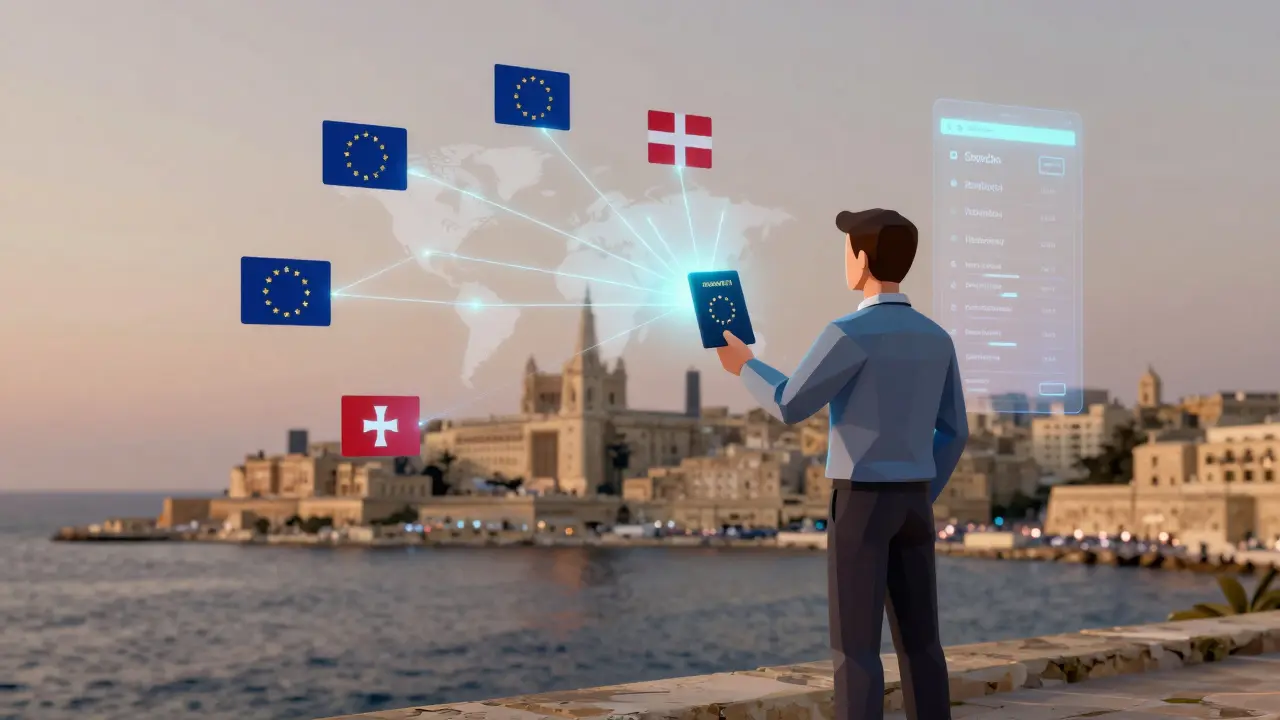
What’s Next for Malta’s Blockchain Strategy?
In 2025, Malta is tightening its rules-not to scare businesses away, but to make them stronger. New guidelines are coming on crypto-to-crypto transactions. More tax breaks are planned for long-term holders. The government is even exploring blockchain for public records, land titles, and voting systems. Education is part of the plan too. The University of Malta offers blockchain courses. Local tech schools train developers in smart contract auditing. The country is building a workforce, not just attracting one. Banks that once refused crypto clients now work with licensed MFSA firms. While not every bank is crypto-friendly, the ones that are have clear compliance paths. You don’t need to hunt for hidden partners-you can apply through official channels.Who Should Consider Malta?
If you’re a crypto exchange, a DeFi protocol, or a token issuer, Malta is one of the safest places to get licensed. If you’re an investor holding crypto long-term, it’s one of the few places where you won’t pay capital gains tax. If you’re tired of regulatory whiplash in the U.S. or unclear rules in Asia, Malta gives you a steady foundation. It’s not for everyone. You need to be willing to comply. You need to keep records. You need to understand that this isn’t a tax haven-it’s a regulated jurisdiction that rewards those who play by the rules. But if you want to build a crypto business that lasts, that can scale, and that can attract institutional investors? Malta’s not just an option. It’s the model others are trying to copy.Is it legal to run a crypto business in Malta?
Yes, it’s not just legal-it’s regulated. Malta has a full licensing system through the Malta Financial Services Authority (MFSA). Businesses must apply for a Virtual Financial Assets (VFA) license or comply with the EU’s MiCA regulation. Once approved, they operate legally under clear rules.
Do I pay capital gains tax on crypto in Malta?
No, if you’re holding crypto as a long-term investment, Malta doesn’t tax capital gains. But if you’re trading frequently with profit intent, it’s treated as business income and taxed at 15%-35%. The key is your intent, not the asset type.
Can I use cryptocurrency to get Maltese residency or citizenship?
Yes, but you must prove the source of your crypto wealth. The Malta Permanent Residence Programme (MPRP) and Citizenship by Naturalisation program accept crypto assets as proof of funds-as long as you provide clear transaction history, wallet ownership proof, and compliance documentation. No anonymous wallets accepted.
How does Malta’s MiCA compliance affect crypto businesses?
Malta fully adopted the EU’s Markets in Crypto-Assets (MiCA) regulation in 2025. This means businesses licensed under Malta’s VFA framework now automatically meet EU-wide standards. It reduces cross-border barriers, increases investor trust, and ensures consistent rules across the bloc.
What’s the difference between Malta and Switzerland for crypto businesses?
Switzerland has strong tech talent and global recognition, but its tax rules vary by canton and lack a unified licensing system. Malta offers a single, national regulatory framework with predictable tax outcomes and EU membership. For businesses wanting simplicity and access to Europe, Malta is more straightforward.
Are there banking services for crypto companies in Malta?
Yes, but only for licensed entities. Banks like Bank of Valletta and FIMBank now offer services to MFSA-regulated crypto firms. You can’t open an account with just a whitepaper-you need a license, compliance procedures, and audited financials. The system is selective, but it works.
Is Malta’s crypto strategy sustainable long-term?
Yes. Malta’s strategy isn’t based on hype. It’s built on EU membership, stable governance, and continuous regulatory updates. The government invests in education, infrastructure, and compliance. Unlike jurisdictions that chase quick wins, Malta is building a legacy. That’s why major firms stay.
miriam gionfriddo
December 9, 2025 AT 01:45Malta?? Really?? Who let the crypto bros take over a tiny island with like 500k people?? I swear if I see one more "Blockchain Island" meme I'm gonna scream. This isn't innovation, it's a tax dodge with a pretty flag.
And don't even get me started on "MiCA alignment"-like, congrats, you copied the EU rulebook after 7 years of pretending you were a pioneer. Pathetic.
Brooke Schmalbach
December 9, 2025 AT 18:49You're all missing the point. Malta didn't just "regulate" crypto-they weaponized legal clarity. The VFA Act didn't just define tokens, it created a taxonomy that forced every other jurisdiction to scramble. Switzerland's "Crypto Valley" is just a bunch of lawyers arguing over cantonal zoning laws. Malta built a system where you know exactly what you're signing up for-no guesswork, no regulatory roulette. That's not luck. That's strategic governance.
And yes, the imputation system is a masterstroke. 35% nominal tax? Sure. But 5% effective? That's not a loophole-it's a feature designed to retain capital. Stop calling it a tax haven. Call it a governance innovation.
Also, the Financial Instrument Test? That's the only thing in crypto that actually works like a legal triage system. No other jurisdiction has that level of operational precision.
Shane Budge
December 10, 2025 AT 23:01Malta’s tax system works because it’s simple: hold = no tax. Trade = business income. No gray zones. Done.
sonia sifflet
December 11, 2025 AT 16:01Oh please. You think this is about regulation? It’s about laundering. Every single "licensed" crypto firm in Malta is just a shell company with a fancy website and a lawyer on retainer. The MFSA doesn’t audit-they rubber-stamp. I’ve seen the filings. Half of them don’t even have real offices. They just rent a desk at a co-working space and call it a headquarters.
And don’t even get me started on citizenship. You think they care if your crypto came from a darknet market? As long as the blockchain trail has enough confirmations, they’ll give you a passport. This isn’t governance. It’s a corporate passport factory.
Chris Jenny
December 13, 2025 AT 10:03...they’re watching you.
Did you know the MFSA doesn’t just monitor crypto transactions? They’re linked to EU surveillance networks. Every wallet address you use in Malta gets flagged, timestamped, and fed into a centralized ledger that connects to INTERPOL’s financial crime unit. They’re not protecting you-they’re profiling you.
And the "blockchain for voting"? That’s not transparency. That’s digital voter suppression. Once they control the ledger, they control who votes, who gets residency, who gets audited. You think you’re free? You’re just a data point in a digital panopticon.
They call it "clarity." I call it control.
And the EU? They’re letting Malta do this because they know it’s a trap. Let the crypto crowd flock there. Then when the bubble pops, they’ll blame Malta. Meanwhile, Brussels keeps the power.
They’re not building a hub. They’re building a sacrificial lamb.
...they’re watching you.
Adam Bosworth
December 13, 2025 AT 20:03Malta?? Bro, I went there last year for a "crypto retreat" and the WiFi in Valletta was worse than my grandma’s AOL dial-up. I had to sit in a café for 4 hours just to get my transaction confirmed.
And the "MFSA audits"? My buddy’s firm got audited and they asked for a spreadsheet of his dog’s name and birthdate because "it might be linked to wallet recovery".
Also, the "5% effective tax"? Yeah, right. That’s only if you’re rich enough to afford the lawyer who knows how to exploit the imputation loophole. I’m a small trader. I got taxed 35% and then got audited for "lack of documentation on my ETH-SOL swap".
This isn’t a haven. It’s a bureaucratic maze with a beach.
And don’t even get me started on the citizenship thing. I saw a guy pay $600k and get his passport in 8 months… then got denied a bank account because he "didn’t have a local phone bill".
Malta doesn’t want crypto entrepreneurs. It wants crypto tourists who’ll buy overpriced villas and then leave when the WiFi dies.
Renelle Wilson
December 13, 2025 AT 22:03I appreciate the depth of this post and the thoughtful structure of Malta’s regulatory framework. It’s rare to see a government treat digital assets with the seriousness they deserve-not as a threat to be suppressed, but as a new class of assets to be integrated responsibly.
What stands out most is how Malta didn’t just react to innovation; it anticipated the needs of both businesses and consumers. The Financial Instrument Test, for instance, is a brilliant way to reduce legal uncertainty without stifling creativity. It allows entrepreneurs to focus on building, not on legal triage.
And the educational investments-the university courses, the smart contract auditing programs-are perhaps the most sustainable part of this strategy. Technology evolves, but human capital endures. By cultivating local expertise, Malta isn’t just attracting talent-it’s creating a legacy.
I also want to acknowledge the nuance in the tax structure. It’s not about lowering taxes for the sake of it; it’s about aligning incentives with long-term value creation. Capital gains exemptions for holders encourage wealth preservation, not speculation. That’s policy with intention.
Yes, it’s not perfect. No system is. But Malta has shown that regulation, when designed with clarity, transparency, and foresight, doesn’t kill innovation-it gives it roots.
Elizabeth Miranda
December 15, 2025 AT 02:57It’s funny how people call Malta a "tax haven" when it’s one of the most transparent jurisdictions in crypto. You have to prove your source of funds, file quarterly reports, and maintain real compliance infrastructure. That’s not hiding money-that’s playing by the rules.
And honestly? I’ve worked with crypto firms in Singapore and Switzerland. The paperwork there is worse. At least in Malta, you know who to call when you’re confused. There’s a dedicated MFSA liaison. In Zurich? You get forwarded to three different departments and then told to "check the cantonal guidelines".
Malta’s not flashy. It’s just… reliable.
Chloe Hayslett
December 16, 2025 AT 02:52Oh wow, a European country that actually regulates crypto? Shocking. Next you’ll tell me they have running water and Wi-Fi.
Meanwhile, in the US, we’re still arguing whether Bitcoin is a commodity or a security while our politicians take crypto donations from people who can’t even spell "blockchain".
Malta’s not special. It’s just not America.
Noriko Robinson
December 17, 2025 AT 10:19I love how Malta made crypto legal without making it easy. You still need to prove everything, keep records, and follow the rules-but at least you know what the rules are. That’s more than I can say for half the states in the US.
My friend started a DeFi project last year and got licensed in Malta. He said the process took 6 months, but once he got it, he actually slept at night. No more "will the SEC shut us down tomorrow?" panic.
And the tax thing? I hold crypto long-term and I’m so glad I don’t pay capital gains. It’s not about avoiding tax-it’s about not being punished for saving.
Malta’s not perfect, but it’s the closest thing we’ve got to a grown-up crypto policy. Kudos.
Mairead Stiùbhart
December 19, 2025 AT 08:21Oh, so now Malta’s the golden child of crypto? Funny how everyone suddenly loves it after Binance moved in.
Let’s not forget the 2020 collapse-the one where three VFA-licensed firms vanished overnight with millions. The MFSA said "we didn’t know". Turns out they approved them based on a PowerPoint and a LinkedIn profile.
Malta’s system is better than most, sure. But don’t act like it’s flawless. It’s just better at PR than the alternatives.
ronald dayrit
December 20, 2025 AT 17:35There’s a deeper philosophical question here: Is regulation the enemy of freedom, or its necessary condition?
Malta’s approach suggests that true autonomy in the digital economy isn’t found in anarchy, but in structured trust. Without clear rules, crypto becomes a Wild West where only the most ruthless survive. With them, it becomes a marketplace where innovation can flourish without fear of arbitrary destruction.
The imputation system isn’t just a tax trick-it’s a recognition that capital, when reinvested responsibly, deserves to be nurtured. The Financial Instrument Test isn’t bureaucratic red tape-it’s epistemological clarity in a field drowning in semantic confusion.
And perhaps most profoundly, Malta understands that the future of finance isn’t about decentralization from institutions, but about redefining institutions to serve decentralized value.
They didn’t just make a crypto haven.
They built a new social contract for digital capital.
Doreen Ochodo
December 21, 2025 AT 03:15Malta’s actually doing it right. Clear rules. Real oversight. No chaos.
Other places talk. Malta acts.
Josh Rivera
December 21, 2025 AT 03:54Let me guess-you all think Malta’s some kind of crypto utopia because they don’t tax your gains? Newsflash: they’re letting you in so they can tax your lifestyle.
Property prices in Valletta? Up 200% since 2019. Rent? So high that local Maltese can’t afford to live there anymore. You think they care about you? They care about your euros.
And don’t get me started on the "citizenship by investment" program. You pay $600k and suddenly you’re a Maltese citizen? Meanwhile, a Maltese kid who grew up there can’t get a passport because his dad missed a tax filing in 2017.
This isn’t innovation. It’s colonialism with a blockchain logo.
Neal Schechter
December 22, 2025 AT 06:13For real though-Malta’s the only place I’ve seen where a crypto startup can actually open a bank account without hiring a lawyer and a private investigator.
Bank of Valletta? They have a dedicated crypto desk. You walk in with your license, your audit report, and your KYC docs-and they don’t stare at you like you’re selling drugs.
That’s not magic. That’s competence.
Madison Agado
December 22, 2025 AT 15:18It’s interesting how Malta turned a small island into a global standard-bearer-not by being the biggest, but by being the most deliberate.
Most countries fear innovation. Malta chose to understand it. That’s the real lesson here: regulation doesn’t have to mean restriction. It can mean reliability. And in crypto, reliability is the rarest currency of all.
Tisha Berg
December 24, 2025 AT 01:58My cousin works at the MFSA. She says the real win isn’t the laws-it’s the culture. They don’t treat applicants as threats. They treat them as partners.
That changes everything.
Nelson Issangya
December 24, 2025 AT 10:47Malta’s not perfect, but it’s the only place that’s actually trying. Stop complaining and get licensed. The world’s moving on-don’t get left behind.
Joe West
December 25, 2025 AT 16:00One thing people forget: Malta’s entire blockchain strategy is built on EU membership. That’s the real superpower. You get clear rules + access to 450 million people. No other jurisdiction can offer that combo.
Wyoming? Cool. But you can’t open a branch in Paris without jumping through 17 more hoops.
Malta? You license once, you operate across Europe.
Chris Mitchell
December 26, 2025 AT 11:07Malta’s model works because it’s not trying to be everything. It’s not trying to be the next Silicon Valley. It’s trying to be the most predictable place to build crypto. And that’s enough.
nicholas forbes
December 27, 2025 AT 21:18Yeah, but what happens when the EU decides to overhaul MiCA again? Malta’s whole system is built on a single regulatory framework. One change, and the whole house of cards collapses.
They’re betting everything on stability. That’s brave. But risky.
miriam gionfriddo
December 29, 2025 AT 08:45And now the MFSA is requiring all token issuers to submit a 12-page sustainability report. Because of course they are. Next they’ll ask for your carbon footprint from your last ETH transaction.
They’re not regulating crypto. They’re turning it into a corporate compliance nightmare with a view of the sea.