

Mexico Crypto Monitoring Regulations by CNBV: What You Need to Know in 2026
 Feb, 24 2026
If you're trading, investing, or running a business involving cryptocurrency in Mexico, you need to understand one thing: the rules aren't just about what you can do-they're about who you’re allowed to do it with. The CNBV is the National Banking and Securities Commission, Mexico's primary regulator for licensing and supervising financial institutions that handle virtual assets. This isn't a suggestion. It's the law. And ignoring it could mean losing your license, facing fines, or worse.
What the CNBV Actually Controls
The CNBV doesn’t regulate Bitcoin or Ethereum directly. You can buy, sell, or hold crypto as an individual without asking anyone’s permission. But if you’re a bank, fintech startup, or payment processor offering crypto services-like custody, trading, or wallet hosting-you need a license from the CNBV. That’s the line. And it’s been that way since 2018, when Mexico passed its Fintech Law.
The law defined "virtual assets" clearly: digital representations of value that can be used as payment, transferred electronically, and aren’t issued by a central bank. That means Bitcoin, Dogecoin, USDT-all of them fall under this definition. But here’s the catch: they’re not legal tender. You can’t pay your rent with Bitcoin and expect your landlord to accept it as pesos. The government doesn’t back them. The CNBV doesn’t guarantee them. They’re treated like digital goods-like selling rare sneakers online.
How Licensing Works (And Why It’s So Hard)
To get licensed, a company must prove it has:
- Strong anti-money laundering (AML) systems
- Customer identity checks (KYC) that meet international standards
- Secure custody solutions for digital assets
- Internal controls to prevent fraud and system failures
Only after passing this review can the CNBV grant authorization. Since 2018, a handful of companies have gotten licensed, including Bitso-the largest crypto exchange in Latin America. But even licensed firms aren’t free to do whatever they want.
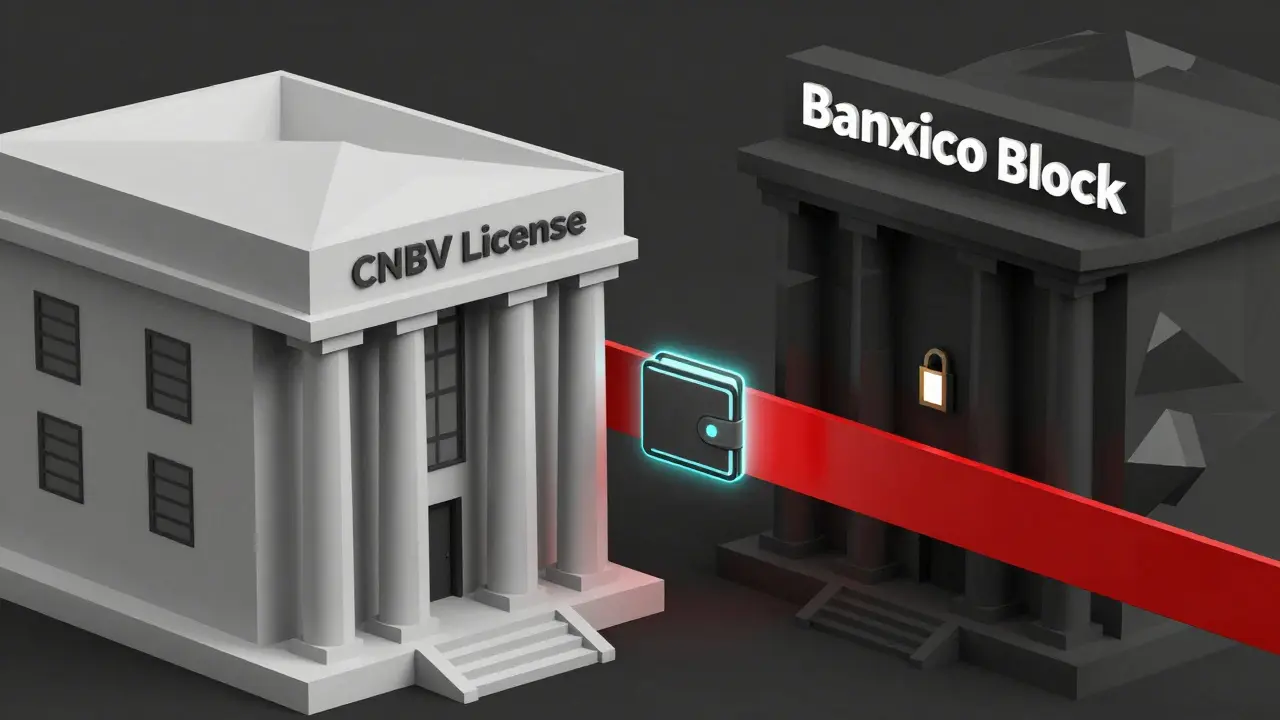
Here’s where it gets messy. While the CNBV gives the license, Banco de México (Banxico) holds the real power. Banxico’s Rule 4/2019 says banks and fintechs can’t offer crypto services like trading or custody unless Banxico approves them directly. And as of 2025, Banxico hasn’t approved a single one. That means companies licensed by CNBV are stuck. They can’t actually offer the services they’re licensed for. It’s like getting a driver’s license but being told you can’t drive on any public road.
Monitoring and Reporting: The Real Burden
Once licensed, firms are under constant watch. The CNBV requires:
- Real-time reporting of all crypto transactions over $12,500
- Monthly disclosures of customer activity and asset holdings
- Immediate alerts to Mexico’s Financial Intelligence Unit (UIF) for suspicious behavior
- Annual audits by third-party firms approved by the CNBV
These aren’t just paperwork. They’re technical systems that must integrate with government databases. Many startups fail because they can’t afford the compliance infrastructure. A small exchange might spend over $200,000 a year just on reporting tools and legal staff.
And it’s not just about money. The CNBV also checks if firms are following tax rules. If you sell crypto for profit, you owe income tax-up to 35% for individuals, 30% for companies. If you buy goods with crypto, 16% VAT applies. And if you’re a buyer in a transaction over $12,500, you’re legally required to withhold 20% and pay it to the tax authority. Most people don’t know this. But CNBV-supervised firms must enforce it.
The New Digital Agents: A Game Changer?
In July 2024, the CNBV introduced a new category: Digital Agents. These aren’t banks. They aren’t traditional fintechs. They’re a new type of entity designed specifically to offer crypto services to the public-with lighter requirements than full financial institutions.
Think of them as crypto-only service providers. They can offer wallets, trading, and asset management, but they can’t take deposits or lend money. They’re capped in transaction volume and must carry insurance for customer funds. This was a smart move. It opens the door for smaller players who can’t meet the full CNBV licensing bar. Already, three companies have applied, and one has received preliminary approval.
But even Digital Agents aren’t free from oversight. They still report to the CNBV. They still need KYC. They still get audited. The difference? Lower startup costs and fewer operational restrictions. It’s a middle path between full regulation and total chaos.
What About the Digital Peso?
Mexico’s central bank is preparing to launch its own digital currency-the digital peso-by the end of 2025. It won’t be Bitcoin. It won’t be decentralized. It’ll be a government-backed digital version of the peso, managed by Banxico. And when it launches, every licensed fintech, bank, and Digital Agent will have to connect to it.
This means CNBV-supervised institutions will need new systems to handle both private crypto (like Bitcoin) and public digital currency (the digital peso). The CNBV is already working with Banxico to align supervision standards. The goal? Make sure no one uses crypto as a loophole to move money out of the system. The digital peso isn’t here yet-but the rules for it are already being written.

The Reality: Crypto Is Legal, But Only for Some
Here’s the truth: Mexico hasn’t banned crypto. Individuals can trade it. Businesses can accept it. You can even mine it in your garage. But if you’re a financial institution, you’re stuck in a maze. The CNBV gives you a map-but Banxico locks half the doors. The result? A market that’s growing fast ($985.5 million projected in 2025) but constrained by bureaucracy.
Most crypto users in Mexico don’t even know about the CNBV. They use apps like Bitso or Coinmama, which are licensed. They assume it’s all legal. And for them, it mostly is. But behind the scenes, regulators are watching every transaction, every transfer, every wallet address. And they’re not playing around.
If you’re building a crypto business in Mexico, your biggest hurdle isn’t technology. It’s compliance. If you’re just investing? Stay clear of unlicensed platforms. If you’re a financial firm? Prepare for years of paperwork, audits, and waiting on Banxico to say yes.
What’s Next?
There are no new laws coming in 2026. But the CNBV is quietly refining its rules. Expect tighter reporting, more frequent audits, and possibly new categories of licensed entities. The goal isn’t to stop crypto. It’s to control it. To make sure it doesn’t become a tool for crime, tax evasion, or financial instability.
As Mexico’s crypto market grows, the CNBV will keep expanding its reach. Digital Agents will become more common. Banks may finally get Banxico’s green light. But until then, the system remains a patchwork of permissions, delays, and contradictions.
One thing’s certain: if you’re serious about crypto in Mexico, you can’t afford to ignore the CNBV. Not because it’s scary. But because it’s the only thing standing between you and a shutdown.
Is cryptocurrency legal in Mexico?
Yes, cryptocurrency is legal for individuals and businesses to hold, trade, or accept as payment. However, it is not legal tender. The government does not recognize it as money, and it’s not backed by any public institution. Only licensed financial institutions can offer crypto services, and they must follow strict rules set by the CNBV and Banxico.
Do I need a license to trade crypto in Mexico?
No, if you’re an individual trading crypto for personal use, you don’t need a license. But if you’re running a business that offers crypto services-like exchanges, custody, or wallet hosting-you must be licensed by the CNBV. Unlicensed firms offering these services risk fines, shutdowns, or criminal charges.
Why can’t Mexican banks offer crypto services?
Banco de México (Banxico) blocks banks and fintechs from offering crypto services unless they get direct authorization under Rule 4/2019. As of 2025, Banxico has not granted any such authorizations. This means even CNBV-licensed firms can’t legally provide custody, trading, or exchange services to customers. The system is stuck until Banxico changes its stance.
What happens if I don’t report crypto gains in Mexico?
Profits from selling crypto are taxed as income. Individuals pay up to 35%, companies pay 30%. If you fail to report, you risk penalties, interest, or audits by the tax authority (SAT). CNBV-supervised institutions must report large transactions, and the SAT cross-checks this data. Non-compliance can lead to fines up to 100% of the unpaid tax.
Can I use crypto to pay for goods and services in Mexico?
Yes, businesses can accept crypto as payment. However, 16% VAT applies to the sale if the item or service is taxable. The seller must report the transaction value in pesos based on the exchange rate at the time of sale. Buyers in transactions over $12,500 must withhold 20% and pay it to the tax authority. This rule applies even if the payment is made in crypto.
What is a Digital Agent in Mexico’s crypto system?
A Digital Agent is a new type of licensed entity introduced in July 2024 by the CNBV. It’s designed for companies that want to offer crypto services-like wallets or trading-without becoming full financial institutions. Digital Agents have lower capital requirements and can’t take deposits or lend money. They still need CNBV approval, must follow AML rules, and are subject to audits. This category opens the door for smaller players to enter the market legally.
Will the digital peso replace Bitcoin in Mexico?
No. The digital peso is a central bank digital currency (CBDC) issued by Banxico. It’s not decentralized, not private, and not meant to compete with Bitcoin. It’s designed to improve payment efficiency and financial inclusion. Bitcoin and other cryptocurrencies will continue to exist as private digital assets. But institutions that interact with the digital peso will need to comply with CNBV oversight, making the line between public and private digital money even clearer.
For now, Mexico’s crypto landscape is a balancing act. The government wants innovation-but not at the cost of control. The CNBV is the gatekeeper. And whether you’re a user, a trader, or a startup, your next move depends on whether you respect the rules-or risk running into them.
Don B.
February 25, 2026 AT 23:48Arya Dev
February 26, 2026 AT 17:29Leslie Cox
February 26, 2026 AT 20:10Andrew Hadder
February 26, 2026 AT 21:13Robert Conmy
February 27, 2026 AT 00:41McKenna Becker
February 27, 2026 AT 12:39precious Ncube
March 1, 2026 AT 05:00Amita Pandey
March 2, 2026 AT 20:50Jan Czuchaj
March 4, 2026 AT 07:47George Suggs
March 4, 2026 AT 14:26Dianna Bethea
March 5, 2026 AT 07:02KingDesigners &Co
March 5, 2026 AT 17:10Felicia Eriksson
March 6, 2026 AT 14:33Patrick Streeb
March 7, 2026 AT 09:16Tracy Whetsel
March 9, 2026 AT 02:25Alyssa Herndon
March 9, 2026 AT 12:46Ifeanyi Uche
March 11, 2026 AT 10:09Jeff French
March 12, 2026 AT 09:37Kenneth Genodiala
March 14, 2026 AT 02:08Michael Rozputniy
March 14, 2026 AT 22:48Danny Kim
March 16, 2026 AT 15:05Cathy Sunshine
March 17, 2026 AT 10:22Shannon Black
March 18, 2026 AT 10:38Richard Cooper
March 19, 2026 AT 19:33Trenton White
March 20, 2026 AT 15:17