

Opium Network Crypto Exchange Review: What It Really Is and Who It’s For
 Dec, 7 2025
Opium Network Derivatives Calculator
How This Calculator Works
This calculator simulates potential outcomes for Opium Network derivative positions. Remember: Opium is a DeFi protocol for advanced users who understand smart contracts, oracle feeds, and liquidation risks. You cannot trade directly on Opium through this tool—this is for educational purposes only.
Important: Derivative positions can lose all collateral due to market volatility, oracle manipulation, or settlement delays. Never invest more than you can afford to lose.
Position Results
People keep calling Opium Network a crypto exchange. That’s misleading. It’s not a place you go to buy Bitcoin with a credit card or trade ETH for Solana in seconds. If you’re looking for something like Binance or Swyftx, you’ll walk away confused. Opium Network is a DeFi derivatives protocol-a behind-the-scenes engine that lets users create and trade financial contracts like options, futures, and perpetual swaps without a middleman. It’s built for people who already understand wallets, gas fees, and smart contracts. Not beginners. Not casual traders. This isn’t a trading app. It’s a toolkit for advanced DeFi users.
It’s Not an Exchange. It’s a Protocol.
Opium Network (opium.finance) launched in 2019 and rolled out its mainnet in late 2020. It doesn’t hold your funds. It doesn’t match buyers and sellers. Instead, it runs on smart contracts on Ethereum, BNB Smart Chain, and Polygon. When you trade a derivative on Opium, you’re interacting directly with code. No order book. No customer support. No KYC. You create a contract-say, a 30-day put option on ETH-and another user takes the other side. The contract settles automatically when it expires, using price data from oracles. That’s it.
The native token, OPIUM, is used for governance and risk management. As of March 2025, there are exactly 18 million OPIUM tokens in circulation. Its market cap hovered around BTC 4.4383, but daily trading volume was under $70. That’s not a sign of failure-it’s a sign of niche use. You won’t find OPIUM listed on major CEXs like KuCoin or OKX for direct fiat pairs. It’s traded on DEXs like Uniswap and SushiSwap, but liquidity is thin. If you’re hoping to flip OPIUM for quick gains, you’ll get stuck. The token’s value is tied to protocol usage, not speculation.
How It Works: No Fluff, Just Mechanics
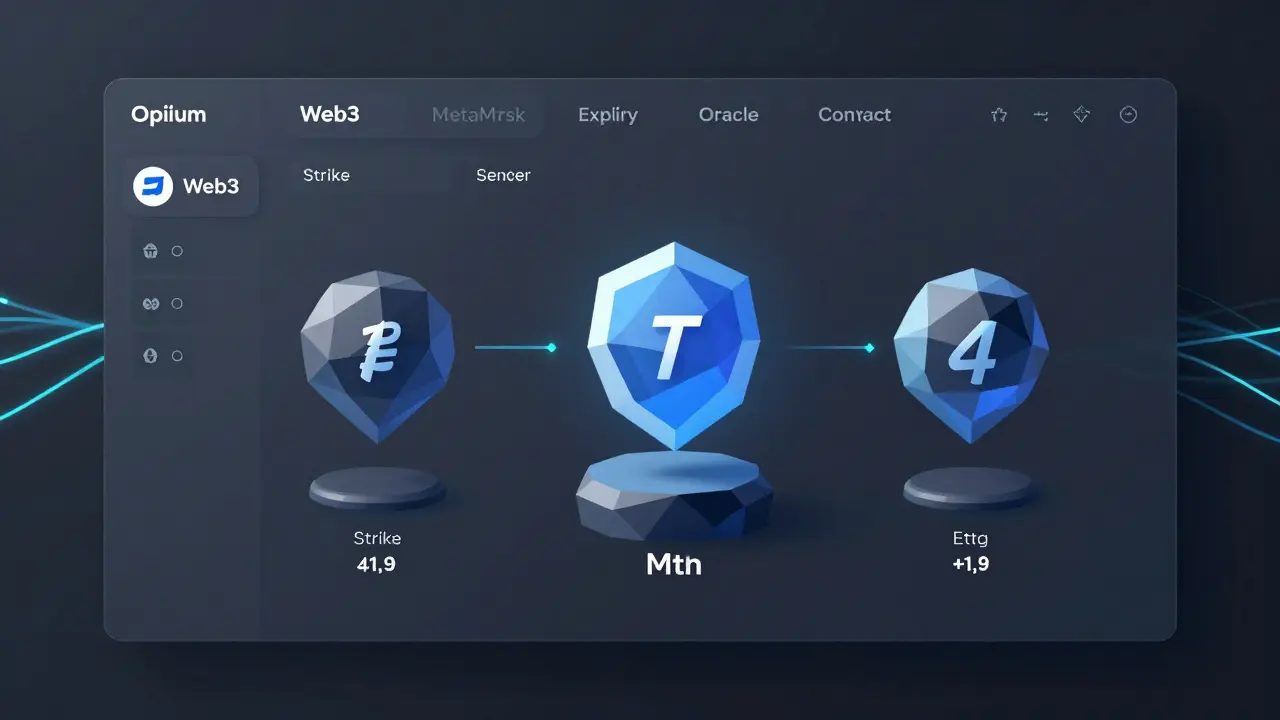
Using Opium requires four things: a Web3 wallet (MetaMask, Trust Wallet, or WalletConnect), some ETH or MATIC for gas, basic understanding of DeFi, and patience. Here’s the real flow:
- Connect your wallet to opium.finance.
- Choose a derivative type: futures, options, or perpetual swaps.
- Select the underlying asset (ETH, BTC, LINK, etc.) and terms (expiry, strike price, leverage).
- Deposit collateral (usually stablecoins like USDC or ETH).
- Confirm two smart contract approvals (token allowance + derivative contract).
- Wait for settlement or manually close the position.
There are no trading fees charged by Opium. But you pay gas fees every time you open, adjust, or close a position. On Ethereum, that can cost $5-$20 per trade during peak times. On Polygon, it’s under $0.10. That’s why most users stick to Polygon for smaller trades.
One of Opium’s strengths is its integration with Aave. You can use your Aave-deposited assets as collateral for Opium positions. That’s powerful for advanced users who want to hedge their DeFi yield without selling their holdings. But it’s also dangerous. If ETH drops 30% in an hour, your position can liquidate fast-especially if the oracle feed lags.
Who Uses It? And Why?
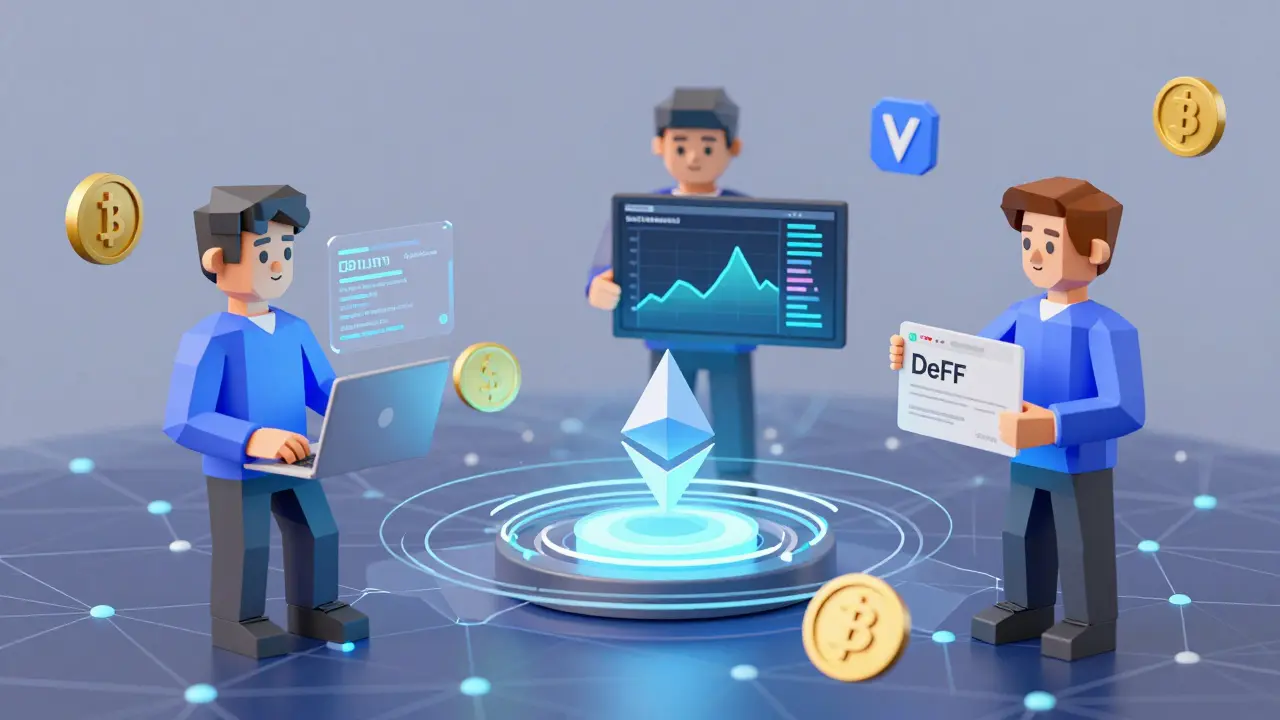
Opium isn’t for retail traders scrolling TikTok crypto videos. It’s for three types of users:
- DeFi power users who hedge their portfolio against volatility. One Reddit user reported hedging $250,000 in ETH exposure during a BTC crash in January 2025 using an Opium-powered options contract.
- Developers building derivative products on top of Opium’s API. The protocol’s developer docs score 8.5/10 for completeness.
- Institutional players testing non-custodial derivatives. Fidelity ran a pilot in March 2025 using Opium for qualified clients, signaling potential enterprise adoption.
But here’s the catch: 68% of Reddit users who tried Opium in March 2025 said they quit because the interface felt like coding. There’s no ‘Buy’ button. No price chart you can drag. You need to understand what a strike price is, how oracle feeds work, and what happens if the price feed gets manipulated. That’s not a flaw-it’s intentional. Opium was never meant to be user-friendly. It was meant to be trustless.
Security and Risks: The Dark Side of Trustlessness
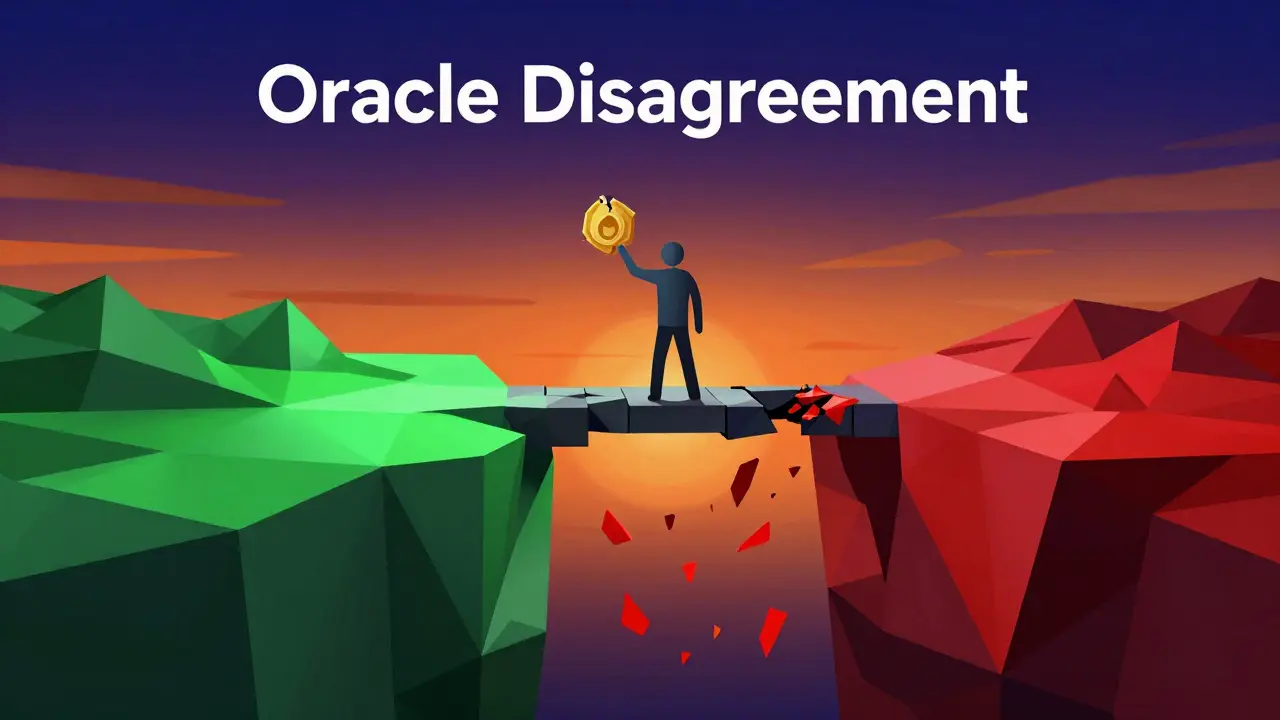
CertiK gave Opium v2.1 a 92/100 security score. That sounds good. But their audit flagged a critical flaw: the liquidation engine relies on price feeds from multiple oracles, and during the March 2024 ETH flash crash, 12% of positions had settlement delays because the oracles couldn’t agree on the price. That’s not theoretical. Real money was locked up for hours.
And then there’s the regulatory risk. In March 2025, the U.S. CFTC issued an enforcement action against unregistered derivatives protocols, specifically calling out oracle-dependent settlement systems like Opium’s as violating position limit rules. That doesn’t mean Opium will shut down. But it means institutional adoption could stall if regulators start cracking down on DeFi derivatives.
Also, the protocol’s total value locked (TVL) is just $8.7 million as of early 2025. Compare that to Synthetix at $420 million or Deribit at $1.2 billion in daily volume. Low liquidity means wider spreads, slippage, and difficulty entering or exiting large positions.
Opium v3.0: What’s Coming in Late 2025
Opium’s team announced v3.0 for Q3 2025. The upgrades are focused on solving the biggest pain points:
- Cross-margin-allowing you to use collateral from multiple positions to reduce liquidation risk.
- Chainlink CCIP integration-enabling cross-chain position management so you can open a derivative on Ethereum and settle it on Polygon without bridging assets.
- Improved UI-a more intuitive dashboard for monitoring positions, though still not beginner-friendly.
If these features deliver, Opium could become the underlying infrastructure for other DeFi apps that want to offer derivatives-like a Coinbase for derivatives, but hidden inside other platforms. But that’s a big ‘if.’ The team has a history of slow development. v2.0 took over two years to launch after the initial version.
The Bottom Line: Not for Everyone
Opium Network isn’t a crypto exchange. It’s a tool for people who already know how DeFi works and want to build or hedge complex positions without trusting a company. If you’re new to crypto, skip it. If you’re a retail trader looking for quick trades, look elsewhere. If you’re a developer, institutional investor, or advanced DeFi user trying to hedge your portfolio in a trustless way-then Opium might be worth your time.
The market for decentralized derivatives is growing. Messari predicts it’ll hit $2.1 trillion by 2026. But right now, it’s a tiny corner of DeFi. Opium is one of the few protocols trying to solve this problem. It’s not perfect. It’s not easy. But it’s real.
Use it if you understand the risks. Don’t use it if you’re hoping for a simple trading experience. The future of derivatives might be decentralized-but right now, it’s still a high-stakes game for experts only.
Is Opium Network a real crypto exchange?
No, Opium Network is not a traditional crypto exchange. It’s a decentralized derivatives protocol that lets users create and trade financial contracts like options and futures using smart contracts. Unlike exchanges like Binance or Coinbase, it doesn’t hold your funds, doesn’t have order books, and doesn’t offer spot trading. You trade derivatives directly through code, not through a centralized platform.
Can I buy Bitcoin or Ethereum on Opium Network?
No, you cannot buy Bitcoin or Ethereum directly on Opium Network. The protocol only supports derivatives-contracts based on the price of assets like ETH, BTC, or LINK. To trade on Opium, you need to already own the underlying asset or stablecoins like USDC to use as collateral. You’ll need a separate DEX or CEX to purchase crypto first.
What’s the OPIUM token used for?
The OPIUM token is used for governance and risk management within the Opium protocol. Holders can vote on protocol upgrades, fee structures, and oracle configurations. It’s not a utility token for paying trading fees-there are none. Instead, it helps align incentives among users and developers. As of March 2025, there are 18 million OPIUM tokens in circulation, with minimal trading volume and low liquidity on DEXs.
Is Opium Network safe to use?
Opium has been audited by CertiK and scored 92/100, but it’s not risk-free. The biggest danger is oracle manipulation during extreme market moves. During the March 2024 ETH flash crash, 12% of positions experienced settlement delays because price feeds disagreed. Also, liquidation mechanics are complex and can trigger unexpectedly. Only use it if you understand DeFi risks and can monitor your positions closely.
Do I need to know how to code to use Opium?
You don’t need to write code, but you need to understand how smart contracts work. The interface requires you to approve multiple token allowances, interpret contract terms, and monitor oracle feeds. There’s no ‘Buy Now’ button. Most users who aren’t experienced with DeFi find it confusing or intimidating. If you’ve used Uniswap or Aave before, you’ll be better prepared. Beginners should avoid it.
Can I use Opium Network in Australia?
Yes, you can use Opium Network from Australia as long as you have a Web3 wallet and access to Ethereum or Polygon. However, Australian regulations around DeFi derivatives are unclear. The Australian Taxation Office (ATO) treats crypto derivatives as taxable events, so you’re responsible for tracking gains and losses. Opium doesn’t provide tax reports, so you’ll need to use third-party tools like Koinly or CoinTracker.
What are the alternatives to Opium Network?
For centralized derivatives: Deribit and OKX offer high liquidity and simple interfaces but require KYC and hold your funds. For decentralized alternatives: Synthetix and Gains Network offer similar products with higher TVL and better user experience. If you want something easier than Opium but still decentralized, try dYdX-it has a cleaner UI and more liquidity. Opium is best for users who need maximum control and don’t mind complexity.
Joe West
December 7, 2025 AT 14:13Opium isn't for everyone, but if you're deep in DeFi, it's one of the few tools that actually lets you hedge without trusting a middleman. I used it to lock in a put on ETH during the January crash-saved my portfolio. No UI? Fine. No customer support? Expected. Just make sure you understand gas fees and oracle risks.
Also, the Aave integration is underrated. Using your staked aETH as collateral? Genius. Just don't get lazy and forget to monitor your positions.
Tom Van bergen
December 8, 2025 AT 22:37Sandra Lee Beagan
December 10, 2025 AT 06:13Wow this is such a clear breakdown 🙏 I'm from Canada and honestly I was terrified to even try DeFi derivatives until I read this. The part about Aave integration made me pause-I’ve been holding LEND for months and never thought to use it as collateral. Thank you for explaining the risks without sugarcoating. I’m not ready yet but I’m bookmarking this for when I am.
Also the CFTC note? Terrifying but necessary context. We need more posts like this.
Jon Visotzky
December 11, 2025 AT 19:24Glenn Jones
December 12, 2025 AT 15:22Brooke Schmalbach
December 13, 2025 AT 12:25Noriko Robinson
December 14, 2025 AT 01:31I get why people get frustrated with Opium but honestly? I think it’s beautiful in its own way. No one’s lying to you. No one’s promising returns. No flashy ads. Just cold, hard code doing exactly what it’s supposed to. I’ve lost money on it too-but I learned more in three weeks than I did in six months on Binance.
It’s not broken. It’s just not for people who want to be spoon-fed. Maybe we need more tools like this, not fewer. The future isn’t going to be easy-but it’ll be honest.
Richard T
December 15, 2025 AT 16:41One thing I haven't seen mentioned enough: Opium's real value isn't in retail trading. It's in being the plumbing behind other DeFi apps. Imagine a yield aggregator that lets you hedge your LP positions automatically using Opium under the hood. That’s where the real innovation is.
Most users won’t touch the UI, but devs will build on it. That’s how DeFi scales-not by making things easier for beginners, but by giving advanced builders the tools to abstract complexity away for others.
jonathan dunlow
December 17, 2025 AT 11:32Let me tell you something-Opium isn’t just a protocol, it’s a philosophy. It’s the digital equivalent of walking into a blacksmith’s shop in 1820 and asking for a sword. The blacksmith doesn’t hand you a pre-made blade with a handle and a sheath. He gives you raw steel, a forge, and a hammer and says, ‘Here. Make it yourself.’
Most people want to buy the sword from Amazon. They don’t want to learn metallurgy. But those who do? They become the ones who forge the next generation of weapons. Opium doesn’t sell swords. It teaches you how to forge them. And if you’re too scared to hold the hammer? That’s fine. But don’t call it broken because you didn’t want to get burned.
Also, the v3.0 cross-margin and CCIP integration? That’s the future. Chainlink enabling seamless settlement across chains? That’s not an upgrade-it’s a revolution. And if the team delivers even half of this? They’ll be the unsung architects of the next DeFi wave. I’m all in.
rita linda
December 17, 2025 AT 15:10Regina Jestrow
December 18, 2025 AT 19:08I’ve used Synthetix, dYdX, and Opium. Opium is the only one that feels like it was built by people who actually hate middlemen-not just pretend to. The UI is brutal, yes. But that’s the point. If you’re going to trade financial instruments without a bank, you should have to think hard about it.
Also, the fact that institutional players like Fidelity are testing it? That’s huge. This isn’t some niche toy. It’s the quiet backbone of what DeFi derivatives will become. The rest of us just need to stop whining about the interface and start learning the mechanics.
Martin Hansen
December 20, 2025 AT 18:48Lore Vanvliet
December 21, 2025 AT 01:41