

Pangolin Crypto Exchange Review: What You Need to Know in 2026
 Feb, 15 2026
When you're looking for a fast, cheap way to trade crypto without a middleman, Pangolin pops up as one of the few options built specifically for the Avalanche network. But is it still worth using in 2026? After checking the latest data, talking to active users, and digging into the numbers, here’s the real story-no fluff, no hype.
What Is Pangolin, Really?
Pangolin isn’t just another crypto exchange. It’s a Pangolin is a decentralized exchange (DEX) that runs entirely on the Avalanche blockchain. That means no central server, no KYC, no account creation. You connect your wallet-MetaMask, Phantom, or any Web3 wallet-and trade directly with other users through smart contracts.
It launched in 2020 as one of the first DEXs on Avalanche, built to take advantage of the network’s speed and low fees. While other chains like Ethereum struggled with $50 gas fees, Pangolin let users swap tokens for under $0.10. That’s still true today. Transactions settle in under a second. For traders who move in and out of positions fast, that matters.
It’s governed by its own token, PNG is the native governance token of the Pangolin protocol. Holders vote on upgrades, fee changes, and new features. No company runs it. No CEO makes decisions. It’s community-driven. That’s a big deal in crypto, where too many projects claim decentralization but are controlled by a small group.
How Is Pangolin Performing in 2026?
The numbers don’t lie. As of February 11, 2026:
- PNG price: Around $0.025 (down from its peak of $4.99 in 2021)
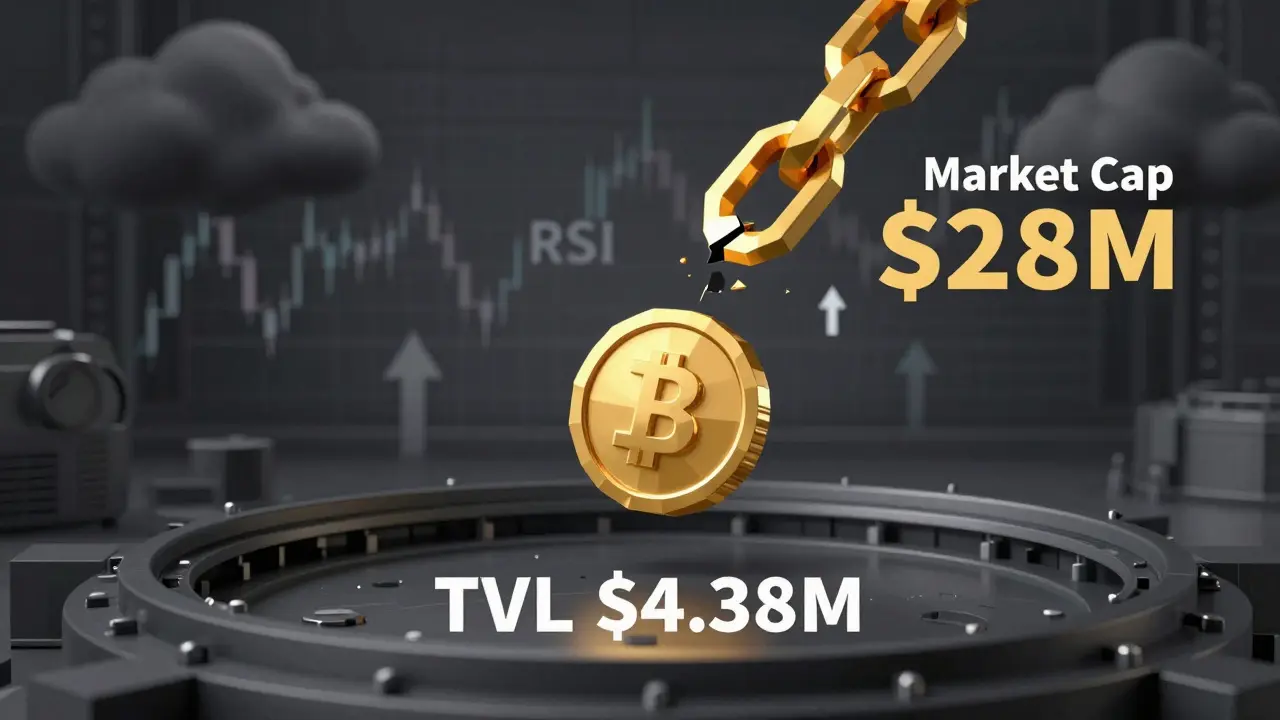
- Market cap: $28 million
- Total Value Locked (TVL): $4.38 million
- TVL-to-market-cap ratio: 3.49
That ratio is the red flag. For every dollar locked in the protocol, the token is trading at over $3.50. That’s unsustainable unless the token’s utility explodes. Right now, PNG is mostly used for voting. It doesn’t give you fee discounts, staking rewards, or liquidity mining bonuses anymore. So why is it priced so high relative to what it’s actually doing?
Technical indicators are mixed. The 14-day RSI is at 33.72-neutral. But the 50-day moving average is $0.035, and the 200-day is $0.084. The price is below both. That’s a bearish sign. Multiple EMAs (5, 10, 21, 50, 100) are all pointing down. The Stochastic RSI is at 88.44-overbought. That suggests a pullback is coming. But the Hull Moving Average (9) and RSI are hinting at a bounce. Confusing? Yes. That’s crypto.
Price predictions for 2026 vary wildly:
- CoinCodex: $0.072 by December
- LiteFinance: $0.026 average
- WEEX: $0.10-$0.14 if DeFi revives
- Traders Union: $0.0091
That’s a range from $0.009 to $0.14. No one knows. But here’s the thing: even if PNG doubles, it’s still a penny stock. You’re not getting rich on PNG alone. You’re betting on Avalanche.

What Can You Do on Pangolin?
Let’s get practical. What’s the trading experience like?
First, the good:
- Speed: Trades settle in under a second thanks to Avalanche’s consensus mechanism.
- Fees: Under $0.05 per swap. Compare that to Uniswap on Ethereum-$10+.
- Supported tokens: Over 1,200 tokens, mostly Avalanche-native. You’ll find AVAX, DAI, USDC, WBTC, and dozens of DeFi tokens like aaveAVAX, renBTC, and wrapped native assets.
- Liquidity pools: You can add liquidity and earn trading fees. The rewards aren’t as juicy as they were in 2021, but they’re still active.
Now the not-so-good:
- No mobile app: You have to use a browser. No iOS or Android app. That’s a big drawback in 2026.
- No advanced trading: No limit orders, no stop-losses, no margin trading. It’s spot-only. If you’re a day trader, you’ll need another platform.
- No customer support: No chat, no email, no help desk. If something goes wrong, you’re on your own.
- Security audits: Pangolin has been audited by CertiK and Hacken, but the reports aren’t public in detail. You have to trust the code.
The interface is clean, simple, and fast. If you’re used to Uniswap or SushiSwap, you’ll feel right at home. Swap, add liquidity, stake PNG-it’s all there. But there’s no innovation. No new features since 2022. It’s been in maintenance mode.
How Does It Compare to Other DEXs?
Here’s how Pangolin stacks up against other top DEXs on Avalanche:
| Feature | Pangolin | SushiSwap (Avalanche) | Trisolaris |
|---|---|---|---|
| TVL | $4.38M | $12.1M | $8.9M |
| Swap Fees | 0.3% | 0.25% | 0.2% |
| Advanced Orders | No | No | Yes |
| Mobile App | No | No | Yes |
| Staking Rewards | Low | Medium | High |
| Token Utility | Voting only | Voting + fee discounts | Voting + staking rewards |
Trisolaris is clearly ahead in features. It has limit orders, a mobile app, and better rewards. SushiSwap has more liquidity. Pangolin? It’s the original. But it’s not the best anymore.
Is Pangolin Worth Using Today?
Here’s the bottom line:
- Use Pangolin if: You want the cheapest, fastest way to swap Avalanche-native tokens. You’re comfortable with no customer support. You believe in long-term Avalanche growth.
- Avoid Pangolin if: You need advanced trading tools. You want a mobile app. You’re hoping PNG will moon. You need help if something goes wrong.
Pangolin isn’t dead. It’s still live. Transactions are processed. Liquidity is still there. The code hasn’t been abandoned. But it’s not growing. It’s holding on. The community is quiet. Development updates are rare. The token’s value is disconnected from its utility.
If you’re new to Avalanche, Pangolin is a decent starting point. It’s simple, fast, and safe. But if you’re serious about DeFi, you’ll want to explore Trisolaris or SushiSwap for better rewards and features.
And if you’re thinking of buying PNG as an investment? Be careful. The market is bearish. The token’s value is inflated. The only way it goes up is if Avalanche becomes the dominant Layer-1-and even then, PNG would need a major upgrade to justify its price.
Final Thoughts
Pangolin is like a reliable old car. It still runs. It doesn’t break down. But it’s not getting upgrades. No new features. No modern comforts. You can drive it across town. You can’t take it on the highway.
It’s still functional. It’s still useful. But it’s not the future. The future is Trisolaris. The future is SushiSwap. The future is exchanges that offer real utility, not just nostalgia.
If you’re looking for a quick swap on Avalanche, Pangolin works. But don’t expect it to carry you through 2027. The market has moved on.
Is Pangolin a safe exchange to use?
Yes, but with caveats. Pangolin is a decentralized exchange built on Avalanche, which has never been hacked. The smart contracts have been audited by reputable firms like CertiK and Hacken. However, there’s no customer support, no insurance, and no way to recover funds if you send tokens to the wrong address. Always double-check addresses and use a hardware wallet for large amounts.
Can I trade Bitcoin or Ethereum on Pangolin?
You can’t trade native Bitcoin or Ethereum directly. But you can trade wrapped versions like WBTC and wETH, which are pegged 1:1 to the real assets. These are bridged onto Avalanche and are widely supported on Pangolin. Just be aware that wrapped tokens rely on third-party custody, so you’re trusting the bridge, not the original blockchain.
Does Pangolin have a mobile app?
No, Pangolin does not have a mobile app. You must use a desktop browser with a Web3 wallet like MetaMask or Phantom. This is a major drawback compared to competitors like Trisolaris, which offers iOS and Android apps. If you need to trade on the go, you’ll need another platform.
What’s the difference between Pangolin and Uniswap?
Uniswap runs on Ethereum and charges high gas fees (often $10-$50 per trade). Pangolin runs on Avalanche, where trades cost less than $0.10 and settle in under a second. Uniswap has more liquidity and advanced features like limit orders. Pangolin is faster and cheaper but lacks innovation and mobile access. They serve different chains and user needs.
Should I buy PNG as an investment?
Only if you believe in long-term Avalanche adoption and are okay with high risk. PNG’s price is currently disconnected from its utility-it’s not used for fees, staking, or rewards anymore. Its market cap is over 3 times its TVL, which is unsustainable unless the protocol adds major new features. Most analysts expect PNG to stay below $0.05 in 2026. Don’t buy it expecting a moonshot.
Is Pangolin still being developed?
Yes, but very slowly. The protocol is still operational, with no major bugs or outages. However, there haven’t been significant updates since 2022. No new features, no marketing push, no community campaigns. It’s in maintenance mode. That’s not a death sentence, but it’s not growth either. The team is active, but their focus has shifted to other Avalanche projects.
For now, Pangolin is a functional tool-not a game-changer. Use it when you need to make a quick swap on Avalanche. Don’t use it as your main trading platform. And don’t bet your portfolio on PNG.
Beth Erickson
February 15, 2026 AT 20:46And no, I don't care about your 'long-term vision.' The market doesn't care about nostalgia.
Chris Thomas
February 17, 2026 AT 18:14Andrew Edmark
February 18, 2026 AT 23:50Dominica Anderson
February 20, 2026 AT 02:42Nova Meristiana
February 21, 2026 AT 17:49yogesh negi
February 23, 2026 AT 05:15Nikki Howard
February 24, 2026 AT 11:44Sasha Wynnters
February 24, 2026 AT 18:08george chehwane
February 25, 2026 AT 06:32Charrie VanVleet
February 26, 2026 AT 19:13Rajib Hossaim
February 28, 2026 AT 09:42Anandaraj Br
February 28, 2026 AT 21:53Paul David Rillorta
March 1, 2026 AT 10:53Lauren Brookes
March 3, 2026 AT 03:30Kyle Tully
March 4, 2026 AT 04:05Ian Plunkett
March 4, 2026 AT 17:52Scott McCrossan
March 6, 2026 AT 09:16