

Risks of Social Token Investment: Why Most Fail and How to Protect Yourself
 Dec, 26 2025
Imagine buying a token tied to your favorite musician, influencer, or YouTuber-thinking you're investing in their success. But what if they stop posting? What if their fanbase fades? What if the platform they use shuts down? That’s not speculation-it’s what happens to social tokens every day.
Social tokens are digital assets created by individuals or communities to reward followers, fund content, or build exclusive economies. They sound exciting: own a piece of your favorite creator’s brand, get early access to content, vote on future projects. But behind the hype lies a minefield of risks most investors never see coming.
They’re Not Stocks-But They’re Treated Like Them
Unlike Bitcoin or Ethereum, social tokens have no intrinsic value. Their price isn’t driven by network usage, mining rewards, or protocol upgrades. It’s driven by one thing: the creator’s popularity. That’s a problem.
When a creator launches a token, they often hype it with promises of future perks-merch discounts, private livestreams, behind-the-scenes access. But once the initial buzz fades, those perks rarely materialize. A 2025 report by TRM Labs found that 63% of celebrity-backed social tokens collapsed within 90 days because the creator didn’t keep engaging. One token tied to a pop star dropped 94% after she went on vacation for two months. No updates. No content. Just silence. And the token? Worthless.
These aren’t isolated cases. The Crypto Scam Database recorded 317 social token scams in 2025 alone. Victims lost an average of $3,850-nearly double the loss from regular crypto scams. Why? Because people assume the creator’s fame equals security. It doesn’t.
Extreme Volatility and Zero Liquidity
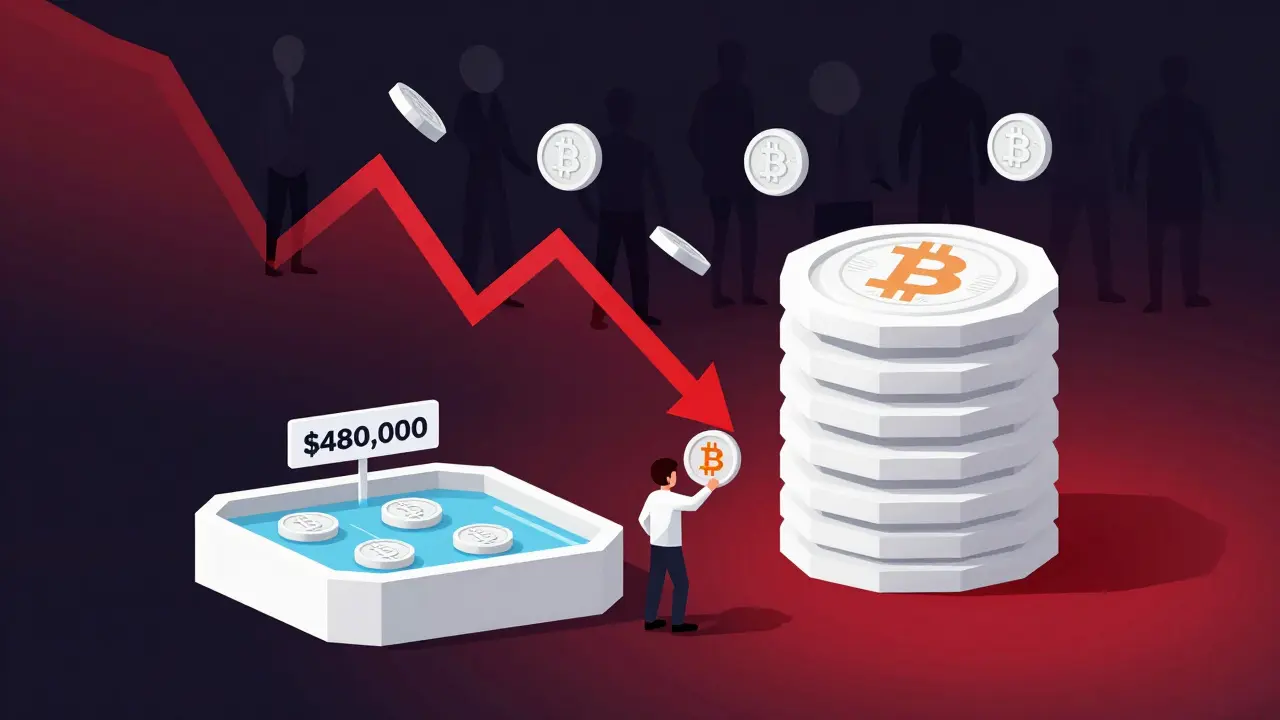
Most social tokens trade on decentralized exchanges with tiny pools of liquidity. According to GeckoTerminal’s September 2025 data, 61% of social tokens have less than $500,000 in combined liquidity across all major DEXs. Compare that to Bitcoin, which trades over $28 billion daily. That’s a difference of 152 times.
What does that mean in practice? If you try to sell your social token, you might not find a buyer-or if you do, the price will crash the moment you hit sell. Slippage isn’t a minor annoyance here; it’s the norm. On Trustpilot, 63% of negative reviews mention being unable to exit positions without losing 30-70% of their value instantly.
And volatility? It’s brutal. Social tokens have a 30-day price standard deviation of 87.4%, according to Kaiko Research. That’s over three times higher than DeFi utility tokens. One tweet from the creator can send a token up 40%. A negative comment from a fan can drop it 60%. There’s no fundamental analysis that can predict this. It’s pure sentiment.
Concentrated Ownership = Price Manipulation
Who holds most of these tokens? Not the fans. The team.
The Financial Stability Board found that in most social token projects, the top 10 holders control between 58% and 73% of the total supply. That includes the creator, their close friends, early investors, and marketing teams. These are the people who can dump their tokens at any time-and they often do.
Take the ‘Drama Token’ case from July 2025. A creator got into a public feud on Twitter. Within 72 hours, the token lost 92% of its value. Why? Because the team had already sold their holdings in the weeks before the drama went public. The fans were left holding the bag.
Even worse, 42% of social token projects have vesting cliffs under six months. That means insiders can legally sell their entire stake just months after launch. No warning. No notice. Just a big sell-off that tanks the price.
Regulators Are Coming-Hard
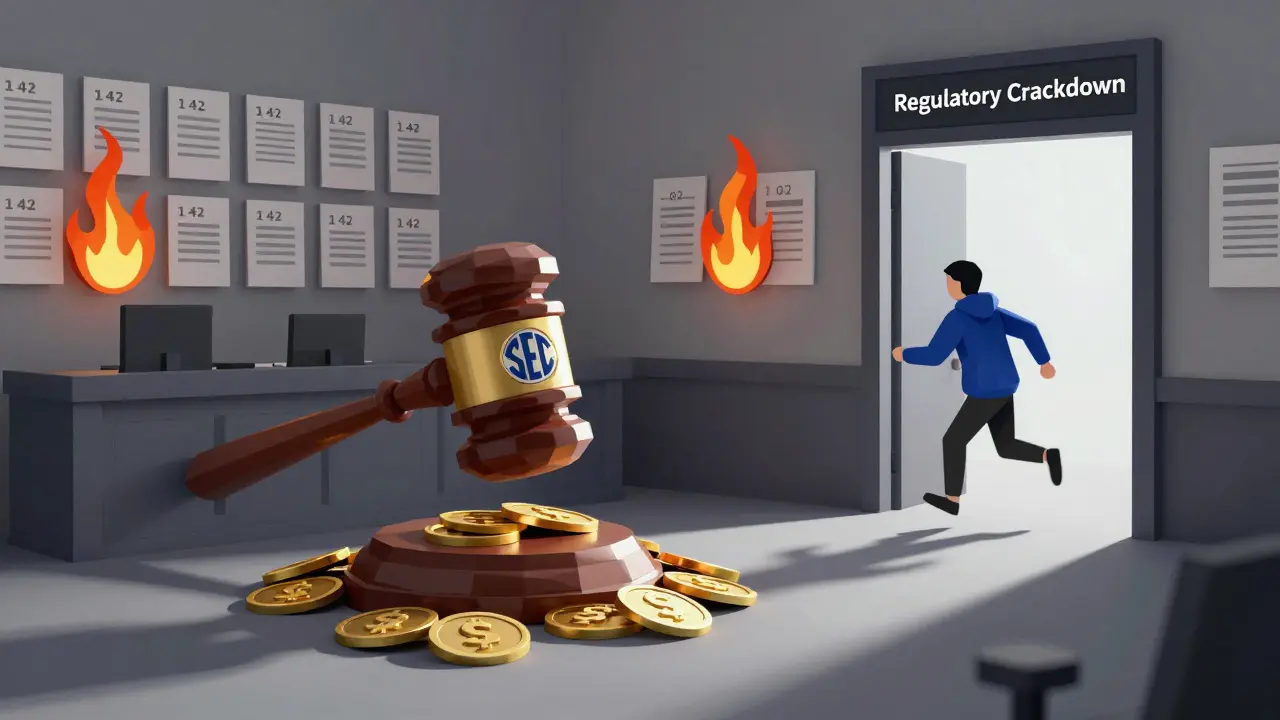
The SEC has been watching. In Q3 2025, they launched 142 investigations into social token projects for potential unregistered securities offerings. That’s 38% of all crypto-related enforcement actions.
Why? Because many social tokens act like securities: they promise future profits based on the creator’s efforts. The SEC’s August 2025 Rule 19c-4 amendment now says: if a token’s value depends heavily on the creator’s ongoing work, it’s a security-and must be registered. Only 12% of existing social tokens meet the ‘sufficient decentralization’ test to avoid this.
It’s not just the U.S. The UK’s FCA forced 38% of small creator tokens off exchanges in July 2025 after requiring them to hold 12 months of operational reserves. The EU’s MiCA rules now classify many social tokens as asset-referenced tokens, triggering strict disclosure rules. In the UK, the Bank of England capped individual holdings at £20,000.
These aren’t warnings. They’re enforcement actions. And they’re making exchanges delist tokens overnight. In 2025, over 60% of social tokens lost exchange listings within a year of launch.
Most Projects Die Within Two Years
How long do social tokens last? Morgan Stanley’s research shows the average survival rate is just 34 months-less than three years. Compare that to DeFi tokens, which last an average of 58 months.
Why the difference? DeFi tokens have protocols, code, and user bases that keep running even if the founders disappear. Social tokens? They vanish when the creator moves on.
Reddit’s r/CryptoCurrency community documented 2,847 social token failures between January and September 2025. The top complaint? “Abandoned projects.” Forty-one percent of those cases involved creators who stopped posting, stopped replying, and stopped caring-while still holding the majority of tokens.
One example: ArtistCoin. A musician launched a token promising exclusive albums and concert tickets. Within six months, he signed with a major label and stopped updating the community. The token lost 97% of its value in 48 hours.
What About the Success Stories?
You’ll hear about the few winners: Patreon’s token, which kept 85% of its value during the 2025 crash because it had real utility inside the platform. Or the indie game studio that used a token to fund development and gave holders voting rights on future games.
But here’s the catch: these aren’t random social tokens. They’re integrated into functioning platforms with real revenue streams. The token isn’t the product-it’s a feature. And the creators behind them have other income sources. They don’t rely on token price to survive.
That’s the difference between a sustainable model and a gamble. Most social tokens are pure speculation. No revenue. No product. Just hope.
How to Protect Yourself (If You Still Want to Try)
If you’re still considering investing, here’s what you need to do:
- Never invest more than 0.5% of your crypto portfolio in a single social token. Fidelity recommends 1-3% total exposure across the entire category. That’s it.
- Check the token’s liquidity. If the DEX pool is under $1 million, walk away. You won’t be able to sell without crushing the price.
- Look at vesting schedules. Use TokenUnlocks.io. If insiders can dump in 3 months, it’s a red flag.
- Track creator activity. Are they posting weekly? Engaging with fans? Or just promoting the token? If their social media is dead, the token will be too.
- Assume it’s a loss. Treat it like you’re buying a lottery ticket. If it goes up, great. If it goes to zero, you won’t care.
And remember: if a creator says, “This token will make you rich,” they’re not selling you a community-they’re selling you a scam.
Is There Any Future for Social Tokens?
Maybe. But not as investment vehicles.
The future belongs to hybrid tokens-those tied to real revenue sharing, like a percentage of merchandise sales or subscription income. These are rare: only 15% of the market. And even they face regulatory hurdles.
ARK Invest predicts 75-80% of today’s social tokens will vanish by 2027. The survivors won’t be traded on DEXs. They’ll be locked inside platforms like Patreon, Substack, or Discord-used as access keys, not speculative assets.
For now, treat social tokens like fireworks: dazzling at first, but dangerous if you get too close. And always remember-the only person who gets rich from a social token is the one who sold it first.
Are social tokens legal?
It depends. In the U.S., the SEC considers many social tokens unregistered securities if their value depends on the creator’s efforts. The UK and EU have also imposed strict rules. While not outright illegal, most social tokens operate in a legal gray area-and regulators are actively shutting them down. If a project doesn’t register as a security, it risks being delisted, fined, or shut down entirely.
Can I make money from social tokens?
A few people have, but they’re the exception. Most who profit are early insiders or those who sold before the hype died. For the average investor, the odds are terrible. The average social token lost 78% of its value between January and September 2025. If you’re looking for reliable returns, this isn’t the place.
How do I know if a social token is a scam?
Watch for these signs: no clear utility beyond speculation, creators with little ongoing engagement, low liquidity ($500K or less), insider holdings over 60%, and promises of guaranteed returns. If the creator talks more about price than community, it’s a red flag. Check TokenSniffer or CertiK for audits-but even those can be misleading if the team controls the wallet.
What’s the difference between social tokens and NFTs?
NFTs represent unique digital items-art, music, collectibles. Social tokens are fungible, meaning each unit is identical and tradeable like Bitcoin. NFTs can be collectibles or access passes. Social tokens are meant to be held, traded, and used for rewards or governance. One is a unique asset; the other is a currency tied to a person or group.
Should I invest in a social token if my favorite creator launched one?
Only if you’re okay losing the money. Supporting your favorite creator is fine-but don’t confuse emotional support with financial investment. If you buy their token hoping to profit, you’re gambling. If you buy it to access exclusive content and accept it might become worthless, that’s a different choice. Never invest more than you can afford to lose-and never rely on it for financial goals.
rachael deal
December 26, 2025 AT 18:39I bought a token from a small YouTuber last year and honestly? It was fun while it lasted. We got exclusive behind-the-scenes clips, early access to merch, and even a shoutout every month. Then she went quiet for three weeks and the price dropped 80%. I didn’t lose much, but I learned the hard way: it’s not an investment, it’s a fan club with extra steps.
Still, I’d do it again if the creator was genuinely engaged. Just don’t expect returns. Expect community.
Andrea Stewart
December 28, 2025 AT 11:52Let’s be real - social tokens are just crypto with a pretty face. The SEC isn’t coming for them because they’re shady, they’re coming because they’re pretending to be something they’re not. If you’re buying a token because your favorite influencer said ‘this will make you rich,’ you’re not an investor. You’re a target.
And yes, liquidity is a nightmare. I tried to dump mine on a DEX and the slippage was 63%. I ended up holding it for a year just to watch it go to zero. Lesson learned: if the creator doesn’t have a real business model, the token is a ghost town waiting to happen.
Josh Seeto
December 29, 2025 AT 04:29Oh wow, another ‘warning’ article that reads like a Fed speech. Congrats, you just spent 10 minutes telling people not to gamble with their money. Who knew? Maybe next you’ll warn us not to touch lava.
Meanwhile, the 12 people who made 100x on Drama Token are laughing all the way to their private islands. The market doesn’t care about your spreadsheets. It cares about hype, timing, and who’s dumb enough to buy at the top.
Mike Pontillo
December 30, 2025 AT 16:52People still fall for this? You think a pop star giving you a Discord badge is worth your life savings? Bro. You’re not investing. You’re paying for a digital autograph that expires when they get bored.
I’ve seen this movie before. Remember the Fyre Festival? Same energy. Same delusion. Same people crying on Reddit when the tents didn’t show up. Social tokens are just Fyre Festival with blockchain glitter.
Joydeep Malati Das
December 31, 2025 AT 06:52As someone from India who has watched crypto trends evolve over a decade, I find this analysis balanced and necessary. The emotional attachment to creators is understandable, but financial decisions must be grounded in structure, not sentiment.
Many here treat tokens like collectibles, but without liquidity, governance, or revenue sharing, they are nothing more than digital confetti. Regulation is overdue. The market needs maturity, not hype.
Elisabeth Rigo Andrews
January 1, 2026 AT 04:28Y’all are missing the point. This isn’t about ‘risk’ or ‘liquidity’ - it’s about power. The creators don’t care if you lose money. They cash out in ETH before the tweetstorm hits. The system is rigged. The entire model is designed to extract value from loyal fans while insiders exit clean.
And don’t even get me started on how the ‘utility’ is always just a whisper. ‘Oh you get a badge!’ Yeah, right. Like a badge pays your rent. This isn’t Web3. It’s Web2 with extra steps and zero accountability.
Adam Hull
January 1, 2026 AT 21:01Let’s be honest - if you’re reading this article, you probably already lost money on a social token. You’re not here to learn. You’re here to rationalize. You want to believe the next one will be different. That the creator ‘really cares.’
They don’t. They’re running a pump-and-dump with a Spotify playlist and a Twitter thread. The fact that you still believe in ‘community’ means you’ve never read the whitepaper. Or the exit plan.
Also, Morgan Stanley? Please. They’re just now noticing what crypto natives knew in 2021. Welcome to the party, Wall Street. The keg’s already empty.
Mandy McDonald Hodge
January 3, 2026 AT 14:53okay so i bought a token from this indie game dev and honestly it was cool bc we got to vote on the next level design and she posted every tuesday like clockwork
then one day she just… stopped. no explanation. no goodbye. just silence. i held it for 8 months hoping she’d come back. she didn’t. the token’s worth 3% now. i’m sad but not mad. i got to be part of something cool while it lasted.
still love her tho. just not with my wallet anymore. 💔
Bruce Morrison
January 5, 2026 AT 01:43If you’re going to invest in a social token, treat it like you’re buying a ticket to a concert. You might have an amazing time. You might get stuck in traffic. You might not even like the band by the end.
But you don’t sell your house to pay for it. You don’t expect the band to make you rich. You do it because you love the music.
Same here. Support the creator. Don’t bet on them.
Jordan Fowles
January 6, 2026 AT 10:22The real tragedy isn’t the collapse of social tokens - it’s the illusion they sold us. That we could bypass traditional finance and build direct, meaningful economies with creators. That technology would empower the individual.
Instead, we got speculation dressed up as solidarity. A system that rewards the already wealthy, exploits the loyal, and leaves the rest holding digital dust.
Maybe the future isn’t in tokens at all. Maybe it’s in platforms that pay creators fairly, without turning fans into gamblers.
Steve Williams
January 8, 2026 AT 02:22Thank you for this comprehensive and sobering analysis. In Nigeria, we have seen similar patterns with influencer-backed crypto projects - often promoted through WhatsApp groups with promises of quick wealth. The emotional manipulation is profound.
It is not merely a financial risk; it is a social one. Trust is eroded. Communities are fractured. And when the token crashes, the human cost is rarely acknowledged.
Regulation is not the enemy. It is the shield we need to protect the vulnerable from those who exploit their admiration.
Shawn Roberts
January 8, 2026 AT 18:09bro i bought 5000 of this one token just bc my fave streamer said ‘it’s gonna moon’
he literally said it in a stream and i lost my mind
now i just use it to buy his merch and pretend it’s a loyalty card
at least i got a hoodie out of it 😅
Abhisekh Chakraborty
January 9, 2026 AT 12:45Everyone’s acting like this is new. In 2018, we had meme coins. In 2021, we had NFTs. Now it’s social tokens. Same script. Same victims. Same predators.
The only difference? Now they’re using TikTok instead of Reddit. And the victims are younger. That’s the real horror story.
dina amanda
January 9, 2026 AT 18:09Of course the SEC is coming. They’re scared. Because if people start trusting creators instead of banks, the whole system collapses. This isn’t about fraud - it’s about control. They don’t want you to have power. They want you to work for them and wait for your paycheck.
They’re banning social tokens because they’re too democratic. That’s the real danger.
Emily L
January 11, 2026 AT 17:36so i just sold my entire social token stash after reading this and honestly? i feel so much better. like i was living in a dream. i thought i was part of something cool. turns out i was just funding someone’s vacation.
now i’m just gonna support my favorite artists the old fashioned way. buy their albums. go to their shows. stop giving them crypto.
Gavin Hill
January 12, 2026 AT 01:30It’s not about the token. It’s about the relationship. If the creator treats you like a customer, you’re a customer. If they treat you like a community, you’re part of something real.
Most social tokens fail because the creator forgot who they were building for. Not the investors. Not the speculators. The fans.
And fans don’t care about price charts. They care about connection.