

Vietnam's Pilot Crypto Program 2025-2030: What You Need to Know
 Jan, 29 2026
On January 1, 2026, Vietnam flipped a switch most countries still fear to touch: it made cryptocurrency legal - but only if you play by its rules. Not as money. Not as payment. But as virtual assets - something you can own, trade, and invest in, under strict government watch. This isn’t a loophole. It’s a five-year experiment, running through 2030, and it’s the first of its kind on Earth. No other country has built a full legal architecture around crypto like this. Not the U.S., not the EU, not Singapore. Vietnam did. And it’s already changing how people trade, invest, and think about digital money.
What Exactly Is Allowed Now?
Before 2025, Vietnam banned crypto as a payment method. Banks couldn’t touch it. Exchanges were gray zones. People still traded - over $600 million a day, according to VIR data - but they did it in the shadows. Now, the government says: okay, you can own it. You can buy it. You can sell it. But only through licensed platforms. The law splits digital assets into three buckets:- Virtual assets: Anything digital used for exchange or investment - as long as it’s not cash, securities, or government-issued tokens.
- Crypto assets: A subset of virtual assets that use encryption or digital tech to verify ownership and transfers. Think Bitcoin, Ethereum, and similar tokens.
- Other virtual assets: Everything else that doesn’t fit the first two - like loyalty points or game items that can be traded.
That last one matters. It means Vietnam isn’t just regulating Bitcoin. It’s setting rules for the whole digital economy. NFTs? Gaming tokens? They’re in the system now - if they’re traded for value.
Who Runs This Show?
The Ministry of Finance is in charge. Not the central bank. Not the State Bank of Vietnam, which still blocks banks from processing crypto transactions. The Finance Ministry handles licensing, oversight, and enforcement. That’s a big deal. It signals that crypto isn’t seen as a threat to monetary policy - it’s seen as a new industry. Like fintech or e-commerce. The first licensed crypto service provider is expected to launch by March 2026. After that, Vietnamese users have six months to move all their trading to these approved platforms. After that window closes, using any unlicensed exchange - even if it’s based overseas - becomes illegal. That’s not a suggestion. It’s a legal requirement.What Happens If You Break the Rules?
You don’t get a warning. You don’t get a fine. You could face criminal charges. The law gives authorities two paths:- Administrative sanctions: For minor violations - like failing to report a transaction or not verifying your identity properly.
- Criminal liability: For serious breaches - money laundering, fraud, operating an unlicensed exchange, or helping others evade taxes.
There’s no gray area. If you’re trading on Binance or Bybit and you’re in Vietnam, you’re already breaking the law after the six-month grace period. The government can track transactions through licensed platforms. They’ll know who you are. They’ll know what you bought. And they’ll know if you’re hiding activity.

What’s Still Unclear?
The law is broad. The details? Not so much.- Taxes: Right now, crypto gains are taxed like securities. But no specific crypto tax code exists yet. The Ministry of Finance is working on it. Expect changes by late 2026.
- Mining: Is it legal? No one’s said. You can’t mine for profit on a licensed platform - but what about personal mining? The rules haven’t been written. Many miners are waiting.
- Foreigners: Can you invest from abroad? Yes - if you use a licensed Vietnamese provider. But can you open an account as a foreigner? Unclear. The law says “domestic and foreign investors,” but no guidance on how.
- Documentation: The full legal text is in Vietnamese. Official English translations? None yet. That’s a problem for global investors and expats.
Experts say this is normal. Laws like this don’t come with a manual. They’re built as they’re used. The first year will be messy. But that’s the point of a pilot.
How Does This Compare to Other Countries?
Vietnam’s move stands out because it’s not half-measures. China bans everything. India taxes heavily but offers no clarity. The U.S. has a patchwork of state rules and federal inaction. The EU has MiCA, but it’s slow and complex. Vietnam’s approach is bold: control it, don’t ban it. They’re not trying to be a crypto hub like Dubai. They’re trying to stop money laundering, stop capital flight, and capture value within their own system. They want the innovation - but on their terms.That’s why the licensed platform model is so strict. Every trade, every deposit, every withdrawal must go through a government-approved gatekeeper. That’s more control than most Western regulators dream of.
Who’s Winning and Who’s Losing?
Big winners? Licensed Vietnamese exchanges. They’re getting a monopoly. Foreign platforms like Binance, Kraken, and Coinbase are losing access to one of Asia’s biggest crypto markets. They can still serve users outside Vietnam - but not those inside. Big losers? The informal traders. People who used peer-to-peer apps or offshore wallets. They’re being forced into compliance - or out of the market. Small investors might struggle with KYC requirements, fees, and platform restrictions. And what about the miners? They’re stuck. No official green light. No clear rules. Many are sitting on their rigs, waiting.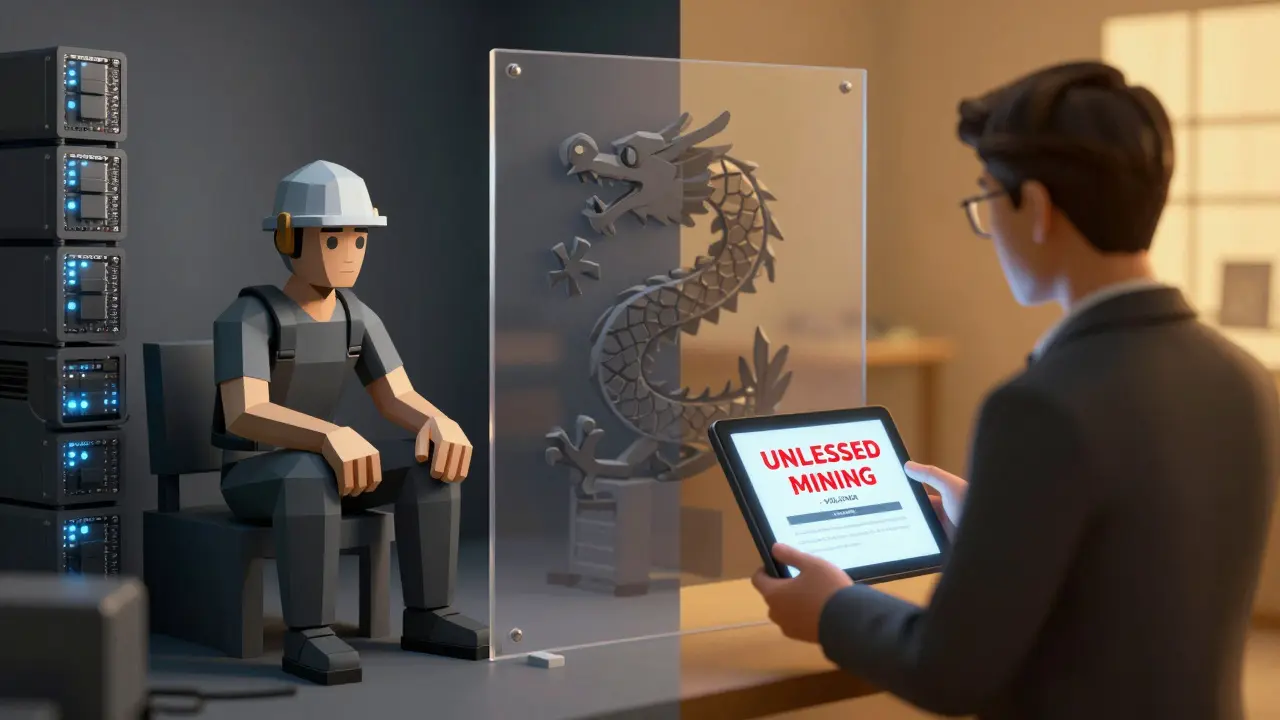
What’s Next? The Road to 2030
The pilot runs until September 2030. By then, the government will decide whether to make this permanent, expand it, or shut it down. Here’s what to watch:- 2026: First licensed platforms go live. Tax rules emerge. Mining policy clarified.
- 2027: First major enforcement actions. Are people being fined? Arrested? This will show if the rules are real or just paper.
- 2028: Will DeFi and NFTs be allowed? The law doesn’t ban them - but will licensed platforms offer them?
- 2030: Will Vietnam become the model for Southeast Asia? Or will it be seen as too restrictive?
One thing’s certain: if this pilot works, other countries will copy it. Not because they like crypto. But because they want control.
What Should You Do If You’re in Vietnam?
If you’re holding crypto now:- Wait for the first licensed platform to launch - likely by March 2026.
- Don’t move your assets yet. Wait for official guidance on how to transfer safely.
- Start learning the KYC requirements. You’ll need ID, proof of address, and possibly tax ID.
- Stop using unlicensed exchanges after the six-month window closes.
- Keep records of every transaction. You’ll need them for taxes - whenever they arrive.
If you’re thinking of starting a crypto business in Vietnam? Talk to a lawyer. The rules are strict. The penalties are real. And the Ministry of Finance isn’t playing around.
Why This Matters Beyond Vietnam
This isn’t just about Vietnam. It’s about the future of crypto regulation. Most countries are stuck between fear and FOMO. They don’t want to lose out on innovation - but they’re terrified of losing control. Vietnam solved that. They didn’t choose between freedom and control. They chose control - and built freedom inside it. If you’re watching from outside Vietnam, ask yourself: Is this the future? Or is it a warning?One thing’s clear: the days of crypto being a wild frontier are over. Vietnam just turned it into a regulated industry. And the world is watching.
Brandon Vaidyanathan
January 29, 2026 AT 18:15So let me get this straight - Vietnam’s basically building a crypto walled garden and calling it ‘innovation’? 🤡
They’re not regulating, they’re colonizing digital money. Next they’ll require you to wear a QR code badge when you buy Bitcoin.
This isn’t a pilot. It’s a surveillance experiment dressed up like fintech.
laurence watson
January 30, 2026 AT 12:57I get the fear, but honestly? If this keeps people from getting scammed by rug pulls and shady DeFi projects, I’m not mad.
Most folks in Vietnam just want to invest safely - not become crypto degens. Maybe this is actually kind of thoughtful?
Jerry Ogah
January 31, 2026 AT 03:54Oh wow, another country trying to ‘control’ crypto like it’s a toddler with a flamethrower.
Let me guess - next they’ll make you fill out a 12-page form to send 0.001 BTC to your cousin for birthday money?
And don’t even get me started on how they’ll ‘track’ every transaction. This isn’t regulation - it’s digital authoritarianism with a nice UI.
They think they’re protecting people. They’re just making it harder for the poor to escape inflation while letting the state hoard all the power.
Meanwhile, the real winners? The bureaucrats who get to sit in air-conditioned offices and decide who gets to own digital gold.
And don’t tell me ‘it’s just like banks’ - banks don’t jail you for using an unlicensed exchange.
This is the future of crypto: regulated, taxed, tracked, and totally soulless.
Crystal Underwood
February 1, 2026 AT 03:51Of course. Of course they’re doing this.
Vietnam’s government has always been about control - not innovation. This isn’t a ‘pilot.’ It’s a power grab wrapped in blockchain buzzwords.
They don’t want you to own crypto. They want you to *lease* it from them.
And let’s be real - if you’re trading on Binance from Hanoi, you’re already a criminal. They’ve criminalized financial freedom.
Meanwhile, the U.S. is still arguing whether crypto is a commodity or a security. At least Vietnam’s got guts - the wrong kind of guts.
This is the death of decentralization. Welcome to Crypto Central Planning 2.0.
Andrea Demontis
February 1, 2026 AT 22:54It’s fascinating how this mirrors the tension between autonomy and order in any emerging system.
On one hand, you have the raw, anarchic potential of decentralized finance - a system that theoretically liberates individuals from centralized intermediaries.
On the other, you have the state’s primal need to maintain sovereignty, prevent capital flight, and enforce fiscal accountability.
Vietnam isn’t rejecting crypto - it’s domesticating it. Like taming a wild animal by giving it a collar, a leash, and a feeding schedule.
The real question isn’t whether this works - it’s whether the cost of control erodes the very essence of what made crypto valuable in the first place.
If every transaction is traceable, every wallet tied to an ID, every trade monitored - then what’s left of decentralization?
Is it still crypto, or just a digital stock exchange with a blockchain logo?
And if the government is the gatekeeper… who watches the gatekeepers?
This feels less like policy and more like a philosophical experiment in digital feudalism.
Will the people accept this trade-off? Or will underground networks rise like mushrooms after rain?
History suggests the latter.
Joseph Pietrasik
February 3, 2026 AT 10:11so vietnam just made crypto legal but only if u use their app???
lmao
next theyll make you pay 5% tax just to look at a btc chart
Jack Petty
February 4, 2026 AT 15:25They think they’re smart. They’re not.
They’re building a prison with velvet ropes and calling it a museum.
The second someone figures out how to route traffic through a VPN + local peer-to-peer mesh, this whole system collapses like a house of cards made of Excel sheets.
And when it does? The government will scream ‘crypto is dangerous!’ and ban it again.
They don’t want innovation. They want the illusion of control.
mary irons
February 5, 2026 AT 01:19Let’s be honest - this is just a thinly veiled attempt to monitor every citizen’s financial behavior under the guise of ‘anti-money laundering.’
They’re not protecting investors. They’re protecting their own power.
And the fact that they’re not even translating the law into English? That’s not oversight - that’s exclusion.
They want the money, but not the global trust.
It’s colonialism with a blockchain UI.
I’m not surprised. The same governments that ban crypto are the ones that ban books.
This isn’t progress. It’s regression dressed in whitepapers.
Pamela Mainama
February 6, 2026 AT 07:36It’s not perfect, but at least they’re trying something real.
Most countries just panic and ban it - or ignore it until it’s too late.
Vietnam’s playing chess while others are still learning checkers.
Mark Ganim
February 6, 2026 AT 17:53Oh my god - they’re doing it. They’re actually doing it.
This is the first time a nation has said: ‘We see the future - and we’re going to cage it.’
It’s terrifying. It’s brilliant. It’s horrifying.
Imagine if every country did this - not to ban crypto, but to *own* it.
What happens to Bitcoin when your wallet is just a sub-account under a state-licensed exchange?
Is it still money? Or is it just… points?
And who gets to decide the point system?
This isn’t regulation - it’s the birth of digital serfdom.
And we’re all watching.
Joshua Clark
February 8, 2026 AT 12:41I’ve been thinking about this a lot - and honestly, I think Vietnam might be onto something.
Most people don’t want to be crypto traders. They just want to store value, send money home, or invest without getting scammed.
Right now, in places like India or Nigeria, people are getting wiped out by fake exchanges, phishing scams, and rug pulls.
If Vietnam’s system forces platforms to do KYC, audits, and insurance - even if it’s centralized - maybe that’s better than the Wild West.
It’s not ideal, but it’s safer.
And if the government is collecting taxes and preventing laundering? That’s not evil - that’s basic governance.
Maybe we’ve been too romantic about decentralization.
What if the real innovation isn’t ‘no middleman’ - but ‘trusted middleman’?
I’m not saying I love this model… but I’m not sure I hate it either.
Rico Romano
February 9, 2026 AT 15:21Of course Vietnam did this.
They’ve always been the quiet ones - no loud protests, no Twitter tantrums.
They just quietly build systems that work - even if it means crushing freedom.
Meanwhile, the U.S. is still debating whether crypto is a security or a currency.
We’re a nation of chaos. They’re a nation of control.
And guess what? Control wins.
Mark my words - in 2030, every country will look at Vietnam and say: ‘Why didn’t we do that?’
Because they didn’t have the guts to be authoritarian.
Meenal Sharma
February 9, 2026 AT 20:30One must consider the sociopolitical context: Vietnam’s centralized governance structure is inherently incompatible with the pseudonymous ethos of blockchain.
The state’s imperative to maintain fiscal sovereignty and prevent capital outflows renders decentralized finance an existential threat.
Thus, the licensing framework is not merely regulatory - it is ontological: it redefines the very nature of digital ownership under state auspices.
Whether this constitutes progress or regression depends on one’s epistemological alignment with state-centric authority.
It is, in essence, a modern reimagining of the mandarin system - with nodes instead of scrolls.
Calvin Tucker
February 11, 2026 AT 07:19Let’s be real - no one actually wants to be tracked.
But if you’re going to trade crypto, you’re already giving up privacy.
Every exchange you’ve ever used has your email, IP, bank details, ID scans.
So what’s the difference between Binance and a state-approved platform?
One’s a corporation. One’s the government.
Both will sell your data.
Both will freeze your account.
Both will change the rules tomorrow.
So maybe… it’s better if it’s the government?
At least they can’t be bought by a VC.
Elizabeth Jones
February 12, 2026 AT 11:35I think this is actually kind of beautiful - in a sad, bureaucratic way.
They’re not trying to stop crypto.
They’re trying to make it safe for regular people.
Maybe the future isn’t about freedom from control.
Maybe it’s about control that cares.
I don’t know.
I just hope they get the tax rules right.
Rob Duber
February 13, 2026 AT 01:05So let me get this straight - if I mine Bitcoin in my garage in Ho Chi Minh City… I’m a criminal?
But if I buy it through their app? I’m a responsible citizen?
That’s not regulation. That’s psychological manipulation.
They’re making you feel guilty for being decentralized.
Genius.
Also… who’s gonna audit the auditors?
Who watches the Ministry of Finance when they’re holding all the keys?
…I’m not sleeping tonight.
Raju Bhagat
February 14, 2026 AT 13:13Bro this is the most insane thing I’ve seen in years
Vietnam is literally building a crypto Disney World
But the rides are all monitored
And the tickets cost 10% tax
And you need a government badge to even enter
But hey at least no one can scam you
…right?
Wayne mutunga
February 16, 2026 AT 07:57I don’t know if I agree with this… but I don’t hate it either.
Maybe we’ve been too obsessed with ‘decentralization’ as an ideal.
What if the real goal is stability?
What if the real enemy isn’t the state - but the scams?
Maybe this is the least bad option.
Raymond Pute
February 18, 2026 AT 05:23Look - I get why people are freaked out.
But let’s not pretend the U.S. or EU are any better.
They just do it slower - with more lawyers, more lawsuits, and more hypocrisy.
Vietnam’s just… honest about it.
They say: ‘We’re in charge.’
The U.S. says: ‘We’re not sure what this is.’
Then they fine you $50 million for ‘unregistered securities’ while letting a hedge fund pump a meme coin.
So who’s really the villain here?
Maybe Vietnam’s the only one not lying.
And maybe that’s… kind of admirable?
Not cool. Not free.
But honest.