

What is Base@FarCon 2025 (BASEFARCON) crypto coin?
 Feb, 3 2026
Base@FarCon 2025, or BASEFARCON, isn’t a cryptocurrency built to change the world. It wasn’t created to solve a problem, improve payments, or power decentralized apps. It was launched as a marketing stunt - a fleeting moment wrapped in code, meant to spark attention, not value.
A token born from controversy
BASEFARCON dropped on May 20, 2025, right after Base - Coinbase’s Ethereum Layer 2 network - ran a campaign called "Base is for everyone." That campaign had its own token, which was gaining real traction. Then, without warning, Base rolled out BASEFARCON. The community felt blindsided. Within hours, the original "Base is for everyone" token crashed 99%. People called it a betrayal. The backlash was loud, fast, and ugly.
BASEFARCON isn’t traded like normal crypto. It’s listed on exchanges like Coinbase, Binance, and Poloniex, but here’s the odd part: those same exchanges say zero tokens are in circulation. Yet CoinMarketCap claims over 96,500 wallets hold it. How? Most of those wallets are likely just sitting on the tokens, never trading. No volume. No activity. Just holding.
Technical details: A token designed to discourage trading
BASEFARCON runs on the Base blockchain, using the ERC-20 standard. Its contract address is 0x6977...60A0d4. That’s public. But the real story is in its rules.
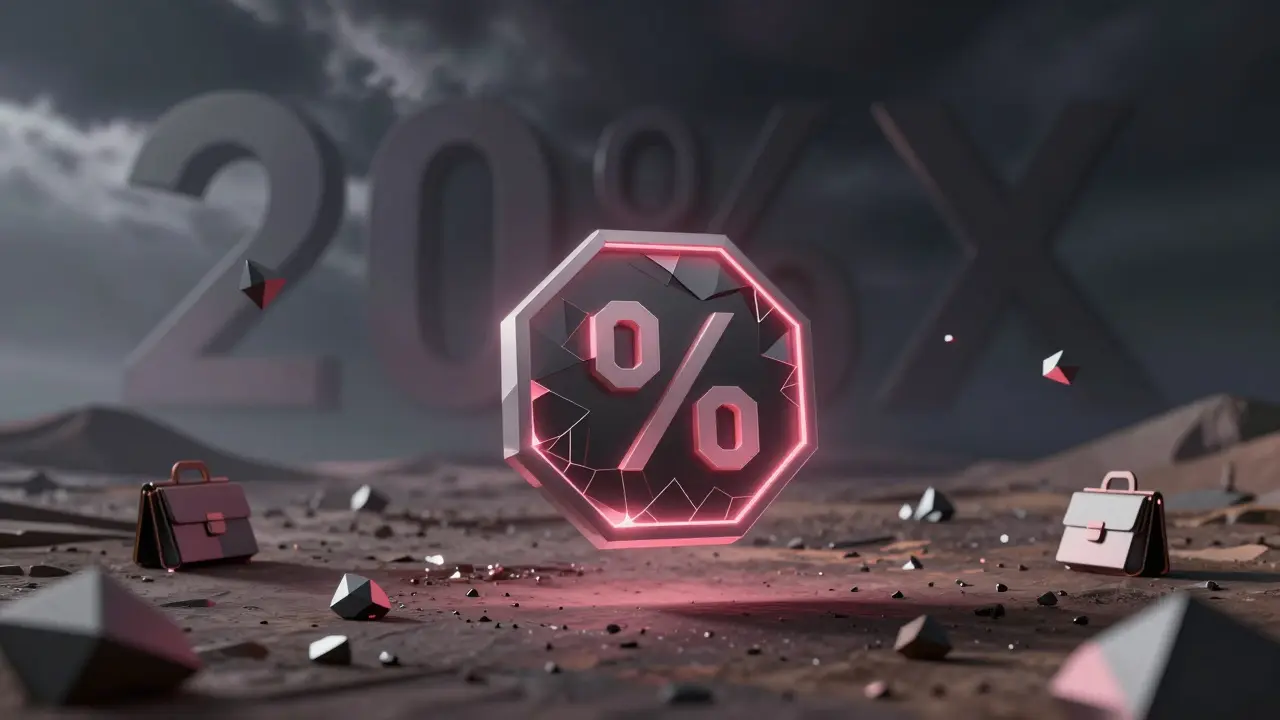
Every time someone buys, sells, or transfers BASEFARCON, a 20% tax is slapped on the transaction. That’s not a fee. That’s a wall. If you buy $100 worth, $20 vanishes before you even get the tokens. If you try to sell, another $20 gets taken. That’s why trading volume is consistently reported as $0 across all major platforms. No one wants to pay 20% just to move a token that’s already lost 87% of its value since launch.
The price peaked at $0.0001511 on day one. By December 2025, it was trading around $0.000017. That’s not volatility - that’s a collapse. Market cap? Just $19,390. For context, a single popular meme coin like DOGE has a market cap in the billions. BASEFARCON is a speck.
Who owns it? The concentration problem
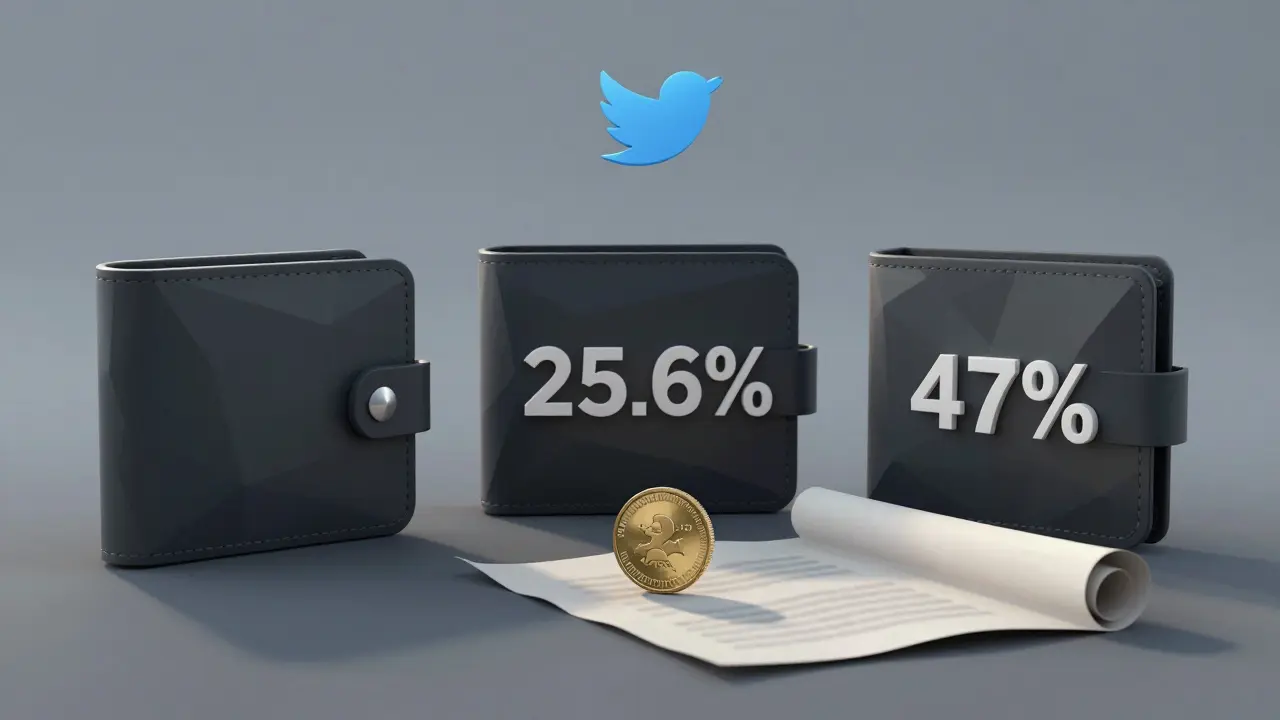
Ownership is terrifyingly centralized. According to MEXC’s analysis, the top three wallets control 47% of all BASEFARCON tokens. One single wallet holds 25.6%. That’s not decentralization. That’s a handful of people holding the keys to a coin nobody wants to trade.
This setup raises red flags. With so much supply in so few hands, those wallets could dump their tokens at any time and crash the price further. Or worse - they could manipulate the market by creating fake trades to make it look active. No one’s doing that either. The lack of volume suggests even the big holders are afraid to move.
Is it a meme coin? A content coin? Or just a scam?
Base’s lead developer, NKECHI, tried to reframe it. On Twitter, they called BASEFARCON a "content coin," not a meme coin. "What you buy is not a project, but a moment, an atmosphere, and a culture," they said. It sounds poetic. But poetry doesn’t pay bills.
Real crypto projects have roadmaps, teams, utilities, and users. BASEFARCON has none. No updates since launch. No new features. No partnerships. No developer activity. Just a website - farcontokenoff.xyz - with a whitepaper you can’t access and no way to contact anyone behind it.
It’s not a scam in the traditional sense. No one promised returns. No one ran a pump-and-dump scheme. But it’s a textbook example of a marketing experiment gone wrong. Base used Zora - a platform for NFTs and on-chain art - to mint the token. Zora’s revenue spiked to $137,000 in a single day from the chaos. Base got headlines. Zora got cash. The community got burned.
Why does it even exist?
Base’s goal wasn’t to build a currency. It was to test how far it could push the boundaries of "on-chain culture." They wanted to see if people would buy a token just because it was tied to an event, even if it had no function. The answer? A few thousand people bought it. Most didn’t trade it. The rest ignored it.
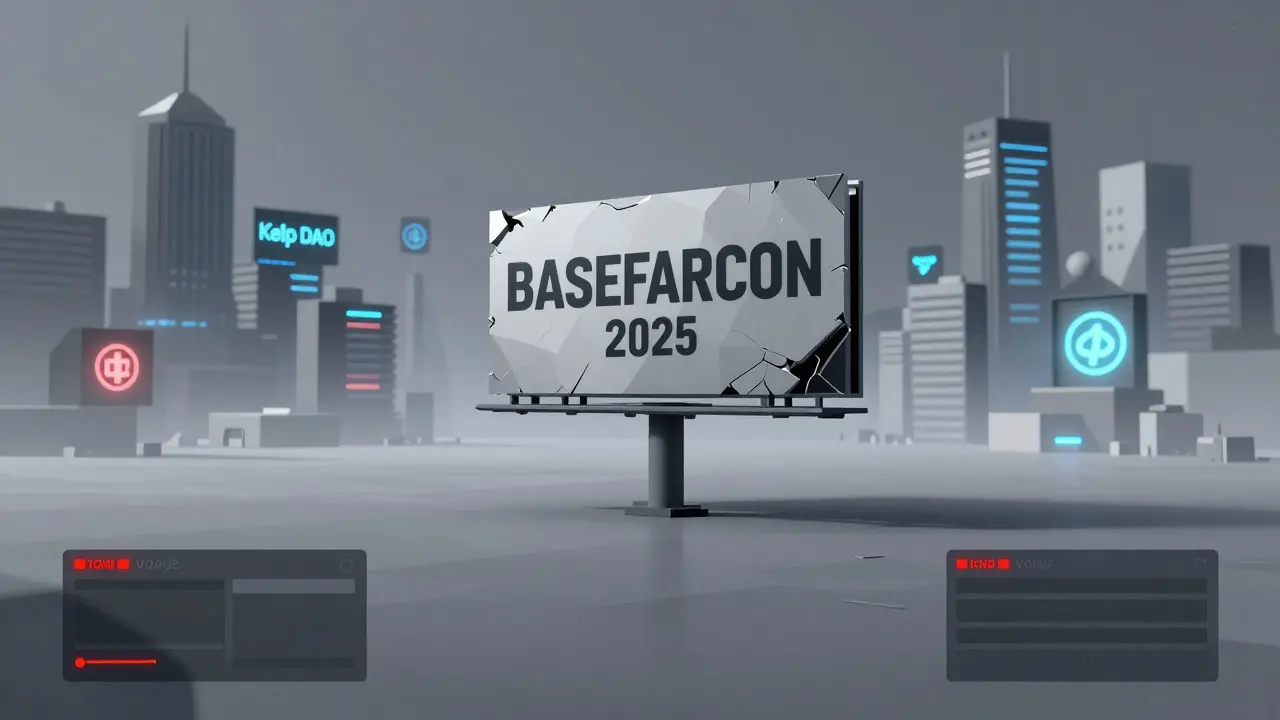
Compare it to other tokens on Base. The native BASE token has billions in trading volume. Projects like Kelp DAO, Frax, and Degen have real users and utilities. BASEFARCON is a ghost town in a bustling city.
Should you buy it?
Here’s the truth: if you’re thinking of buying BASEFARCON, you’re not investing. You’re gambling on a joke.
There’s no upside. The 20% tax makes any trade a loss. The price is stuck in a death spiral. The holders aren’t active. The team isn’t talking. The exchanges aren’t promoting it. Even Coinranking, which lists over 50,000 cryptocurrencies, gives it a ranking of #51,802 - and explicitly warns users it’s unverified and risky.
Some people bought it as a curiosity. Others as a protest. A few thought it might rebound. None of those reasons are sound investment strategies. If you already own it, you’re holding a digital artifact of a failed experiment. If you don’t, there’s no reason to start.
The bigger lesson
BASEFARCON isn’t about the token. It’s about what happens when big companies treat crypto like a viral TikTok trend. They think hype = value. They think launching a token = building a community. They’re wrong.
Real crypto grows through utility, transparency, and trust. BASEFARCON had none of that. It was a flash in the pan - a moment of noise, not innovation. And like most noise, it faded.
If you want to understand crypto, don’t look at BASEFARCON. Look at what happened after it launched. Base’s main ecosystem kept growing. Zora’s revenue dropped back to normal. The community moved on. The token? It’s still there - sitting in wallets, collecting dust, quietly proving that not everything with a blockchain behind it is worth owning.
Is BASEFARCON a real cryptocurrency?
Yes, technically. It’s a token on the Base blockchain with a contract address, supply, and listings. But it lacks the core traits of a functional cryptocurrency: trading volume, utility, active development, or community-driven growth. It’s more of a digital artifact than a currency.
Can I trade BASEFARCON for profit?
It’s nearly impossible. The 20% transaction tax means every trade loses value immediately. With near-zero volume, there’s no liquidity - you won’t find buyers or sellers at any reasonable price. Even if the price rises slightly, you’d still lose money after fees. Most holders are just sitting on it.
Why does CoinMarketCap show 96,500 holders if no one is trading?
The 96,500 holders are wallets that received the token during launch or via transfers. But holding ≠ trading. Many of these are likely inactive, abandoned, or held by bots. The fact that exchanges report zero circulating supply confirms that no meaningful trading is happening. It’s a disconnect between ownership data and actual market activity.
Is BASEFARCON related to Coinbase?
Yes, indirectly. BASEFARCON was launched by Base, which is owned by Coinbase. It was part of a marketing push tied to FarCon 2025. But Coinbase itself didn’t promote it as an investment. They framed it as a "content coin" - a cultural experiment. The company has since moved on and doesn’t reference it in official communications.
Can I use BASEFARCON to buy anything?
No. There are no merchants, platforms, or services that accept BASEFARCON as payment. It has zero utility outside of speculative holding. Even within the Base ecosystem, it’s ignored. It doesn’t pay for gas, access to apps, or NFTs.
Is BASEFARCON a scam?
It’s not a classic scam like a rug pull, where devs vanish with funds. No one stole money. But it’s a manipulative marketing tactic disguised as a crypto project. It exploited community trust, created artificial hype, and left holders with a worthless asset. Many experts consider it a cautionary example of how not to launch a token.
Will BASEFARCON ever recover?
Extremely unlikely. There’s no roadmap, no team activity, no community demand, and no incentive to trade. The 20% tax alone makes recovery impossible without a complete overhaul - which isn’t happening. It’s effectively dead as a functional asset. Its only legacy is as a case study in poor crypto marketing.
Freddie Palmer
February 4, 2026 AT 17:28Okay, so let me get this straight: Base launched a token with a 20% tax on every single transaction… and then acted surprised when no one wanted to trade it?
That’s not innovation. That’s trolling with a whitepaper.
I’ve seen rug pulls. I’ve seen pump-and-dumps. But this? This is the first time I’ve seen a company intentionally design a token to be untradeable… and then call it "culture."
It’s like opening a restaurant, putting a $200 cover charge on every bite, and then saying "we’re serving an experience."
People didn’t get burned because they were stupid. They got burned because they trusted a brand they thought had integrity.
Taybah Jacobs
February 4, 2026 AT 22:28While I appreciate the thoroughness of this analysis, I must respectfully point out that the emotional response to BASEFARCON may have been disproportionate to its actual impact.
It is true that the token lacks utility, liquidity, and developer engagement.
However, one might also argue that it serves as a valuable case study in the unintended consequences of centralized entities attempting to co-opt decentralized cultural movements.
Perhaps its greatest legacy lies not in its market value, but in the dialogue it provoked regarding the ethics of corporate crypto experimentation.
That said, I would not recommend any individual allocate capital to this asset.
Udit Pandey
February 5, 2026 AT 03:02Base is an American company. They do not owe the global crypto community anything.
They built a blockchain. They ran a campaign. They minted a token.
Those who bought it did so voluntarily. No one forced them.
If you bought a token with a 20% tax and expected to profit, you were not investing-you were gambling on a joke.
Stop crying about it.
India has built real infrastructure. We don’t waste time on digital theater.
BASEFARCON is a lesson in hubris. Not a scandal.
mahikshith reddy
February 6, 2026 AT 02:4220% tax? LOL.
They didn’t make a coin.
They made a meme.
And now the meme is dead.
But the real joke? The fact that people still talk about it.
It’s not a token.
It’s a funeral.
And we’re all just standing around it taking selfies.
Brendan Conway
February 7, 2026 AT 19:44man i just don’t get why people are so mad
i mean… it’s a token
it’s not like base promised us world peace or free pizza
they threw a party
some people showed up
others didn’t
the party ended
the music stopped
and now we’re all just… arguing about the playlist
like… chill out
it was never meant to last
it was meant to be a vibe
and vibes don’t need a whitepaper
Matt Smith
February 9, 2026 AT 08:37OMG I can’t believe this is real 😭
20% tax? Zero volume? 96k wallets with 0 activity? 😂
This isn’t crypto.
This is a TikTok trend that got a blockchain.
Base didn’t lose trust.
They just proved that their "community" is just a bunch of people who bought a token because it had a cool name.
And now? They’re all just… sitting there.
Like… staring at a $0 balance like it’s gonna magically turn into $1000.
It’s tragic.
And hilarious.
And also… kinda beautiful? 🤷♂️
Alex Garnett
February 11, 2026 AT 01:56The fact that anyone still defends this as "art" or "culture" is evidence of the intellectual decay of the crypto space.
A token with no utility, no liquidity, no team, and a punitive tax structure is not a cultural artifact.
It is a failure of governance, a failure of marketing, and a failure of ethics.
Base used Zora to monetize chaos.
They did not build.
They extracted.
And now, the only thing left is a ghost ledger and a thousand wallets holding digital confetti.
There is no lesson here.
Only shame.
Ryan Chandler
February 12, 2026 AT 08:24I’ve been watching this whole thing unfold like a slow-motion train wreck.
Remember when BASEFARCON dropped? The whole crypto world went silent.
Not because it was boring.
But because it was *too* real.
It exposed the lie: that every token needs to be a revolution.
What if… some tokens are just… moments?
Like a concert. A festival. A protest.
You don’t own the sound.
You don’t own the energy.
You just… remember it.
BASEFARCON is that moment.
Not a currency.
A memory.
And maybe… that’s enough.
Ajay Singh
February 14, 2026 AT 04:18Nathaniel Okubule
February 14, 2026 AT 10:17While BASEFARCON lacks traditional utility, I believe it is important to recognize that not all value is financial.
The token has sparked meaningful conversations about corporate responsibility, tokenomics, and the ethics of on-chain culture.
Its existence has prompted developers, regulators, and users to reevaluate what constitutes a legitimate blockchain project.
Perhaps its greatest contribution is not in its market cap, but in the awareness it has generated.
That said, I would still advise against purchasing or trading this asset.
Joshua Herder
February 15, 2026 AT 14:24Let’s go deeper.
BASEFARCON isn’t just a failed token.
It’s a mirror.
It reflects the entire crypto ecosystem’s obsession with novelty over substance.
Every time a project launches a token with zero utility, we say "it’s a meme" or "it’s for culture."
But then we get mad when the meme dies.
We want the hype.
We want the price spike.
We want the narrative.
But we don’t want the responsibility.
We don’t want to ask: "Who benefits?"
Base did.
Zora did.
The community? They got a lesson in capitalism dressed up as decentralization.
And now we’re all just… waiting for the next one.
Because we know it’s coming.
And we’ll fall for it again.
Brittany Coleman
February 16, 2026 AT 13:40I think we’re all projecting.
We’re angry because we wanted to believe.
We wanted BASE to be the good guy.
We wanted this to be about culture, not cash.
But it wasn’t.
And that’s okay.
Maybe the real mistake was believing that a corporation could ever be trusted to lead a cultural movement.
Not the token.
Not the tax.
Our own hope.
laura mundy
February 18, 2026 AT 04:17They didn’t create a coin.
They created a trigger.
For rage.
For memes.
For outrage.
For people like us.
Who sit here arguing about a token with 0 volume.
That’s the real scam.
Not the 20% tax.
The attention economy.
They didn’t sell tokens.
They sold outrage.
And we bought it.
Every single one of us.
Mendy H
February 20, 2026 AT 00:55This is the most boring thing I’ve read all week.
20% tax? 96k wallets? Market cap under $20k?
Who cares?
There are 50,000 coins on CoinMarketCap.
Why is this one special?
Because it embarrassed a big company?
So what?
Move on.
This isn’t journalism.
This is a Yelp review for a token.
sabeer ibrahim
February 21, 2026 AT 14:49The 20% tax is a brilliant anti-speculative mechanism.
It filters out the degens.
It filters out the whales.
It filters out the traders.
What remains?
True believers.
Those who hold not for profit, but for principle.
Those who understand that value isn’t measured in USD.
It’s measured in cultural resonance.
BASEFARCON is the first token designed to be held, not sold.
And that… is revolutionary.
David Bain
February 23, 2026 AT 04:57The ontological status of BASEFARCON remains unresolved.
Is it a token? A symbol? A performative act?
Its existence challenges the very epistemology of crypto-asset valuation.
By design, it defies liquidity metrics, market cap benchmarks, and utility-based frameworks.
It is not a failure.
It is a counter-model.
A negative space.
A void that reveals the contours of what we thought we valued.
And in that void… we see ourselves.
Deeksha Sharma
February 24, 2026 AT 10:14I think this is beautiful.
Not because it made money.
But because it made people feel.
Angry.
Confused.
Curious.
Even hopeful.
That’s rare.
Most crypto projects don’t even make you blink.
BASEFARCON made you scream.
And sometimes… that’s the most powerful thing you can do.
Freddie Palmer
February 25, 2026 AT 15:26Wait. I just realized something.
BASEFARCON’s real genius?
It didn’t need to be traded.
It needed to be talked about.
And now… here we are.
Arguing about it.
For hours.
On Reddit.
On Twitter.
On blogs.
On YouTube.
It’s not a token.
It’s a viral story.
And stories… outlive coins.