
When navigating the world of Cryptocurrency, digital assets secured by cryptographic techniques and recorded on decentralized ledgers. Also known as digital currency, it enables peer‑to‑peer transactions without banks, you quickly run into a few core concepts that shape every decision.
Understanding Airdrop, a distribution method where free tokens are given to community members in exchange for simple actions helps you spot real opportunities and avoid scams. Meanwhile, a solid grasp of Crypto Exchange, platforms that match buyers and sellers of crypto assets and provide tools for trading, staking or lending is essential for safe trading. Finally, knowing Tokenomics, the economic model behind a token, covering supply, distribution, utility and incentive structures lets you evaluate a project’s long‑term potential.
Cryptocurrency is more than a buzzword; it’s a network of interconnected systems. It encompasses decentralized finance (DeFi) protocols that let anyone earn yield without a bank. It requires wallet software to store private keys, and it relies on blockchain consensus mechanisms to keep the ledger honest. In practice, every airdrop you see on a new platform is a marketing hook that also serves token distribution goals, while every exchange you use must balance security, fees, and user experience.
Our collection below covers real‑world examples of each concept. You’ll find step‑by‑step guides on buying crypto in Nigeria, deep dives into tokenomics of projects like STUFF and Enzyme, and critical reviews of exchanges such as BitAI, OKX and XXKK. We also break down the mechanics of popular airdrops—MagicCraft Genesis NFT, CrossWallet CWT, SUNI, 1DOGE Finance—and warn you about red flags. If you’re curious about how blockchain regulation is shaping the market in 2025, we’ve got a concise overview of U.S. policy shifts.
Each article ties back to the core entities introduced above. For instance, the piece on Enzyme (MLN) shows how tokenomics determines fee structures and governance rights, while the BitAI review examines exchange security in the context of airdrop scams. The Nigeria fiat‑on‑ramp guide explains how a crypto exchange’s KYC process impacts everyday buying power. Together, these posts paint a clear picture of how airdrops, exchanges, and tokenomics interact to shape the broader cryptocurrency ecosystem.
What you’ll discover next is a curated mix of actionable advice and data‑driven analysis. Whether you’re hunting the next airdrop, comparing exchange fee schedules, or trying to decode a new token’s supply curve, the articles below give you the facts you need without the fluff.
Ready to dive in? Below you’ll find the full list of resources, each designed to help you move from curiosity to confidence in the fast‑moving world of cryptocurrency.
Bitvast crypto exchange claimed to offer low fees and OTC trading but has quietly shut down as of 2026. No official notice, no refunds, no support. Here's what really happened and why you should avoid it.
The CPR CIPHER 2021 airdrop was a quiet token distribution by Cipher to reward users who migrated to Polygon. While it had potential, the project faded without ongoing development. Today, CPR trades near zero, serving as a lesson in crypto sustainability.
As of 2026, moving Bitcoin out of China is illegal. The government has banned all crypto ownership and transfers. No workaround, VPN, or offshore exchange can legally bypass this. Learn why attempts carry severe penalties-and what alternatives exist.
Lumint (LUMINT) is a hybrid cryptocurrency combining blockchain staking with AI-driven investment tools. It offers immediate staking rewards, automatic token burns, and a Web2-friendly interface. As of 2026, it's still early-stage but shows unique potential.
EU crypto businesses must comply with strict AML rules under MiCA and AMLR, including the Travel Rule, KYC tiers, and licensing. Learn what’s required in 2026 and how regulators are cracking down on non-compliance.
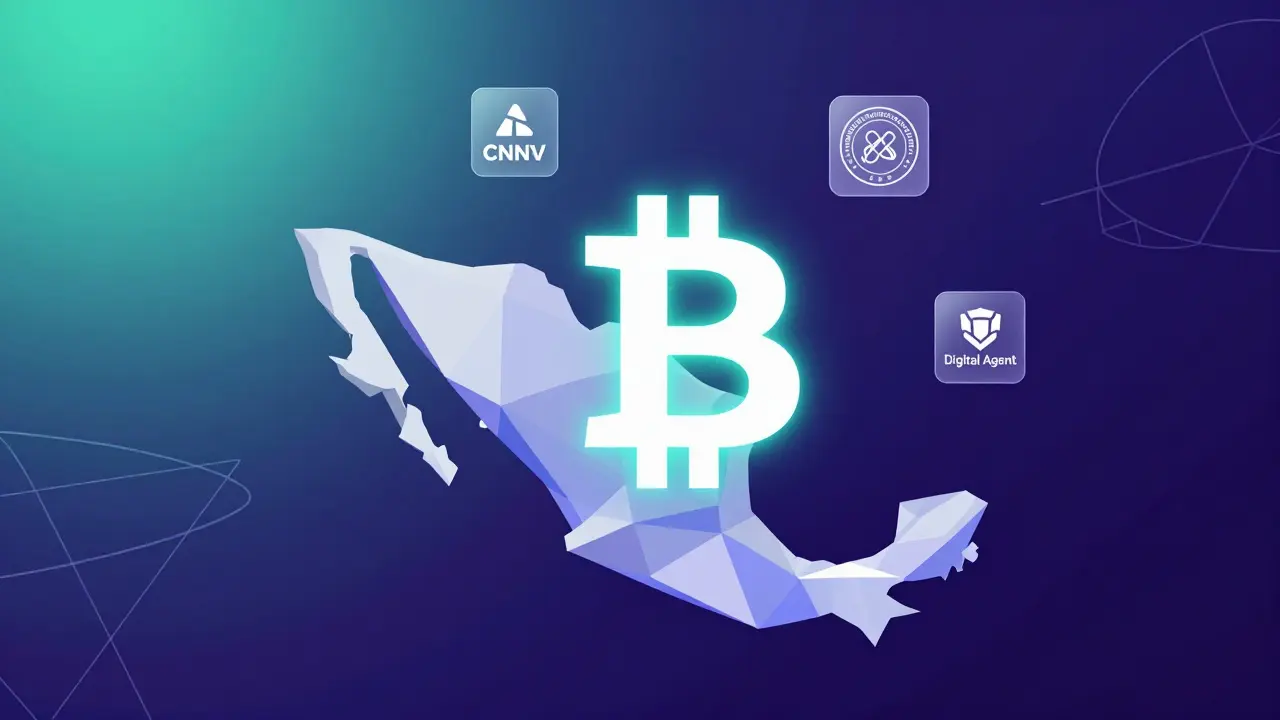
Mexico's CNBV regulates crypto through licensing and monitoring, but banks can't offer services due to Banxico's restrictions. Learn how virtual assets are taxed, licensed, and monitored in 2026.
Cryptocurrency correlation reveals how coins like Bitcoin and Ethereum move together, impacting portfolio risk. Learn how to measure it, why it changes, and how to use it to avoid false diversification.
BitcoinToYou is a long-standing Brazilian crypto exchange focused on Bitcoin trading. With high fees and limited coins, it's simple and safe-but outdated for active traders. Best for Brazilians who want a no-frills way to buy Bitcoin.
The DSG token airdrop by Dinosaureggs is a high-risk, low-reward opportunity with zero trading volume and no real utility. Learn how MEXC's Kickstarter works, why you shouldn't invest, and what to watch out for.
BlueCoin (BLU) is a quiet, long-running cryptocurrency with a hybrid blockchain, charity mission, and near-zero trading volume. Find out what it is, how it works, and whether it still has value in 2026.
Pangolin is a fast, low-cost decentralized exchange on Avalanche, but in 2026 it's lagging behind competitors. Learn its real performance, token value, and whether it's still worth using for crypto trading.
Terraformer crypto exchange doesn't exist-it's a scam. Learn how fraudsters mimic Terraform Labs to steal crypto, how to spot fake exchanges, and which real platforms you can trust in 2026.